
I Am Sober
See website
Best for free day counting with a daily pledge routine
- Free plan
- Yes, core counter for up to two addictions
- Rubric
- 7.4 of 10
We compared nine sober tracker apps on privacy, free access, structure and community, so you can match the tool to the way you actually want to stop or cut back.

IThe short answer
I Am Sober is the best sober tracker app for most people who want a free daily counter and a pledge routine, Sunnyside suits drinkers who want a structured weekly cut-back plan with coach support, and Nomo is the pick when privacy and zero cost matter more than polish. All three were checked in November 2026 alongside six other apps, including Reframe for a guided 160-day program, Try Dry for free dry-month challenges and In The Rooms for online meetings. Pricing for every paid tier sits on the vendor site.
9 tools compared from vendor pages on November 25, 2026. 0 publish a starting price we could read; the rest say "See website".
IITop three berths
Register order is editorial fit for the buyer each entry describes. Prices are the starting figures read on November 25, 2026.
See website
Best for free day counting with a daily pledge routine
See website
Best for cutting back with a structured weekly plan

See website
Best for a guided daily program to quit or cut back
How this page is paid for. All 9 tools here are unpaid editorial picks.
A paid listing's position can be part of what the vendor pays for. Every entry, paid or not, is scored on the same rubric and keeps its limits in print. Advertising disclosure.
IIIThe register
Starting prices as shown on each vendor's pricing page on November 25, 2026. "See website" means no figure we could confirm.
| No. | Tool | From | Free plan | Trial | Rubric | Actions |
|---|---|---|---|---|---|---|
| 01 | I Am SoberFree day counting with a daily pledge routine | See websiteNot shown publicly | Yes | No | 7.4 | |
| 02 | SunnysideCutting back with a structured weekly plan | See websiteNot shown publicly | No | 15-day free trial | 5.7 | |
| 03 | ReframeA guided daily program to quit or cut back | See websiteNot shown publicly | No | 7-day free trial | 6.1 | |
| 04 |  NomoSimple, private sobriety clocks at no cost | See websiteNot shown publicly | Yes | No | 7.7 | |
| 05 |  LoosidBuilding a sober social life | See websiteNot shown publicly | Yes | No | 6.9 | |
| 06 |  Door 24Progress tracking without streak anxiety | See websiteNot shown publicly | Yes | No | 6.9 | |
| 07 |  Try DryFree structured dry-month challenges | See websiteNot shown publicly | Yes | No | 7.3 | |
| 08 |  In The RoomsOnline recovery meetings and community | See websiteNot shown publicly | Yes | No | 7.7 | |
| 09 | CLRTY: Quit Smoking & SobrietyPrivate, account-free sobriety and habit tracking | See websiteNot shown publicly | Yes | 7-day free trial on Premium | 6.8 |
Pinned:
IVMethod
What the free tier actually includes, not whether a free download exists.
Whether an account is required, where data lives and whether sharing is opt in.
Lessons, weekly plans and coaching that go beyond counting days.
Meetings, peer groups, partner matching and access to a human when a craving hits.
How easy it is to find and understand what the vendor charges and what the plan includes.
VMethod
Every app on this list was scored against the same five criteria. Free access carries the most weight at 25 percent, because a tracker you cannot afford is not a tracker, and it covers what the free tier actually includes rather than whether a free download exists. Privacy and data takes 20 percent: whether you need an account, where data lives and whether sharing is opt in. Program structure takes another 20 percent, covering lessons, plans and coaching that go beyond a counter. Community and support takes 20 percent for meetings, groups and peer contact. Price clarity takes the final 15 percent, rewarding vendors whose plans are easy to find and describe.
Pricing facts come from vendor pricing pages checked on November 25, 2026. Where a page could not be read on that date, the review says so and does not present a number as current. All nine tools in this list show See website for starting price, which in most cases means the vendor page did not return readable pricing on the check date. Free plan and trial facts follow the vendor's own description, including the 15-day Sunnyside trial and the 7-day trials from Reframe and CLRTY Premium.
This list contains no Featured placement. When a vendor does buy that position, it is labeled Featured, and it is scored with the same rubric and given the same honest cons as every other entry. The order of the list reflects editorial fit for the buyer described in each entry, not a weighted total.
Two things were checked but not scored: whether the app works for cutting back as well as quitting, and how much you can use before creating an account. Both are noted in the reviews where they matter.
The full routine, from price reads to corrections, is on the methodology page. Paid listings follow the advertising disclosure.
Entry I of IX / Daily pledge ritual
Our verdict
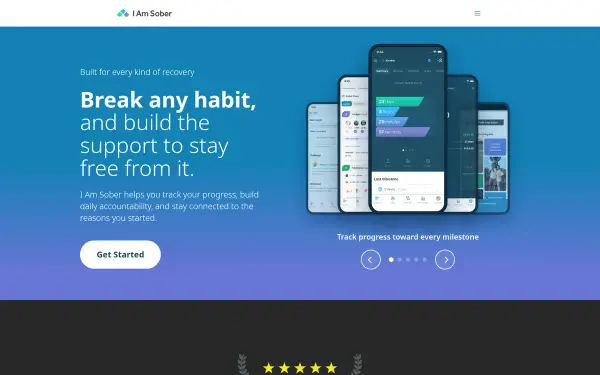
Best free start for most people: a daily pledge loop, a sober counter and milestone-grouped community, with extras behind a subscription.
I Am Sober is the default recommendation for someone who wants a sober day counter that does more than count. The core screen shows elapsed time since your last drink, plus running totals for money saved, and a morning pledge followed by an evening review gives the day a shape. Habit tracking covers roughly 150 habits, though the free tier only allows two, which is enough for sobriety plus one trigger habit.
The community is organized by addiction type and milestone, so a person on day four is grouped with others near day four rather than in one giant feed. That structure is the strongest thing about the app and also the most variable, because feed quality depends on who is posting in your bracket. Private accountability groups and extra habit slots sit behind the subscription.
Pricing is on the vendor site. A paid tier exists, but the vendor pricing page could not be read on November 25, 2026, so confirm the current tiers before you buy. The withdrawal timeline also requires creating an account, which is a small friction point if you want to look before signing up.
Fit matters more than features here. If you want a daily ritual, a counter and peers at your stage, this covers all three without payment. The pledge loop is the part worth testing in week one, because a counter with a daily prompt is easier to keep than one without. If you want a structured curriculum, Reframe is a better match, and if you want medication support sold separately, Sunnyside is a better match. If you want zero accounts and zero ads, CLRTY is the cleaner choice.
You want a free daily counter with a pledge routine and peers at your stage.
You need clinical guidance, coaching calls or a full curriculum.
Entry II of IX / Text coach access
Our verdict
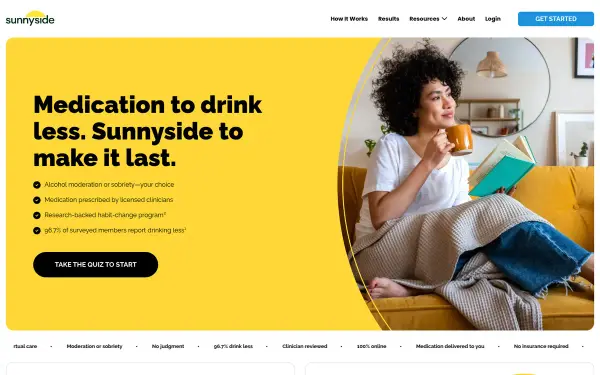
Best for drinkers who want to cut back rather than quit, with a weekly plan and on-demand text coaching.
Sunnyside is built for the person who is not ready to say they will never drink again. Signup runs an onboarding quiz that produces a drinking profile, then the app generates a weekly plan from what you log. You can set full abstinence as the goal at signup, but moderation is the default frame, and the company states the app is not intended for people with alcohol use disorder.
Logging happens over text message with a coach-style thread rather than a tap-heavy dashboard. Drink logging over text message is a different feel from a form, and some users find it clunky when they just want to log a drink in two taps. The analytics show drinks reduced and money saved against your plan, and the motivational content library supplies short reads between check-ins.
Human coaches are available on demand through the same text thread, which is useful because it does not require booking a session. Medication support is sold separately as a clinical service, so if you are pursuing a prescription route, budget for two products rather than one.
There is no free tier: the 15-day trial is the only way in without paying, and after that the subscription is mandatory. Pricing sits on the vendor site; the page returned no text on November 25, 2026, so confirm the current pricing before buying. The company also offers a refund if the program does not fit, which lowers the risk of trying it.
Pick this if you want a weekly structure and a human on text. Skip it if you need abstinence-only support, clinical treatment for alcohol use disorder or a free tool you can keep indefinitely.
You want a weekly cut-back plan with a coach you can text.
You need abstinence-only support or a free app.
Entry III of IX / 160-day curriculum
Our verdict
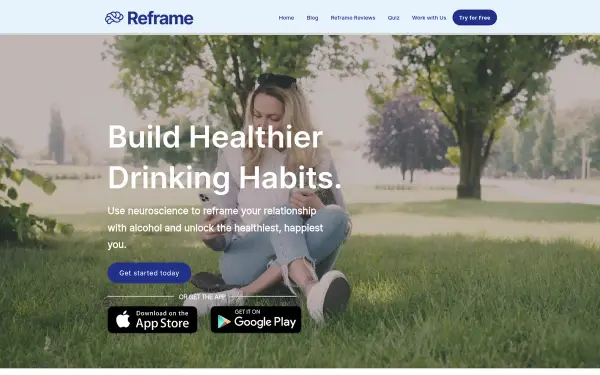
Best structured program: 160 days of lessons, craving tools and coach-led video meetings for people who want a curriculum, not a counter.
Reframe treats quitting as a course to work through rather than a number to watch. The centerpiece is a 160-day program of daily lessons on the neuroscience of drinking, with separate quit and cut-back tracks you can switch between as your goal changes. That curriculum is the reason people pay for it, and it is also why it feels heavy if all you wanted was a day counter.
Around the lessons sit the practical tools: a drink tracker, craving management exercises, guided meditations and mood logging. Coach-led video check-in meetings run daily inside the app and are included in the subscription, which puts a group meeting in your pocket without a separate 12-step or therapy appointment. One-to-one coaching is available as an optional extra.
Pricing is on the vendor site and varies by channel, but the vendor page could not be read on November 25, 2026, so check the current figures before buying. The 7-day trial is the only free access; there is no meaningful free tier once it ends.
Outcome and usage numbers the company cites come from its own surveys rather than independent research, so weigh them as marketing rather than evidence. The daily meeting schedule is the feature most likely to justify the price, because it replaces a separate group commitment.
Pick this if you want a guided program with meetings built in. Skip it if you want a free counter, dislike daily coursework or would rather log a day and close the app.
You want lessons, craving tools and daily group meetings in one subscription.
You only want a counter or you will not do daily coursework.
Entry IV of IX / Unlimited free clocks
Our verdict
Best free option overall: unlimited private sobriety clocks, accountability partners and no paid tier at all.
Nomo does one thing well and refuses to charge for it. You can create unlimited sobriety clocks, each counted to the minute, covering alcohol, drugs, nicotine or any other habit you want to track. Clocks are private by default, which matters if you want a tracker without a public feed or a profile.
The accountability features go further than most free apps. You can match with an accountability partner and message privately, share a clock with someone so they can see your progress, and use check-in buttons when a craving hits. Milestone chips and an encouragement wall add a light social layer, and short distraction exercises give you something to do in the moment rather than something to read.
There is journaling and a PIN lock, and the app is run by a single developer in recovery and funded through donations. That explains both the good and the bad: there is no paid tier and no upsell, but updates move slowly and the interface is functional rather than polished.
Because there is no pricing page and no paid tier, there is nothing to verify on the vendor site, which makes budgeting simple. The trade-off is depth. There is no structured program, no coaching and no clinical content, so it pairs well with a meeting app like In The Rooms or a curriculum like Reframe.
Pick this if you want free, private, unlimited counters. Skip it if you want a guided program, coaching or a polished interface with regular redesigns.
You want unlimited private counters and a partner at no cost.
You want a curriculum, coaching or a refined interface.
Entry V of IX / Sober social life
Our verdict
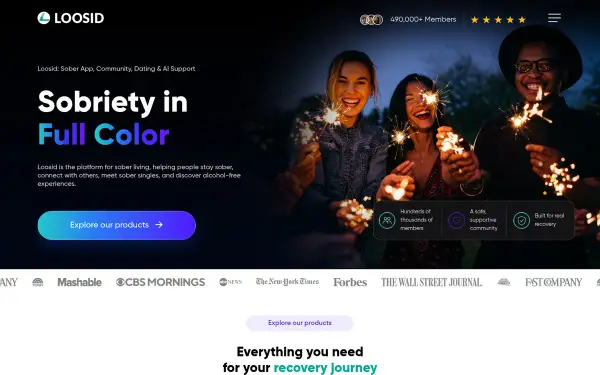
Best for the social side of sobriety: events, dating and a recovery marketplace around a basic milestone counter.
Loosid approaches sobriety as a lifestyle rather than a streak. Milestone tracking is present, but it sits beside alcohol-free events listings, sober dating features and a recovery marketplace, so the app is primarily somewhere to build a social life that does not revolve around bars. The member community and connection features are the core of the product.
A 24/7 AI-powered virtual mentor answers questions between meetings, and the company partners with treatment centers on alumni programs, which is the most interesting part of its model: it gives people leaving treatment somewhere to land socially. That makes it a useful companion to a clinical program rather than a replacement for one.
Tracking depth is shallower than dedicated counters. If you want minute-by-minute clocks, running money-saved totals, journaling prompts or a detailed withdrawal timeline, other apps on this list do that better and you would use Loosid alongside them.
The platform is free. No paid tier is listed and there is no pricing page to check, so there is no cost to test whether the social layer suits you. The caveat is scale: it is a newer platform still building its user base, so event listings and connections depend on how many members are nearby, and a lifestyle feed with dating and marketplace content may feel like too much for someone in early recovery who needs structure and quiet.
Pick this if you want sober friends, events and dating in one place. Skip it if you want a serious tracking tool or you are in the first weeks and want less stimulation.
You want alcohol-free events, dating and connections more than day counting.
You need deep tracking or a quiet tool for the first weeks.
Entry VI of IX / No streak resets
Our verdict
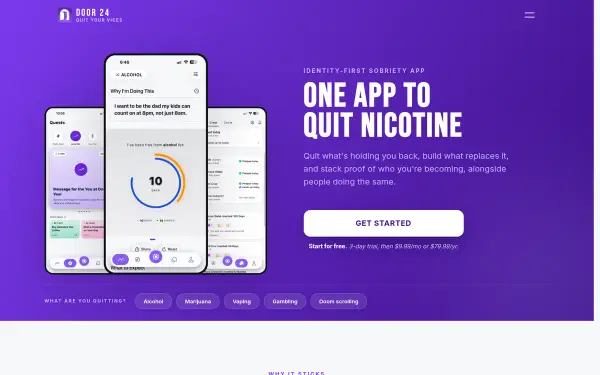
Best for people who fear losing a streak: a 42-day rolling Growth Score that does not reset to zero after a slip.
Door 24 is aimed at a specific fear: that one slip wipes out months of visible progress and takes the motivation with it. Instead of a streak that resets to zero, it uses a Growth Score that averages your daily activity over a rolling 42-day window. A missed day dents the score rather than destroying it, which is closer to how recovery actually behaves and softer on people who beat themselves up over a lapse.
Daily activity tracking feeds that score, and the app includes progress documentation, optional social accountability and a small library of educational resources. Privacy is switched on by default with user-controlled sharing, so nothing is public unless you choose to make it so. Apps run on both iOS and Android.
The app is free to download and there is no pricing page to check, so cost is not a barrier. The honest limits are maturity and scale: it comes from a small wellness technology company and has a short operating history, so long-term reliability and data portability are unproven, and the community is smaller than the established counters. Fewer social features also means less peer support in the moment.
Think of it as a progress tool rather than a program. It will not coach you, teach you or run meetings, but it will keep showing a trend line when a slip would otherwise erase your visible record. For anyone who has abandoned an app after a relapse, that single design choice is the whole pitch. It also suits people who want a tracker they can open without a reminder, since there is no program to fall behind on.
Pick this if streak resets have derailed you before. Skip it if you want a large community or a long track record.
A streak reset would knock you off course.
You want a big community or a proven long-term platform.
Entry VII of IX / Free challenge tracker
Our verdict
Best free challenge app: drink, calorie and money tracking plus seasonal challenges from the charity behind Dry January.
Try Dry comes from the UK charity behind the Dry January campaign, and it shows: the app is organized around challenges and goals rather than open-ended day counting. You set a goal, whether that is a dry month, a cut-back plan with planned drinking days, or full abstinence, and the app tracks drinks, calories and money saved against it. Milestone badges mark progress, and a notes journal captures how the week went.
The wellbeing tracking is more thoughtful than most free apps. You log sleep, mood and cravings, which turns the app into a record of how drinking changes your week rather than a scoreboard. A drinking-risk quiz gives you a baseline, and seasonal challenges such as Dry January and Sober Spring give a reason to start.
It is free with no ads and no upsell, and there is no paid tier to check. Localization covers Welsh, French, German, Norwegian and Italian, with adjustable measures and currency, so US users can switch away from UK units. That default is still the main friction: the app assumes UK units and currency on first run, and the framing is challenge-based, so it fits a defined period better than years of continuous tracking.
Treat any outcome claims from the charity as its own reporting rather than independent research. The US user base is smaller than in the UK, so do not expect a busy community feed.
Pick this if you want a free, well-designed challenge tracker. Skip it if you want open-ended sobriety clocks or a large US community.
You want a free challenge tracker with wellbeing logging.
You want open-ended day counting or a busy US community.
Entry VIII of IX / Round-the-clock meetings
Our verdict
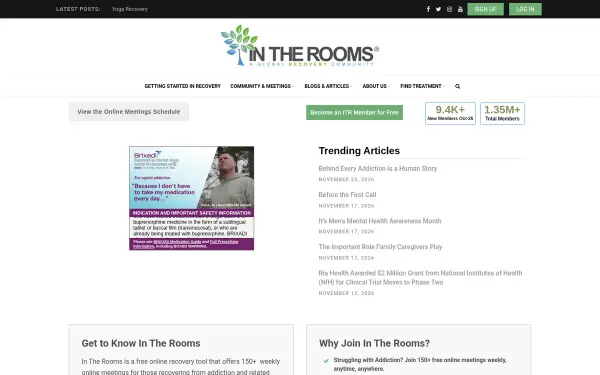
Best for meetings: round-the-clock live online recovery meetings and forums, with tracking tools as a side feature.
In The Rooms is a meetings platform first and a tracker second. It runs daily live online meetings across many time slots, which means there is usually a meeting at a convenient time regardless of your timezone, and it covers both 12-step and non-12-step programs rather than tying you to a single fellowship. For someone in a small town, or someone who will not walk into a room, that availability is the point.
Around the meetings sit discussion forums, speaker recordings and a community the platform describes as more than half a million members. Free access makes it the cheapest way to try a meeting before committing to a group. Sobriety tracking tools exist, but they are basic compared with a dedicated counter, so most people use this alongside another app rather than instead of one.
The platform is free to join and no paid tier is listed, so there is no pricing page to verify and no subscription decision to make. The cost shows up in design instead: the interface looks dated, navigation takes getting used to, and the experience is meeting-centric, which means you have to show up at a scheduled time rather than open an app and get a nudge.
That structure suits people who want human contact and accountability. It does not suit people who want a private solo tool, a clean daily ritual or a program with lessons and exercises. Privacy expectations are also different here: you are joining a community with forums and profiles, not a locked device-only log.
Pick this if meetings are the support you are missing. Skip it if you want a quiet, private tracker or a structured course you work through alone.
You want live meetings and a global recovery community at no cost.
You want privacy and a quiet solo tracker.
Entry IX of IX / Account-free privacy
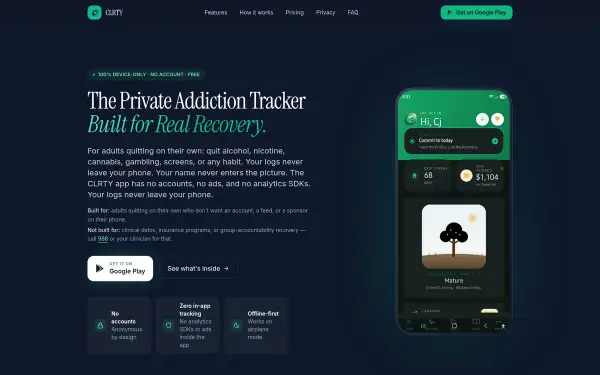
Our verdict
Best for privacy: no account, device-only storage and no ads, with a free core toolkit and Premium for extras.
CLRTY is designed around what it does not do. There is no account, no login, no ads and no analytics SDKs, and data is stored on the device rather than on a server. If the reason you have not downloaded a sobriety app is that you do not want a company holding your drinking history, this is the one built for you.
It covers more than alcohol. There is a sober day counter for drinking and smoking, plus streaks and taper plans for more than 20 habits, so it works as a general habit tracker with sobriety at the center. Craving and coping tools give you something to reach for in the moment, and a Recovery Tree marks milestones with a visual reward rather than a badge grid. iPhone and Android apps are both available.
The free core toolkit is free forever, with Premium limited to extras and a 7-day trial. Pricing sits on the vendor site; the page failed to load on November 25, 2026, so confirm the current figure before buying.
The limits are deliberate. It is not built for clinical detox, insurance programs or group accountability, so it will not replace treatment or a meeting. Some tools sit behind Premium, and the AI coach on iOS routes messages to an external service, which is worth knowing given how the rest of the app is built. It is also newer than the long-running counters, so the track record is short.
Pick this if privacy and no accounts are your top requirement. Skip it if you want coaching, community or clinical support built in.
You want a tracker that never asks for an account.
You want coaching, group accountability or clinical support.
VIBackground
A sober tracker app records time without alcohol and turns that record into something you can see: days counted, money saved, habits changed. The simplest versions do little more than a clock, a milestone list and a private note. The fuller versions add a daily ritual, a curriculum, a coach, a community or a meeting schedule, which is why two apps in the same category can feel unrelated.
Most trackers overlap on four jobs:
The differences show up in what happens around a slip. Streak apps reset to zero, which some people find motivating and others find shattering; a few, such as Door 24, use a rolling average instead. They also differ on scope. Some are abstinence only, some support a cut-back goal with planned drinking days, and some treat drinking as one habit among many.
Decide which of the four jobs you actually need before you compare feature lists. A person who wants a private clock and nothing else will find Reframe exhausting and Nomo about right. A person leaving treatment who needs meetings and peers will find a pure counter too thin. It can make sense to run two apps: a counter for the daily record and a meetings or community app for contact.
One limit applies to all of them. A tracker is a record keeping and motivation tool, not a diagnosis or a treatment plan. If you are drinking heavily and stopping suddenly could cause withdrawal, or if you have thoughts of harming yourself, talk to a clinician first and use an app as an add-on.
This comparison sits in the software register. Further along the shore: baby tracking app and e signature software.
VIIPricing
Pricing in this category splits into a few shapes: free and donation funded, trial then subscription, and free core with a paid upgrade. None of the nine vendors returned readable pricing on November 25, 2026, so every starting price in this list reads See website and every model below is described by shape rather than by a confirmed number.
| Model | How it bills | Typical fit | Example from this list |
|---|---|---|---|
| Free, no paid tier | Nothing to pay; sometimes donation funded | People testing whether tracking helps, or who cannot subscribe | Nomo |
| Free with optional premium | Core tools free, extras behind a paid plan | People who want a usable free app but may upgrade later | I Am Sober, CLRTY |
| Trial then subscription | Short free trial, then a recurring charge | People ready to commit to a program | Sunnyside, Reframe |
| Free, no paid tier | Free with no ads or upsell | Challenge-style tracking and public health campaigns | Try Dry |
| Community platform | Free to join, community features at no cost | People whose main need is other people | In The Rooms, Loosid |
Three habits keep costs down. First, check what the free tier includes rather than whether a free download exists; I Am Sober's free tier covers the counter and the daily ritual but not private groups, and it caps habits at two. Second, note trial lengths before you start, because the 15-day Sunnyside trial and the 7-day Reframe trial are different commitments. Third, expect medication support and one-to-one coaching to be sold separately from the app subscription, as Sunnyside and Reframe both do.
If a price matters to your decision, open the vendor's own pricing page on the day you buy. Prices in this category move with promotions and app store offers, and an annual plan bought in the app store can differ from the same plan bought on the web.
Each entry card shows the starting price as it appeared on the vendor's own pricing page on November 25, 2026. When a vendor shows no figure we could confirm, or only a promotional rate, the card says "See website" or gives the regular price instead of a guess. Usage, overage and add-on rates in the text change more often than plan prices, so confirm them on the vendor page before you set a budget. To test the numbers against your own volume, try the free User Research Budget Planner. The Event Break-Even Calculator is a second way to check the same decision.
VIIIDecision
IXPitfalls
XQuestions
Nomo, Try Dry, Loosid, Door 24 and In The Rooms cost nothing to use, with no paid tier listed for any of them. CLRTY and I Am Sober have free tiers with optional paid upgrades. Sunnyside and Reframe are trial only, at 15 days and 7 days respectively, and there is no free tier once the trial ends.
For community, In The Rooms runs live online meetings around the clock and covers both 12-step and non-12-step programs. For privacy, CLRTY needs no account and keeps data on the device with no ads. For structure, Reframe's 160-day curriculum plus daily coach-led video meetings is the most guided option here. Nomo covers privacy at zero cost.
Yes. Sunnyside is built around moderation, with a weekly plan and optional full abstinence as a goal, and Try Dry supports cut-back plans with planned drinking days. Reframe has separate quit and cut-back tracks you can switch between. Simple counters such as Nomo still work as a record but will not model a taper.
None of them diagnose or treat alcohol use disorder. Sunnyside states it is not intended for people with alcohol use disorder, and CLRTY is not designed for clinical detox or insurance programs. Heavy drinking and sudden stopping can cause withdrawal that needs medical supervision, so speak to a clinician first and use an app as a supplement.
Money saved figures are estimates based on your own spending inputs, not a bank record, so they are only as accurate as the numbers you provide.
Often, yes, especially when you subscribe through an app store. Sunnyside runs a 15-day trial and Reframe and CLRTY Premium run 7-day trials, so check the renewal terms before you start. Cancel the day you start if you only want to test, and check the renewal terms on the store listing before you confirm.
XIFurther along the shore
Vendors can ask for a correction or apply for a Featured listing. Paid or not, the entry is scored on the same rubric and its limits stay in print. Partner with Umberlake.
Free tools
Our free browser tools turn the prices on this page into a figure for your own volume. Nothing you type leaves your device.