QuickBooks
$38Simple Start, per month, 1 user, $11.40 per month for first 3 months with 70% off
Best for established small businesses needing all-round accounting
- Free plan
- Yes
- Rubric
- 8.1 of 10
Eight replacements for Wave, checked on price and fit for freelancers, UK filers, inventory sellers and owners who would rather hand bookkeeping to a person.

IThe short answer
Wave accounting alternatives in November 2026 come in three shapes. QuickBooks suits established small businesses that need accounting, payroll and inventory in one place; Xero suits growing businesses that want cleaner, simpler software at $27 per month; and Bench suits owners who would rather a human bookkeeper did the work, from $199 per month. The other five entries cover free plans, UK tax filing, self-hosted software and mid-market finance teams. Prices were checked on November 26, 2026.
8 tools compared from vendor pages on November 25, 2026. 7 publish a starting price we could read; the rest say "See website".
IITop three berths
Register order is editorial fit for the buyer each entry describes. Prices are the starting figures read on November 25, 2026.
$38Simple Start, per month, 1 user, $11.40 per month for first 3 months with 70% off
Best for established small businesses needing all-round accounting

$27Early plan, USD per month, $2.70 per month for first 6 months with 90% off
Best for growing small businesses wanting clean, simple software

$23Lite, USD per month, 5 billable clients, $2.30 per month for first 4 months with 90% off
Best for service businesses and freelancers centered on invoicing
How this page is paid for. All 8 tools here are unpaid editorial picks.
A paid listing's position can be part of what the vendor pays for. Every entry, paid or not, is scored on the same rubric and keeps its limits in print. Advertising disclosure.
IIIThe register
Starting prices as shown on each vendor's pricing page on November 25, 2026. "See website" means no figure we could confirm.
| No. | Tool | From | Free plan | Trial | Rubric | Actions |
|---|---|---|---|---|---|---|
| 01 | QuickBooksEstablished small businesses needing all-round accounting | $38Simple Start, per month, 1 user, $11.40 per month for first 3 months with 70% offUpdated on vendor page | Yes | 30-day free trial | 8.1 | |
| 02 | XeroGrowing small businesses wanting clean, simple software | $27Early plan, USD per month, $2.70 per month for first 6 months with 90% offRead on vendor page | No | See website | 8.0 | |
| 03 | FreshBooksService businesses and freelancers centered on invoicing | $23Lite, USD per month, 5 billable clients, $2.30 per month for first 4 months with 90% offUpdated on vendor page | No | 30-day free trial | 7.3 | |
| 04 |  Zoho BooksSolopreneurs and micro businesses wanting a free plan | FreeFree plan, 1 user plus 1 accountant, paid plans from $10 per org per month billed annuallyRead on vendor page | Yes | 14-day free trial | 7.4 | |
| 05 |  FreeAgentUK freelancers and small businesses handling HMRC filings | £33Per month billed monthly, £16.50 per month for first six months, excl. 20% VATRead on vendor page | Yes | 30-day free trial | 7.3 | |
| 06 |  SageScaling finance teams moving toward mid-market | See websiteNot shown publicly | No | See website | 6.5 | |
| 07 | AkauntingBudget-conscious users comfortable self-hosting software | $8Standard Cloud, per month, 1 company and 1 user, $5 with Black Friday discount appliedUpdated on vendor page | Yes | Free trial available | 5.9 | |
| 08 |  BenchOwners who want bookkeeping handled by a person | $199Bookkeeping Light, per month, for businesses up to $250K annual revenue, annual plans save 20%Read on vendor page | No | See website | 7.0 |
Pinned:
IVMethod
Every entry was scored against the same five criteria: core accounting depth (25 percent), pricing clarity (20 percent), ease of use (20 percent), integrations and extras (20 percent), and support and fit for the buyer named (15 percent). Core accounting asks whether the books actually close: reconciliation, reporting, tax handling and inventory. Pricing clarity rewards published numbers and penalizes quote-only sales. Ease of use covers setup time and day-to-day clicks. Integrations and extras covers payroll, projects, app connections and migration help. Support and fit asks whether the tool matches the business type in its verdict.
Prices, plan names and trial terms come from vendor pricing pages checked on November 26, 2026, and are quoted in the currency each vendor lists. Where a page showed no figure, we say pricing is on the vendor site rather than estimating a number. Promotional rates are noted separately from list rates, because an introductory discount is not a budget.
Any entry marked Featured holds a paid placement. Featured entries are scored with the same rubric as every other tool, and they carry the same kind of cons. The order is editorial: it reflects fit for the buyer each entry describes, not a calculated total.
The full routine, from price reads to corrections, is on the methodology page. Paid listings follow the advertising disclosure.
Whether the books actually close: reconciliation, reporting, tax handling, inventory and multi-entity work.
Published numbers, understandable tiers and clear separation of list rates from introductory discounts.
Setup time, learning curve and how many clicks it takes to finish routine weekly work.
Payroll, projects, app connections, migration help and the extras a growing business will want.
Whether support, country fit and accountant familiarity match the buyer the entry names.
Entry I of VIII / Full-stack accounting platform
Our verdict
The broadest replacement here: accounting, payroll, inventory and sales tax under one login, at a price that climbs with add-ons.
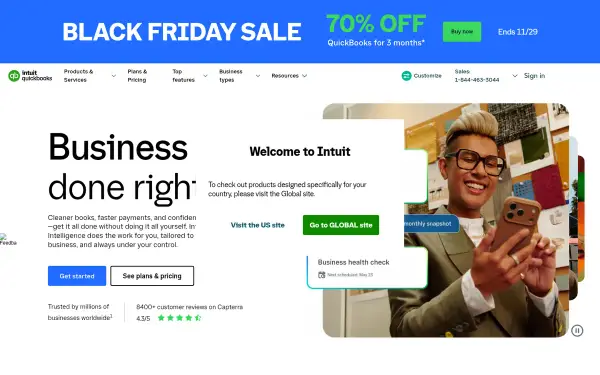
QuickBooks is the fullest replacement on this list. Bookkeeping, invoicing with automated payment reminders, payroll, inventory tracking and sales tax sit in one product, and the integration catalogue runs past 800 apps. Intuit Intelligence handles some recurring tasks automatically. The vendor says roughly 10 million businesses use it globally, which is why most accountants already know the interface.
The trade-off is a cost that climbs. Simple Start is $38 per month for one user, currently $11.40 per month for the first three months with 70 percent off, and each add-on (payroll, extra users, inventory) moves you up a tier. A 30-day free trial is offered, and a free plan is listed on the site.
The product leans toward the US market in its feature set and support, which matters if you file elsewhere. For an established small business that wants accounting and payroll under one login, that breadth justifies the running cost. For a solo freelancer invoicing a handful of clients a month, it is more machinery than the job needs.
You run an established small business that wants accounting, payroll and inventory in one place.
You are a solo freelancer with low transaction volume and a tight budget.
Entry II of VIII / Bank reconciliation quality
Our verdict
Clean, quick to learn and strong on reconciliation, provided you budget on the $27 list price rather than the six-month introductory rate.
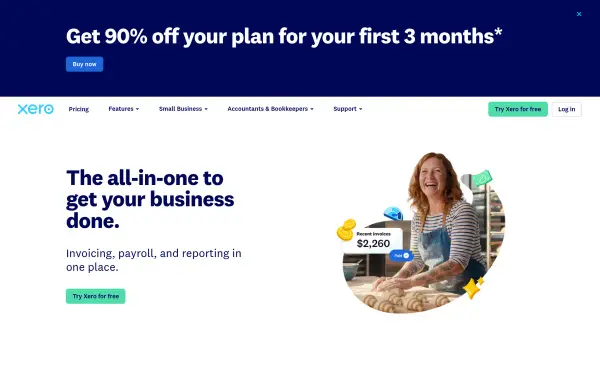
Xero sits between Wave's simplicity and QuickBooks' breadth. Bank reconciliation is the strongest part of the product, and the interface stays readable as transactions pile up. JAX, the built-in AI assistant, answers questions and handles routine entries, while smart document capture pulls data off receipts and bills. Free standard ACH bill payments are included.
Pricing is published in three tiers: Early at $27, Growing at $59 and Established at $97 per month at list rates. The $2.70 rate on Early lasts six months at 90 percent off, then reverts to full price. Free plan and trial terms are on the vendor site rather than stated plainly. Payroll, projects, multi-currency and 180-day cash flow forecasting sit on the higher tiers, and invoice and bill allowances are capped on the entry plan. The company reports roughly 5 million customers worldwide.
For a growing small business that wants clean software without hiring a consultant to set it up, Xero is the easiest recommendation on this list. Budget on the list price, not the promotional rate, and check the allowance caps before you commit if you issue a lot of invoices or bills each month.
You want simple, tidy accounting software with excellent reconciliation and no consultant required.
You need payroll or multi-currency from day one on the cheapest plan.
Entry III of VIII / Fast billing workflow
Our verdict
Invoice-first accounting for service businesses, with onboarding help included, but five billable clients on the Lite plan runs out fast.
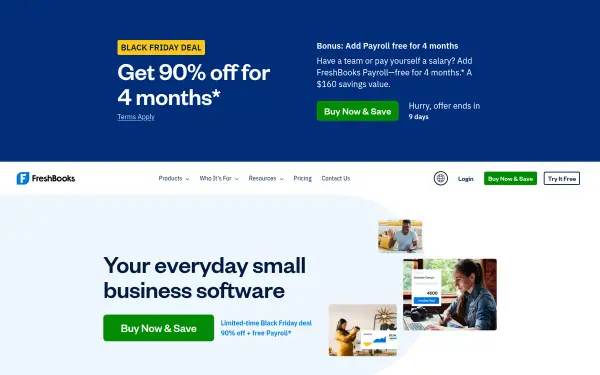
FreshBooks is built around getting invoices out and paid. The workflow for billable time, retainers and late payment chasing is tighter than in ledger-first tools, and expense tracking comes as standard. Free onboarding with a specialist is included at no extra charge, and more than 100 app integrations cover Zapier, Gusto, Square and HubSpot. The vendor serves 500,000-plus small businesses.
Pricing is thin on the homepage. Lite lists at $23 per month for five billable clients, discounted to $2.30 for the first four months at 90 percent off, and a 30-day free trial is offered. There is no free plan. The five-client cap on Lite is the constraint to watch: a service business with a steady stream of small jobs will outgrow that tier quickly and move up a price band.
Compared with QuickBooks or Xero, FreshBooks is shallower on double-entry depth, inventory and multi-entity work. For its audience that is a deliberate choice rather than a flaw. Freelancers, consultants and small agencies that bill by the hour or by project will find it faster to live with than a full accounting suite. Product businesses holding stock should look at QuickBooks or Zoho Books instead.
You bill clients for time or projects and want the shortest path from work done to money in.
You carry inventory or need full double-entry depth across several entities.
Entry IV of VIII / Real free tier
Our verdict
The cheapest credible route on this list, thanks to a real free tier and paid plans from $10 per org per month billed annually.
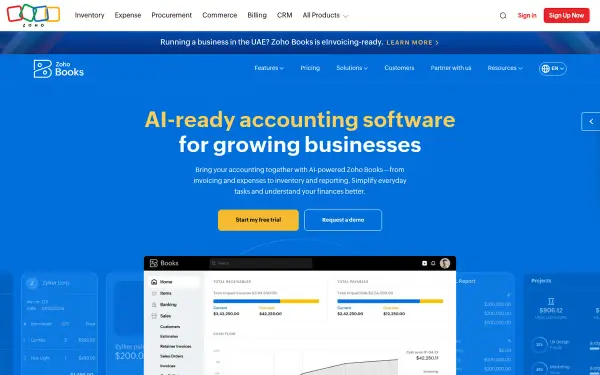
Zoho Books is the only entry here with a free plan that is a real tier rather than a countdown. The free version covers one user plus one accountant, enough for a sole trader or a very small operation. Paid plans start at $10 per org per month billed annually, and the published ladder runs from Standard at $15 to Ultimate at $240 per month, exclusive of local taxes. A 14-day free trial covers the paid tiers.
The module list is broader than the price suggests: accounts receivable and payable, inventory management, project accounting, financial reporting, multi-currency and Zia AI assistance. Migration from another accounting tool is offered at no cost, which lowers the effort of leaving Wave. For a micro business that needs stock tracking and project billing without a subscription, that combination is hard to beat.
The catch is ecosystem gravity. The more you use, the more the surrounding Zoho apps become part of the setup, and moving off later is harder than moving on. Prices exclude taxes, so the headline figure is not the final one, and the free tier is aimed at very small operations rather than established teams. Above a certain size, the $240 top tier starts to look like QuickBooks money.
You are a solopreneur or micro business that wants inventory and projects without a monthly bill.
You want to keep your software choices independent of a single vendor ecosystem.
Entry V of VIII / HMRC digital filing
Our verdict
The UK pick: HMRC-recognised filing for VAT and Self Assessment, free if you bank with NatWest, RBS, Ulster Bank or Mettle.
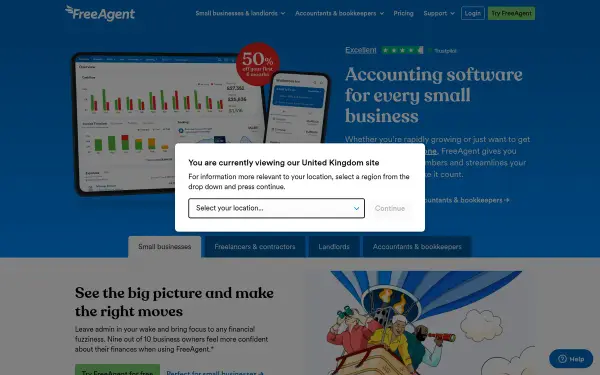
FreeAgent is the UK answer to this question. It is recognised by HMRC as an end-to-end Making Tax Digital solution, which means VAT returns and Self Assessment go straight from the software to HMRC instead of through a spreadsheet and a portal. Tax calculations update as you work, and a single view shows amounts due and deadlines. Invoicing and expense tracking are included as standard.
The list price is £33 per month billed monthly, with a £16.50 rate for the first six months, excluding 20 percent VAT. A 30-day free trial is available, and the account is free if you hold an eligible NatWest, RBS, Ulster Bank or Mettle business account. That banking tie-up is the single biggest reason UK owners choose it over a generic cloud ledger, because it can take the subscription to zero.
Outside the UK the product makes little sense: compliance work is the core selling point, not an add-on. US businesses should treat FreeAgent as not applicable rather than as an alternative. For a UK freelancer or small company filing VAT quarterly and a Self Assessment once a year, the tax handling alone justifies the subscription, and the promotional discount is a bonus rather than the reason to buy.
You are a UK business filing VAT and Self Assessment and want the filing done inside the ledger.
You trade outside the UK or need multi-currency consolidation.
Entry VI of VIII / Multi-entity controls
Our verdict
Built for multi-entity finance teams rather than solo owners, with serious controls and automation but no published small-business pricing.
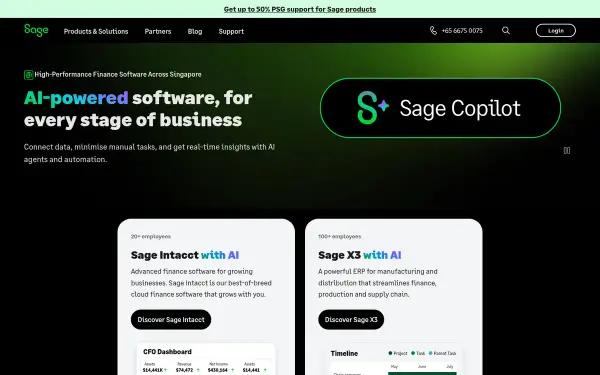
Sage is the entry for finance teams that have outgrown entry-level bookkeeping. The homepage now leads with Sage Intacct, the mid-market line, and the pitch is automation: multi-entity accounting, AI handling of manual finance tasks, connected workflows across finance systems, built-in audit trails and controls, real-time visibility and a faster period-end close. Finance AI agents surface insights rather than waiting for someone to request a report.
The vendor claims automation of up to 90 percent of manual tasks and payback in as little as six months, and says around 30,000 scaling and midsized teams use the product. Treat those as vendor figures rather than verified outcomes. Pricing is on the vendor site and the sales process is quote-led, which is real friction if you are comparing on budget alone; small-business pricing is not published anywhere obvious.
If you are still at Wave scale, with one entity and a few dozen invoices a month, Sage is overkill and the evaluation cost will exceed any benefit. The product rewards complexity: several entities, intercompany work, tight controls and a close that currently runs late every month. Buyers in that position should shortlist it. Everyone else should not, and that is the honest read of a mid-market platform sitting in a small-business list.
You are consolidating several entities and need controls, audit trails and faster closes.
You are a single-entity small business that wants a price on a web page today.
Entry VII of VIII / Free self-hosting
Our verdict
Zero subscription cost if you self-host, with the maintenance and security work that comes with running accounting software on your own server.
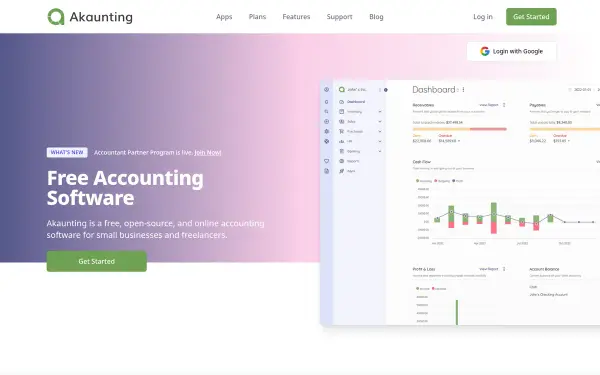
Akaunting is open-source accounting software you can host yourself. The free edition ships with source code, so there is no subscription at all: you install it, and your team owns updates, backups and security. The cloud version starts at $8 per month on Standard Cloud for one company and one user, currently $5 with a Black Friday discount applied, and a free trial is available.
Feature coverage is narrower than the commercial clouds but covers the basics well: invoicing with no volume cap, expense tracking, payments and cash flow views, transaction categories and browser access from any device. The interface is available in more than 50 languages. The vendor reports 300,000-plus users across 100-plus countries and more than 10 million invoices sent on the platform.
The honest trade-off is operational. Integrations are fewer than QuickBooks or Xero offer, accountant familiarity is limited, and a failed update or a missing backup is your problem rather than a support desk's. For a technically comfortable owner with low transaction volume who wants zero software cost, it works well. For anyone who wants to call a person when reconciliation breaks, the saving is not worth the exposure.
You are technically comfortable self-hosting and want to remove the subscription entirely.
You want vendor support, accountant familiarity or a managed backup routine.
Entry VIII of VIII / Done-for-you bookkeeping
Our verdict
Bookkeeping done by a person from $199 per month, which removes the work and most of the day-to-day control over the ledger.
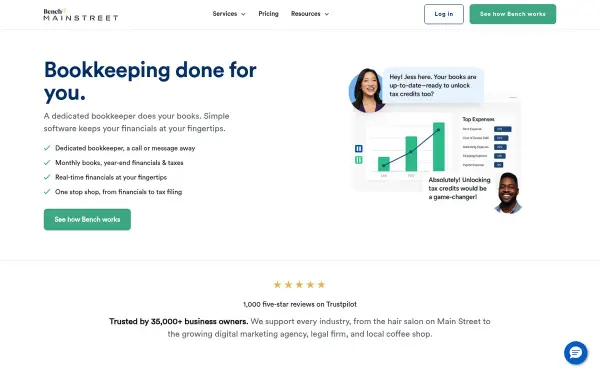
Bench is not software in the same sense as the rest of this list. You pay for a dedicated human bookkeeper who handles monthly bookkeeping, prepares year-end financial statements and gives you software access to view the numbers. Tax filing is available as an option and is bundled into the top tier. It can operate inside an existing QuickBooks account if you already run one.
Pricing is unusually transparent for a service. Bookkeeping Light is $199 per month for businesses up to $250K in annual revenue, with tiers at $399 and $649 above it, and annual plans save 20 percent. The vendor describes fees as fully tax-deductible. Trial terms sit on the vendor site rather than being stated plainly, so ask before you commit.
The comparison with software is straightforward. Zoho Books at a fraction of the cost leaves the categorizing and reconciling to you; Bench removes the work, and with it the hands-on control that some owners want. You can see the ledger, but you do not drive it. Owners who dread a lost Sunday of receipt matching will get real value. Owners who need to stay inside the detail for cash flow decisions will find $199 hard to justify against a $10 to $38 subscription.
You would rather pay someone to keep the books than learn software to do it yourself.
You are under $250K revenue and watching every fixed cost, or want to drive the ledger yourself.
VBackground
Wave accounting alternatives are other tools that take over the bookkeeping job Wave used to do: recording income and expenses, reconciling the bank, sending invoices and producing reports your accountant can file from. People start looking when they add payroll, carry inventory, register for sales tax, hire staff or need a ledger that handles more than one bank account cleanly.
The category splits into four types, and knowing which one you need shortens the search more than any feature list.
The differences that matter in practice are not the marketing features. They are how many users and clients the entry plan allows, whether payroll is included or bolted on, whether inventory is tracked properly, whether the tool files tax returns in your country, and what happens to the price after the introductory period ends. A freelancer with twenty invoices a year and a retailer with stock across two locations are not shopping for the same thing, even though both are leaving Wave.
This comparison sits in the finance register. Further along the shore: lease accounting software and accounting software for landlords.
VIPricing
Pricing in this category follows five models, and the model matters more than the headline number. Subscription ledgers charge per month per tier, with limits on users, clients or bills. Open source charges nothing for the software but bills you in time. Services charge a monthly fee for labour. Mid-market platforms charge whatever the quote says.
| Model | How it bills | Typical fit | Example from this list |
|---|---|---|---|
| Free tier plus paid plans | Monthly or annual per organization | Solopreneurs and micro businesses | Zoho Books: free plan for 1 user plus 1 accountant, paid from $10 per org per month billed annually |
| Tiered subscription | Monthly per tier, limits per plan | Established small businesses | Xero: Early $27, Growing $59, Established $97 per month at list |
| Subscription with intro discount | Monthly, discounted opening period | Buyers who will stay past the promo | QuickBooks: $38 per month for Simple Start, $11.40 for the first 3 months |
| Open source plus optional cloud | Nothing, or monthly for hosted | Technical, low-volume owners | Akaunting: free self-hosted, Standard Cloud $8 per month |
| Monthly service fee | Per month, priced by revenue band | Owners who want the work done | Bench: $199, $399 and $649 per month |
Two habits save money here. First, compare list prices rather than promotional rates, because a six-month discount is not a budget line. Second, count the limits that apply to you, not the ones in the headline: billable clients on FreshBooks Lite, invoice allowances on Xero Early, and the revenue ceiling on Bench's entry tier will each force an upgrade sooner than the sticker price suggests.
Each entry card shows the starting price as it appeared on the vendor's own pricing page on November 25, 2026. When a vendor shows no figure we could confirm, or only a promotional rate, the card says "See website" or gives the regular price instead of a guess. Usage, overage and add-on rates in the text change more often than plan prices, so confirm them on the vendor page before you set a budget. To test the numbers against your own volume, try the free Lease Liability Calculator. The Event Break-Even Calculator is a second way to check the same decision.
VIIDecision
Fix the job first. Write down what you actually need: payroll, inventory, VAT filing, multiple entities or simply invoicing. That single list usually eliminates half the field before you open a pricing page.
Set a real monthly ceiling. Use list prices, not introductory rates. Include add-ons such as payroll and extra users, and remember that a free plan with a one-user cap stops being free the day you hire.
Check the country fit. Tax filing is local. FreeAgent handles UK Making Tax Digital and Self Assessment; QuickBooks leans US. Buying a tool that cannot file where you trade creates a spreadsheet workaround you will keep for years.
Decide whether you want to do the work. If you enjoy the detail and want control, choose software. If bookkeeping is the task you keep postponing, price Bench against your own hourly rate before dismissing it as expensive.
Run the migration on a trial. Most cloud tools here offer a trial, and Zoho Books offers free migration. Import a month of real transactions before you cancel Wave, so you find the reconciliation gaps while you can still go back.
Test with your accountant. Ask whether they work in the tool you have chosen and what they need from it at year end. A tool your accountant cannot open costs more than the subscription difference.
VIIIPitfalls
Budgeting on the promotional price. Xero's $2.70 rate lasts six months and QuickBooks' $11.40 lasts three. Renewal happens at list price, and that is the number your cash flow has to carry.
Ignoring user and client caps. A plan that allows one user or five billable clients is fine until your second hire or your sixth client. Read the limits before the features.
Assuming a free plan scales. Zoho Books' free tier is genuinely free but built for one user plus one accountant, and Akaunting's free edition requires you to maintain the server yourself.
Choosing a mid-market platform too early. Sage brings multi-entity controls and audit trails, which is value you cannot use at one entity and thirty invoices a month. Quote-led evaluation also takes weeks.
Cancelling Wave before the first reconciliation. Export your data, run a parallel month and check that opening balances, unpaid invoices and sales tax carry across correctly. Closing the old account early removes your reference point.
IXQuestions
QuickBooks is the broadest. Accounting, invoicing with automated reminders, payroll processing, inventory tracking, sales tax handling and more than 800 integrations sit in one product. Sage goes further on multi-entity controls and audit trails, but it is aimed at mid-market finance teams and its pricing is not published. For a small business, QuickBooks covers the most ground at $38 per month on Simple Start.
Zoho Books has a real free tier for one user plus one accountant, and Akaunting offers a free self-hosted edition. QuickBooks lists a free plan, and FreeAgent is free with an eligible NatWest, RBS, Ulster Bank or Mettle business account. Everything else is a trial or a paid subscription, so check what the free tier actually allows before you plan around it.
FreeAgent is the clear fit. It is recognised by HMRC as an end-to-end Making Tax Digital solution, submits VAT returns and Self Assessment directly, and keeps tax calculations current as you work. It costs £33 per month billed monthly, £16.50 for the first six months, excluding 20 percent VAT, and the account is free with an eligible NatWest, RBS, Ulster Bank or Mettle business account.
Zoho Books on the free plan, or Akaunting self-hosted, which costs nothing beyond your own maintenance time. Both suit a handful of invoices a month. If you want paid support and a hosted product, Akaunting Standard Cloud is $8 per month, and Zoho Books paid plans start at $10 per org per month billed annually. Akaunting's cloud rate currently shows $5 with a Black Friday discount.
Software gives you the tools and you do the work; Bench gives you a dedicated human bookkeeper who does the monthly books and year-end financial statements, with software access to view the numbers. Bench starts at $199 per month for businesses up to $250K revenue, with tiers at $399 and $649. You trade control over the ledger for time back.
QuickBooks and Zoho Books both track inventory properly, including stock levels linked to purchases and sales. Zoho Books adds that to its free and low-cost tiers, which is unusual at $10 per org per month billed annually. FreshBooks is not built for stock, and neither FreeAgent nor Bench is aimed at product businesses, so a retailer leaving Wave should start with those first two.
XFurther along the shore
Vendors can ask for a correction or apply for a Featured listing. Paid or not, the entry is scored on the same rubric and its limits stay in print. Partner with Umberlake.
Free tools
Our free browser tools turn the prices on this page into a figure for your own volume. Nothing you type leaves your device.