
Spacebase
See websitequote on request
Best for finance and real estate teams needing accounting plus administration in one system
- Free plan
- No (demo available)
- Rubric
- 7.5 of 10
Ten lease accounting tools ranked by fit for ASC 842, IFRS 16 and GASB 87, from free tiers for a handful of leases to enterprise suites, with prices checked November 25, 2026.

IThe short answer
Spacebase is the best fit for finance and real estate teams that want accounting and lease administration on one record. LeaseQuery powered by FinQuery suits growing and mid-market teams with tens to hundreds of leases, and Visual Lease fits mid-market and enterprise portfolios of 50 or more. That order reflects editorial fit, not a score total, and Spacebase is a Featured placement. We checked prices on vendor pricing pages on November 25, 2026; most vendors in this list publish nothing, so expect a quote: Best Lease Accounting Software.
10 tools compared from vendor pages on November 25, 2026. 0 publish a starting price we could read; the rest say "See website".
IITop three berths
Register order is editorial fit for the buyer each entry describes. Prices are the starting figures read on November 25, 2026.
See websitequote on request
Best for finance and real estate teams needing accounting plus administration in one system

See websitequote on request
Best for growing and mid-market teams with tens to hundreds of leases

See websitequote on request
Best for mid-market and enterprise portfolios with 50 or more leases
How this page is paid for. Spacebase pays for a Featured listing in this comparison, and the Featured label sits on it wherever it appears. The other 9 tools are unpaid editorial picks. No vendor saw this page before it was published.
A paid listing's position can be part of what the vendor pays for. Every entry, paid or not, is scored on the same rubric and keeps its limits in print. Advertising disclosure.
IIIThe register
Starting prices as shown on each vendor's pricing page on November 25, 2026. "See website" means no figure we could confirm.
| No. | Tool | From | Free plan | Trial | Rubric | Actions |
|---|---|---|---|---|---|---|
| 01 | SpacebaseFeaturedFinance and real estate teams needing accounting plus administration in one system | See websitequote on requestQuote only | No | Demo only | 7.5 | |
| 02 | LeaseQuery powered by FinQueryGrowing and mid-market teams with tens to hundreds of leases | See websitequote on requestQuote only | Yes | Free LeaseGuru tier at no cost for up to 15 leases | 7.1 | |
| 03 | Visual LeaseMid-market and enterprise portfolios with 50 or more leases | See websitequote on requestQuote only | No | Demo only | 7.4 | |
| 04 |  EZLeaseMid-market buyers with 6 to 49 leases wanting flat pricing | See websiteNot shown publicly | Yes | Free version for 1 to 5 leases; no stated trial | 6.5 | |
| 05 |  LeaseAcceleratorEnterprises with hundreds to thousands of real estate and equipment leases | See websitequote on requestQuote only | No | Demo only | 6.8 | |
| 06 |  NetLease by NetgainNetSuite users, then small portfolios wanting transparent pricing | See websiteNot shown publicly | Yes | Free plan for 3 leases; no stated trial | 7.0 | |
| 07 |  CrunchafiCPA firms, nonprofits, small businesses and government entities needing guided compliance | See websitequote on requestQuote only | No | Demo and test environment | 5.8 | |
| 08 | LeaseCalcsEnterprise organizations managing 100 to 10,000 plus leases | See websiteNot shown publicly | No | No | 6.4 | |
| 09 | CradleSmall businesses and CPA firms with 5 to 20 leases | See websiteNot shown publicly | No | 30-day free trial, no credit card required | 7.4 | |
| 10 |  Tango LeaseRetail and multi-brand chains with large real estate portfolios | See websitequote on requestQuote only | No | Demo only | 6.4 |
Pinned:
IVMethod
How many of ASC 842, IFRS 16, GASB 87 and GASB 96 the tool handles, and whether lessor accounting is supported.
Whether the vendor publishes a rate, a free tier or a trial that lets a buyer estimate cost before a sales call.
Whether entries post into the general ledger directly or leave through exports, and how many named ERP connectors exist.
Critical dates, renewals, clause tracking, document storage and abstraction beyond the accounting calculations.
How much configuration, data loading and vendor services stand between signing and the first compliant close.
VMethod
Every tool here was scored against the same five criteria, weighted for the questions buyers actually ask during an ASC 842 project. Standards coverage carries 25 percent because the calculation engine is the reason to buy. Pricing clarity, integrations and administration depth carry 20 percent each, since a quote-only vendor, a missing ERP connector or thin critical date tracking each sink a project in its own way. Implementation effort carries the remaining 15 percent, because a six-month rollout is a cost whether or not it appears on the invoice.
Pricing came from vendor pricing pages, checked on November 25, 2026. Several of those pages returned nothing at all, and where that happened we say so in the entry and do not substitute a number from anywhere else. Reported figures are labeled as reported. Free plans, free tiers and trial lengths are recorded exactly as the vendor states them.
The scores are a per-criterion read on capability, not a ranking mechanism. The order of this list is editorial: it reflects fit for the buyer each entry describes, plus the disclosed Featured position at the top. Spacebase holds that Featured placement, which is a paid position, and it was scored with the same rubric and given the same honest cons as every other entry. Where it loses points, it loses them on pricing clarity, because the vendor publishes nothing.
Use the scores as a starting filter, then run the two questions that actually decide a purchase: how the vendor bills when lease counts change, and how long implementation takes before your first close.
The full routine, from price reads to corrections, is on the methodology page. Paid listings follow the advertising disclosure.
Entry I of X / Cited AI abstraction
Our verdict
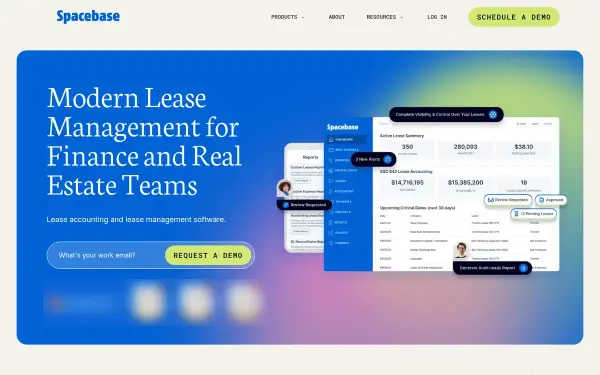
Best fit for teams that need ASC 842 accounting and lease administration on one record, provided they can absorb a quote-only price.
Spacebase leads because accounting and lease administration share one lease record. It covers ASC 842, IFRS 16 and GASB 87, calculates right-of-use assets and lease liabilities, and produces journal entries, modification handling and amortization schedules. Disclosure reporting and month-end close use the same data, so the audit trail is not rebuilt each quarter.
Administration is not a bolt-on: critical date alerts and document storage live in the same record, and AI abstraction cites each extracted field to the source page, helping when an auditor asks why a renewal option was reasonably certain. ERP connections use API, SFTP and report exports.
Pricing is quote only; the pricing page was empty on November 25, 2026, so the number arrives after a demo. Limits are budget and scale: a dozen leases may struggle to justify the cost, and nothing published means budget screening is impossible. One customer replaced more than 30 spreadsheet tabs and cut equipment lease audit time by roughly 80 percent, which fits multi-entity, audit-facing portfolios.
Your leases carry both an accounting obligation and an administration burden and you want one system of record for both.
You need a published price before you can book a demo, or you hold a dozen plain vanilla leases.
Entry II of X / Built for accountants
Our verdict
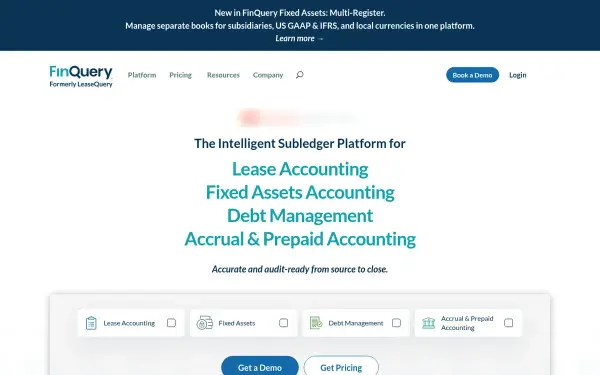
The safe mid-market pick: accountant-built workflows, a free 15-lease tier and four named ERP connectors, with paid tiers quoted after a demo.
LeaseQuery powered by FinQuery is the mid-market default here, carrying its new name after the rebrand with the same engine. It covers ASC 842, IFRS 16 and FRS 102, produces one-click journal entries, audit-ready amortization schedules and disclosure reports, and is built by people who ran lease accounting.
Named connectors cover NetSuite, Sage Intacct, JD Edwards and QuickBooks. A free LeaseGuru tier supports up to 15 leases, so the engine can be tested on real data before a call, unlike vendors that gate everything behind a demo.
Paid tiers bill as a flat subscription tiered by lease volume, not per lease, keeping cost predictable. The catch is quote-based tiers with no public numbers; the pricing page was empty on November 25, 2026. Implementation runs three months, including data load and first close. It fits growing and mid-market teams with tens to hundreds of leases. It fits less at the top end, where end-of-term workflows matter, and below 15 leases, where free tier does the job.
You run NetSuite, Sage Intacct, JD Edwards or QuickBooks and want accountant-grade outputs from a flat subscription.
You have fewer than 15 leases and the free tier already covers you, or you need equipment lifecycle features.
Entry III of X / Audit-trail calculations
Our verdict
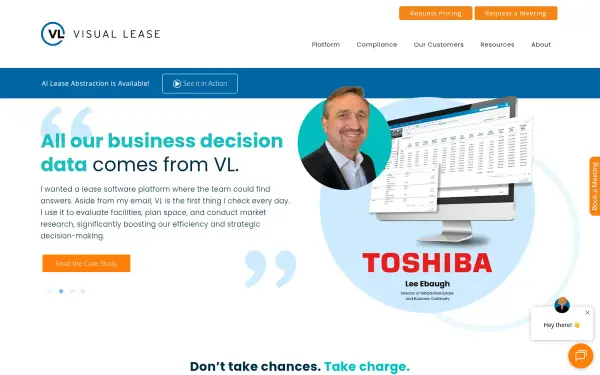
A compliance and administration stack for 50-plus lease portfolios, priced per lease per year with no public price list.
Visual Lease pairs a calculation engine with lease administration on one contract, aimed at mid-market and enterprise buyers after the first audit cycle. The ASC 842 and IFRS 16 engine keeps audit trails on calculations, automates disclosures and journal entries, and stores clauses that justify the treatment.
Administration covers critical dates, renewals and clause tracking, so the same system that produces the entry also tracks expiry. Integrations include NetSuite, QuickBooks Online, SAP Financials, JD Edwards and Sage. Implementation and training are in-house and reported as quick, which matters before a first close.
Pricing is per lease per year with no published price list, rewarding large stable portfolios and penalizing small ones. Sales are consultative, and the vendor targets 50 leases and up. The pricing page was empty on November 25, 2026. The enterprise design suits a controller with a large portfolio but creates friction for a two-person team. It fits 50 or more leases wanting compliance accounting and administration from one vendor.
You hold 50 or more leases and want compliance accounting plus renewals and clause tracking from one vendor.
Your lease count is small or shrinking, because per lease pricing works against you in both cases.
Entry IV of X / Flat annual pricing
Our verdict
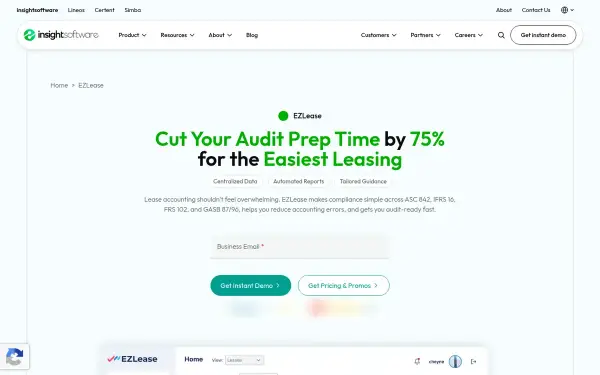
Flat annual pricing that resists per-lease creep suits 6 to 49 lease portfolios, though reporting and integrations stay basic.
EZLease competes on pricing structure. It sells flat annual pricing without a per-lease meter, covers ASC 842, IFRS 16, GASB 87 and GASB 96, and handles lessee and lessor accounting across real estate and equipment leases. Four standards and both sides on one flat fee is unusual.
The reported figure is $4,000 per year for 6 to 49 leases on a three-year subscription, covering both lessee and lessor accounting. The pricing page was empty on November 25, 2026, so treat that number as reported rather than verified. A free tier handles 1 to 5 leases. Onboarding is self-service with bulk import and templates.
Reporting is basic, integrations are limited and there is no API, so automated posting into an ERP will feel like a gap. Variable rent, CPI escalations and multi-currency support are thin, ruling out indexed leases or international entities. It fits mid-market buyers with 6 to 49 leases who want a known cost and can export a journal entry; it suits lessor-side accounting.
You hold 6 to 49 leases, need GASB 96 or lessor accounting, and want one predictable annual fee.
Your leases carry indexed escalations, span currencies, or need automated posting into a large ERP.
Entry V of X / Full lifecycle automation
Our verdict
Enterprise lifecycle automation for equipment-heavy fleets, with months-long implementations that rule out small portfolios entirely.
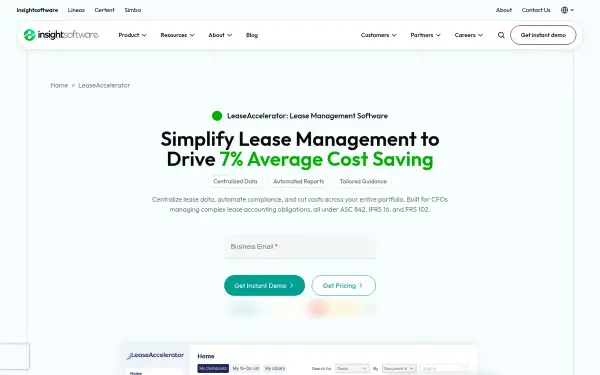
LeaseAccelerator covers the full lease lifecycle rather than accounting alone, from sourcing through monthly close and end-of-term management. For equipment-heavy industries with hundreds or thousands of leases, the same system tracks the asset, the payment schedule, the accounting entries and what happens when the term ends.
Accounting support covers ASC 842 and IFRS 16, with automated monthly close and native integrations into SAP and Oracle. Lease administration handles large equipment and property fleets. The product is part of insightsoftware, alongside EZLease.
Pricing is quoted per deal with no public price list, and the pricing page was empty on November 25, 2026, so a scoped quote after a demo is the reliable path. Implementation is measured in months. It fits enterprises with hundreds to thousands of real estate and equipment leases, where end-of-term decisions carry real money. It does not fit small portfolios: pricing, implementation and configuration assume scale. A small portfolio that only needs compliant journal entries will pay for lifecycle features it never uses.
You manage hundreds of equipment or property leases and end-of-term decisions belong in the same system as the accounting.
You need a first close inside a quarter or your portfolio sits under a hundred leases.
Entry VI of X / Native NetSuite SuiteApp
Our verdict
The natural pick for NetSuite shops, and a cheap standalone option at $888 per year for 10 leases with a free 3-lease plan.
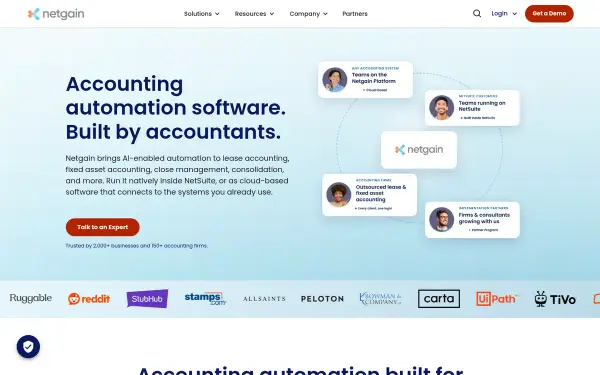
NetLease by Netgain runs on two tracks. The standalone is priced at $888 per year for 10 leases, with a free plan for 3 leases. The NetSuite SuiteApp edition runs inside NetSuite and posts journal entries straight to the general ledger with no external sync layer, and is custom-quoted.
Coverage spans ASC 842, IFRS 16, GASB 87 and GASB 96, with AI lease abstraction, CSV journal export and bulk imports. A QuickBooks API connection is listed. Flat annual pricing keeps the standalone number easy to budget.
The published $888 covers the standalone version only. NetSuite customers are steered to the SuiteApp quote, and the pricing page was empty on November 25, 2026, so that price is unverified. It fits NetSuite users first, since the SuiteApp avoids a sync layer at close. It also fits small portfolios wanting transparent pricing and a QuickBooks connection without a sales call. It fits less well as portfolios grow and administration requirements arrive. Confirm which edition you are quoted for.
You run NetSuite and want entries in the general ledger without a sync layer, or you hold under 10 leases and want a flat fee.
You need deep lease administration, or you want a published price on the NetSuite edition.
Entry VII of X / Guided ASC 842 workflow

Our verdict
Accountant-designed guided workflows for CPA firms and small entities, held back by quote-only per-lease pricing and thin integrations.
Crunchafi is the product formerly known as LeaseCrunch, renamed in June 2025 with the same tool and positioning widened toward CPA firms. The core is a guided ASC 842 workflow that walks a user through classification, measurement and disclosure rather than presenting an empty spreadsheet grid.
Deliverables are the selling point: audit-ready amortization schedules, journal entries and disclosure reports built from the same data. AI-assisted extraction pulls lease terms from documents, and multi-entity collaboration keeps several entities in one environment, which suits a CPA firm running one standard across a book of clients.
Pricing is the weak spot. No published price list, per-lease billing, and the pricing page was empty on November 25, 2026. No confirmed push integration into NetSuite or QuickBooks means confirming how deliverables reach the general ledger. It fits CPA firms, nonprofits, small businesses and government entities wanting guided compliance and clean deliverables without an implementation. It fits less for a mid-market company that needs automated ERP posting or a flat annual price.
You are a CPA firm or small entity that wants a guided ASC 842 path and clean deliverables for an auditor.
You need automated ERP posting or a flat published annual price.
Entry VIII of X / No feature gating

Our verdict
Full features on every tier and scale to 10,000 leases, at enterprise prices with roughly six-month implementations behind them.
LeaseCalcs sells enterprise lease accounting on capacity tiers without gating features by tier. Silver, Gold, Platinum and Diamond all ship ASC 842 and IFRS accounting, lease administration, financial analysis and reporting for audit backup, SAP and Oracle integration and multi-currency support. Only lease capacity varies.
Silver starts at $24,999 per year for up to 100 leases, roughly $250 per lease annually, with higher tiers scaling upward. That figure was reported from a vendor-provided listing, and the pricing page was empty on November 25, 2026, so confirm it directly. The top reaches 10,000 plus leases.
Reporting is built for audit backup. No feature gating means a 100-lease buyer gets the same multi-currency and analysis tools as a 10,000-lease buyer. Enterprise pricing is far beyond small budgets, and implementation runs six months, so first-year cost includes internal time. It fits enterprise organizations managing 100 to 10,000 plus leases that need multi-currency, SAP or Oracle integration and one platform. Below 100 leases, flat-priced tools do the same job.
You hold 100 or more leases across entities and currencies and want one platform without feature gating.
You need a first close this quarter or your portfolio fits inside a flat-priced plan.
Entry IX of X / Unlimited users
Our verdict
Transparent $199 per month for up to 20 agreements with unlimited users, auditor accounts and a genuine self-serve trial.
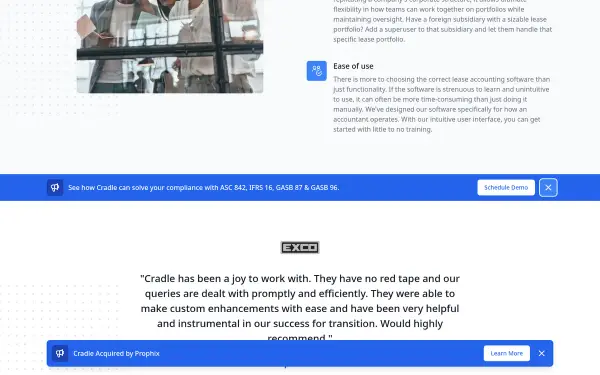
Cradle is the easiest product here to evaluate without a sales call. It runs a 30-day free trial with no credit card required, publishes monthly pricing, and includes ASC 842, IFRS 16 and FRS 102 on every tier.
The Regular plan costs $199 per month for up to 20 agreements, with unlimited users, auditor accounts and secure document storage included. Unlimited users matters because lease data lives across teams and per-seat pricing forces access choices. Auditor accounts let an external reviewer see schedules without a shared login.
Lease entry is self-serve with guidance built in. Integrations with QuickBooks, NetSuite and SAP run through exports, so posting is deliberate rather than automatic. Small plan caps at 10 agreements, and FX accounting and bulk tools are reserved for Enterprise. It fits small businesses and CPA firms with 5 to 20 leases that want monthly costs and full compliance features. It fits less well above 20 agreements, where Enterprise pricing removes that transparency. Confirm cap before loading data.
You hold 5 to 20 agreements and want published monthly pricing with unlimited users and a real trial.
You manage multiple currencies or expect to pass 20 agreements within a year.
Entry X of X / Real estate lifecycle

Our verdict
Real estate lifecycle strength with independently reviewed accounting logic, sold as one module of a larger property suite.
Tango Lease treats lease accounting as an extension of real estate administration. Abstraction, renewals, clause review and critical date tracking sit in the same system as ASC 842 and IFRS 16 calculations, so a store closure or renewal flows into accounting entries rather than a separate email chain.
AI-powered abstraction speeds migration of legacy documents. Tango says its accounting logic has been reviewed by an independent accounting firm and that the product carries SOC 1 Type 2 controls. Real estate portfolio financials round out the administration side.
Tango Lease is one module of a broader real estate suite, so standalone purchase needs confirming, and pricing comes only through a consultative, demo-based sales process with no published rates. The pricing page was empty on November 25, 2026. Equipment-only portfolios may find the real estate depth excessive. It fits retail and multi-brand chains with large real estate portfolios that want abstraction, administration and compliance accounting under one roof. It fits less well for a finance-only buyer and for equipment-heavy portfolios.
You run a large retail or multi-brand property portfolio and want accounting inside the same system as renewals and clauses.
You are a finance-only team with equipment leases and no real estate administration to manage.
VIBackground
Lease accounting software calculates, records and reports the financial effect of a lease contract. Under ASC 842, IFRS 16 and GASB 87, most leases now sit on the balance sheet as a right-of-use asset and a lease liability, and both numbers change over the life of the contract. Software does the present value math, builds the amortization schedule, generates the journal entries and produces the disclosure tables that go with them.
A spreadsheet can do the same math for a handful of simple leases. What it struggles with is the maintenance. Every modification, renewal, early termination or change in an index rate triggers a remeasurement, and each remeasurement needs its own schedule, entry and audit trail. Add critical dates, document storage and multi-entity consolidation, and the workbook becomes a project rather than a tool.
The core functions look like this:
The category splits into two families that overlap. Accounting-first tools concentrate on calculations, entries and disclosures, and often integrate tightly with an ERP. Administration-first tools start from the lease document and the dates, then add compliance reporting. A handful of products here do both on one lease record, and that is usually the cleanest setup for a portfolio large enough to have a real estate or equipment team.
You probably need software once a portfolio is large enough that spreadsheets create rework, once an auditor asks for a cited audit trail, or once more than one entity reports under the same standard. Below that, a free tier is usually enough to keep the schedules clean and the disclosures defensible without a procurement cycle.
This comparison sits in the finance register. Further along the shore: Maze alternatives and ticket sales platform.
VIIPricing
Most lease accounting vendors do not publish a price, so budget from the billing model instead. Six models appear in this list: per lease per year, flat annual pricing by lease band, named capacity tiers, flat monthly fees with an agreement cap, low-cost standalone pricing for small counts, and module based pricing. The model matters more than the headline number, because it decides what happens when the portfolio changes.
Per lease per year scales linearly with the portfolio, which is fine when counts are stable and painful during acquisitions or divestitures. Flat annual pricing by band protects a buyer inside the band and creates a cliff at the boundary. Capacity tiers do the same at enterprise scale. Low-cost standalone products keep a small portfolio cheap and hand the vendor an upgrade conversation as counts grow.
| Model | How it bills | Typical fit | Example from this list |
|---|---|---|---|
| Per lease per year | Annual fee multiplied by lease count | Large, stable portfolios | Visual Lease (no public price list) |
| Flat annual by band | One fee for a lease range | 6 to 49 lease portfolios | EZLease at a reported $4,000 per year for 6 to 49 leases |
| Capacity tiers | Named tier with a lease ceiling | 100 plus leases | LeaseCalcs Silver at a reported $24,999 per year for up to 100 leases |
| Flat monthly | Fixed fee up to an agreement cap | Small teams and CPA firms | Cradle Regular at $199 per month for up to 20 agreements |
| Low-cost standalone | Small annual fee for a small count | NetSuite and QuickBooks shops | NetLease standalone at $888 per year for 10 leases |
| Module based | Separate modules for accounting and administration | Teams buying one function first | Spacebase, where modules can be adopted separately |
Two costs sit outside the subscription. Implementation time is real money, ranging from self-service onboarding to roughly six months at LeaseCalcs and a months-long project at LeaseAccelerator. And lease abstraction, the work of pulling terms out of legacy documents, is either automated by the tool or paid for in consultant hours. Ask about both before comparing annual fees, and ask what the price becomes at the next band.
Each entry card shows the starting price as it appeared on the vendor's own pricing page on November 25, 2026. When a vendor shows no figure we could confirm, or only a promotional rate, the card says "See website" or gives the regular price instead of a guess. Usage, overage and add-on rates in the text change more often than plan prices, so confirm them on the vendor page before you set a budget. To test the numbers against your own volume, try the free Lease Liability Calculator. The Event Break-Even Calculator is a second way to check the same decision.
VIIIDecision
Count your leases and entities. Pull the actual number, including equipment and embedded leases, then list reporting entities and currencies. Every pricing model in this category keys off that count, and an undercount produces a surprise invoice after implementation.
Settle the standard question first. Confirm whether ASC 842, IFRS 16, GASB 87 or GASB 96 applies, and whether you need lessor accounting as well as lessee. EZLease covers both sides; check lessor support if you need it.
Name the general ledger and the posting method. Decide whether entries must post automatically or whether a journal export is acceptable. NetSuite shops should look at NetLease's SuiteApp, and QuickBooks users at the API connections listed in this guide.
Test with a free tier or trial. Load real leases within each free tier or trial: LeaseQuery's LeaseGuru tier, NetLease's free plan, EZLease's free tier or Cradle's 30-day trial, before taking a demo. A tool that fails on your messiest lease in a trial will fail later too.
Ask what happens at the boundary. Get the next lease band or tier price in writing, and ask what a divestiture does to a per-lease contract. Invoice behavior at the edges is where these contracts differ most.
Price the first close, not the subscription. Ask for the implementation timeline in weeks and confirm who abstracts the legacy documents. LeaseQuery runs around three months, LeaseCalcs around six, and self-service tools depend on how clean your files are.
IXPitfalls
XQuestions
Most vendors do not publish a number, so cost tracks lease count and modules. Disclosed figures in this list include $888 per year for a 10-lease standalone product (NetLease), $199 per month for up to 20 agreements (Cradle) and a reported $24,999 per year for up to 100 leases (LeaseCalcs Silver). For larger portfolios, expect a quote tied to volume plus implementation.
ASC 842 puts operating and finance leases on the balance sheet as a right-of-use asset and a lease liability, with amortization schedules, journal entries and disclosures behind them. Spreadsheets can produce the math for a dozen simple leases, but remeasurement, modifications, critical dates and audit trails turn into manual rework. A team should consider software once spreadsheets create rework, or sooner once an auditor asks for a cited trail.
Three do. LeaseQuery's LeaseGuru tier covers up to 15 leases at no cost, NetLease offers a free plan for 3 leases alongside a paid standalone edition at $888 per year for 10, and EZLease has a free tier for 1 to 5 leases. Cradle runs a 30-day free trial with no credit card, which suits a team that wants to test a full workflow first.
NetLease by Netgain is the native SuiteApp option: its SuiteApp edition posts journal entries straight to the NetSuite general ledger with no external sync layer, and a standalone edition exists for everyone else. LeaseQuery also integrates with NetSuite among its four named connectors (NetSuite, Sage Intacct, JD Edwards and QuickBooks). Cradle and Visual Lease connect through exports or integrations rather than running inside NetSuite.
Pick a tool that either posts to QuickBooks or exports a clean journal entry file. NetLease has a QuickBooks API connection, LeaseQuery lists QuickBooks among its integrations, Visual Lease integrates with QuickBooks Online, and Cradle exports to QuickBooks. For small lease counts, a CSV journal export plus a monthly import is workable, so confirm the direction of the connection before signing.
It varies widely. LeaseQuery implementations typically run around three months, LeaseCalcs averages around six months, and LeaseAccelerator's timeline is measured in months. Visual Lease's implementation is reported as quick with training included, Cradle and EZLease lean self-service, and EZLease offers template-based onboarding, and Crunchafi's guided onboarding is reported as fast. Add time for abstraction if documents are unstructured.
XIFurther along the shore
Vendors can ask for a correction or apply for a Featured listing. Paid or not, the entry is scored on the same rubric and its limits stay in print. Partner with Umberlake.
Free tools
Our free browser tools turn the prices on this page into a figure for your own volume. Nothing you type leaves your device.