
Square
FreeSquare Free, per location per month, processing 2.6% + 15 cents in person
Best for new and small shops wanting zero-cost software
- Free plan
- Yes, Square Free plan
- Rubric
- 8.9 of 10
Eight retail systems compared on monthly cost, card rates, inventory depth and contract terms, so a small shop can pick a register it can actually leave.

IThe short answer
Square is the best retail software for small business when you are starting from nothing, because its POS software is free and the card rates are published. Shopify POS suits shops already selling on Shopify and wanting one inventory count across web and store, and Lightspeed Retail fits apparel and specialty stores with deep variant and serial tracking. All prices below were checked on November 26, 2026 for this November 2026 comparison.
8 tools compared from vendor pages on November 25, 2026. 5 publish a starting price we could read; the rest say "See website".
IITop three berths
Register order is editorial fit for the buyer each entry describes. Prices are the starting figures read on November 25, 2026.
FreeSquare Free, per location per month, processing 2.6% + 15 cents in person
Best for new and small shops wanting zero-cost software

$89POS Pro, per location per month, POS Lite included with Shopify plans
Best for retailers already selling online with Shopify
$89Basic, per month, billed annually
Best for inventory-heavy apparel, specialty and multi-location retailers
How this page is paid for. All 8 tools here are unpaid editorial picks.
A paid listing's position can be part of what the vendor pays for. Every entry, paid or not, is scored on the same rubric and keeps its limits in print. Advertising disclosure.
IIIThe register
Starting prices as shown on each vendor's pricing page on November 25, 2026. "See website" means no figure we could confirm.
| No. | Tool | From | Free plan | Trial | Rubric | Actions |
|---|---|---|---|---|---|---|
| 01 | SquareNew and small shops wanting zero-cost software | FreeSquare Free, per location per month, processing 2.6% + 15 cents in personRead on vendor page | Yes | No; free plan available | 8.9 | |
| 02 | Shopify POSRetailers already selling online with Shopify | $89POS Pro, per location per month, POS Lite included with Shopify plansRead on vendor page | No | 3-day free trial, then $1 per month for up to 3 months | 7.3 | |
| 03 | Lightspeed RetailInventory-heavy apparel, specialty and multi-location retailers | $89Basic, per month, billed annuallyRead on vendor page | No | Free trial | 7.2 | |
| 04 |  CloverShops wanting purpose-built hardware with integrated software | See websiteNot shown publicly | No | 90-day free trial on Essentials or Services Growth plans | 6.1 | |
| 05 |  Epos NowBudget-conscious shops wanting one flat software fee | See websitecustom quoteQuote only | No | 30-day free trial | 5.7 | |
| 06 |  Heartland RetailMulti-store retailers focused on inventory and purchasing data | See websiteNot shown publicly | No | Demo only | 5.8 | |
| 07 |  KORONA POSShops that want to keep their own payment processor | $59Core, per terminal per monthRead on vendor page | No | Unlimited free trial, no credit card required | 7.5 | |
| 08 |  PayPal ZettleMicro-merchants, market sellers and new businesses | Freeno monthly fee, 1.75% per card transactionRead on vendor page | Yes | No; free plan available | 7.4 |
Pinned:
IVMethod
Every tool here was scored on five criteria. Cost clarity asks whether a shop can find its monthly fee and card rate without a sales call. Checkout and payments covers card-present handling, returns and online acceptance. Inventory depth runs from simple item counts to matrix SKUs, serials and purchase orders. Contract flexibility weighs term length and exit fees, which matter more in retail than in most categories. Setup and support covers hardware, trial length and how much onboarding is self-serve. Cost clarity carries the most weight at 25%, because a hidden rate compounds every month.
Prices come from vendor pricing pages checked on November 26, 2026. Where a vendor only quotes on request, the entry says so and no figure is guessed. Processing rates are reproduced as published, with no currency conversion, and annual versus monthly billing is stated wherever the vendor publishes both.
The Featured position in this format is a paid placement. It is scored with the same rubric, held to the same length and given the same kind of cons as every other entry. Order in the list is editorial: fit for the buyer each entry describes, plus the disclosed Featured position. Where a vendor publishes plan fees in one place and quotes in another, the entry states which figure was available at the time of checking.
The full routine, from price reads to corrections, is on the methodology page. Paid listings follow the advertising disclosure.
Can a shop find its monthly fee and card rate without a sales call or a quote?
How well the system handles card-present sales, returns and online payment acceptance.
The range from simple item counts to matrix SKUs, serials, purchase orders and multi-location stock.
Term length, exit fees and whether a small shop can leave without penalty.
Hardware options, trial length and how much onboarding happens without a sales conversation.
Entry I of VIII / Free software, public rates
Our verdict
The cheapest way for a new shop to start selling in person and online, provided card volume stays modest.
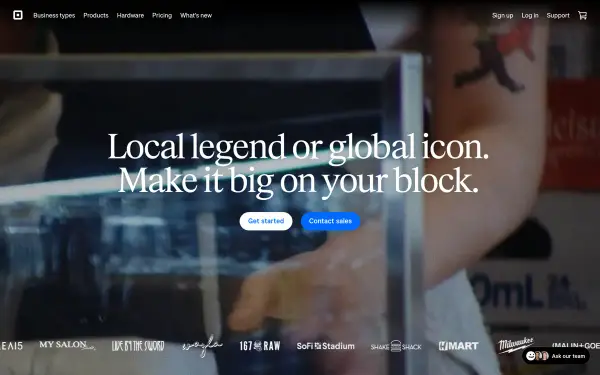
Square puts a working register in a new shop for $0 in monthly software fees. The Free plan covers in-person sales, online payment acceptance and item and inventory basics, with month-to-month use and no exit fee. Hardware is the unusual part: a reader, a terminal or a full register can be bought on the website without a sales call, so a market stall and a storefront can run on the same account.
In October 2025 Square consolidated eighteen subscriptions into Free, Plus at $49 per month and Premium at $149 per month. Processing is where the money goes. Free in-person is 2.6% + 15 cents, Plus is 2.5% + 15 cents and Premium is 2.4% + 15 cents, and custom Pro pricing opens at roughly $250,000 in annual processing. A shop with steady card volume should total a typical month at each tier before deciding the free plan is the cheapest.
The free tier's online rate is high for delivery-led businesses, and the retail features that matter later, such as deeper inventory and reporting, sit behind a subscription. For a new shop the trade is simple: no software cost and public rates now, against flat pricing that stops rewarding volume later.
You are opening your first shop and want a working register today with no monthly software fee.
Your card volume is high enough that a lower negotiated rate would beat the published tiers.
Entry II of VIII / One inventory count

Our verdict
The right register if your store already sells on Shopify and you want one inventory count across both.
Shopify POS is the register for a retailer who already sells on Shopify and wants the store to behave like another channel of the same business. Products, inventory, customers and sales sync between web and counter, and cross-channel returns mean an item bought online can come back in store. POS Lite comes with every Shopify plan for basic checkout. POS Pro at $89 per location per month, or $79 on annual billing, adds staff permissions, smart inventory tools, purchase orders, demand forecasting and store analytics. Pickup in store and local delivery are part of the setup.
The math is worth doing early. A single location on Basic plus POS Pro runs about $128 per month before processing, and Basic in-person processing is 2.6% + 10 cents. There is a 3-day free trial, then $1 per month for up to 3 months.
The limits show up when the counter is the main business rather than the website. POS depth is thinner than retail-first systems, offline card payments are limited, and many advanced functions depend on paid apps. The per-location charge on POS Pro compounds as you add stores. It fits omni-channel retailers; less so a standalone shop with no website.
Your website already runs on Shopify and you want the counter and the storefront to share one stock count.
You have no website and want the deepest possible register for the money.
Entry III of VIII / Variant and serial depth
Our verdict
Built for shops where the stock is the business: sizes, colors, serials, purchase orders and several locations.
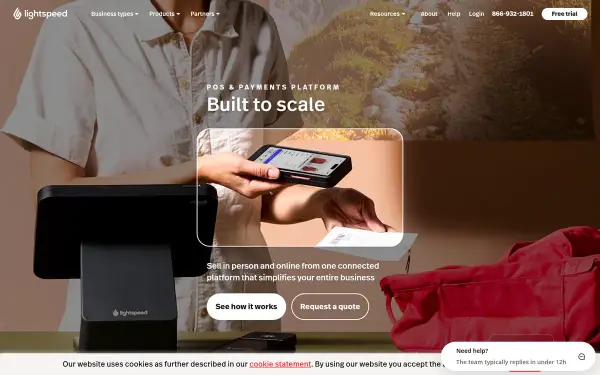
Lightspeed Retail is built for stores where the stock is complicated. Matrix SKUs handle size and color runs as one product, serial tracking covers goods that need individual records, and purchase orders, vendor catalogs, low-stock alerts and automated reordering carry the buying side. Multi-location stock tracking and the NuORDER wholesale catalog integration with product import suit shops that also sell wholesale. An ecommerce store is included on every plan, and integrated card-present payments run at 2.6% + 10 cents across brands including Amex.
Pricing starts at $89 per month for Basic on annual billing, or $109 month to month. Core is $149 per month annually and Plus is $289 annually.
Three things to weigh. The advertised card rate depends on an annual commitment. Round-the-clock phone support is limited to the top tier. Using an outside processor rather than Lightspeed Payments adds monthly charges, which erodes the reason to choose it in the first place.
It fits apparel, specialty and multi-location retailers whose inventory is the hard part of the job. A single counter selling simple goods will pay for depth it never uses.
You sell goods with sizes, colors or serial numbers and need purchasing and multi-location stock in one place.
You sell a short, simple item list and would never open the purchase order screens.
Entry IV of VIII / Purpose-built terminals
Our verdict
Polished hardware with software that grows by app, best for a shop that wants a real terminal, not a tablet.
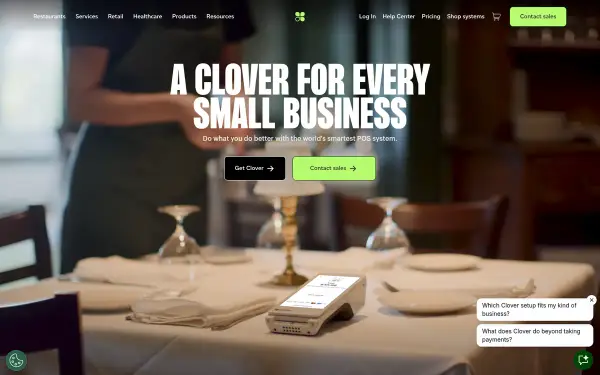
Clover sells hardware first and software second, which is the right order for a shop that wants a purpose-built terminal instead of a tablet in a case. The lineup runs from the Compact and Mini to the handheld Flex and the Station Duo countertop setup, all running Clover's retail register software with integrated payments. Published card-present rates start at 2.3% + 10 cents, competitive with the flat rates elsewhere in this list, and there is a 90-day free trial on the Essentials or Services Growth plans.
Pricing for the software sits on the vendor site and, in practice, often comes through a reseller or a bank, so the figures depend on who quotes you. Hardware can be bought outright (Station Duo at $1,899, Flex at $749) or financed over 36 months with termination fees. Optional extras arrive through the App Market, typically about $10 to $99 per app per month, which is how loyalty, scheduling and advanced inventory get added.
The catch is the stack. Hardware, software and apps combine into a rising total, entry plans are sparse, and functions other systems include are sold separately. Promotional hardware deals tie you to 36 months. Reseller and bank quotes vary, so get processing terms in writing. It fits shops that want a durable terminal and will pay for the pieces.
You want a durable countertop or handheld terminal and are happy to add functions as paid apps.
You need a published software price up front or want everything included in one plan.
Entry V of VIII / Flat fee, own hardware
Our verdict
A flat-fee system that runs on hardware you may already own, but the contract term deserves a careful read.
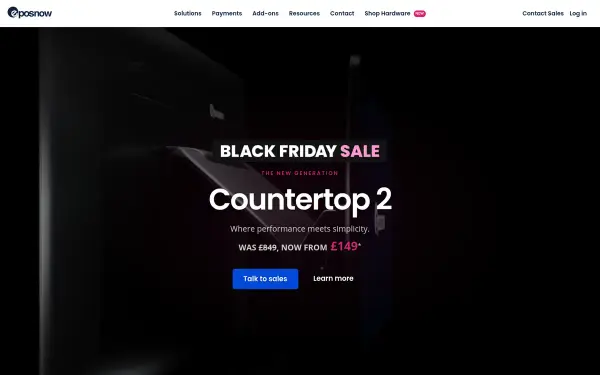
Epos Now charges one flat software subscription and no per-transaction software fee, which makes the monthly bill easy to forecast. The software runs on iPad, Android, PC or Epos Now's own terminals, so a shop can bring hardware it already owns rather than starting over. Payments go through Epos Now Payments at 2.6% + 10 cents, and integrations run past 100, with links to QuickBooks and Xero for accounting and Mailchimp for marketing.
Pricing is a custom quote on the vendor's site rather than a published number, so the monthly figure comes from a sales conversation. There is a 30-day free trial, which is the right way to test the workflow before signing anything.
The term is the part to read twice. Epos Now commonly sells 1- to 5-year terms, so the exit terms matter as much as the monthly fee. The choice of payment processors is narrow, and round-the-clock support costs extra on the base plan.
It fits budget-conscious shops that want a flat fee, are comfortable with a multi-year commitment and do not need a wide processor choice. A business that expects to change its mind within a year should look at month-to-month options first.
You want one predictable software fee and already own tablets or PCs you can put behind the counter.
You need the freedom to leave within a year or want to keep a processor it does not support.
Entry VI of VIII / Multi-store purchasing
Our verdict
Serious multi-store inventory and purchasing at a per-station price, tied to a three-year commitment.
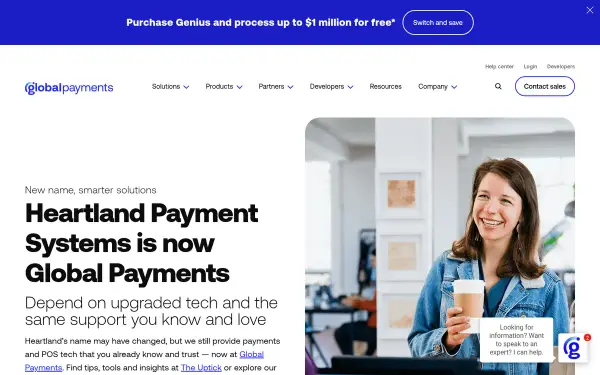
Heartland Retail, formerly Springboard, is aimed at retailers running more than one store who care about purchasing and inventory data. Multi-location inventory, integrated ecommerce, sales orders, purchasing and receiving, customer management and reporting all sit in the product, and most of those functions are on the entry Plus plan. Professional adds advanced inventory, promotions and automated reordering. Interchange-plus processing can undercut flat card rates once volume is high enough to justify the paperwork.
Pricing is not self-serve. There is no trial, only a demo, onboarding goes through sales, and both the per-station plan fee and the processing markup arrive by quote, so the real cost only appears in writing. Ask for the processing side in the same document as the software fee.
The commitment is three years, with a $295 early termination fee per location. That is a long time in retail, and it makes the demo stage more important than usual: test the purchasing and receiving workflow with your own vendor list before you sign.
It fits a multi-store retailer with steady purchasing volume, staff who will use the reporting, and a card mix high enough for interchange-plus to pay off. A single small shop should not take on the term for inventory tools it could rent monthly elsewhere.
You run several stores, buy in volume and want purchasing and inventory reporting in one system.
You have one location or cannot commit for three years.
Entry VII of VIII / Bring your own processor
Our verdict
Keep your own processor and pay per register, with month-to-month terms and no setup fee.
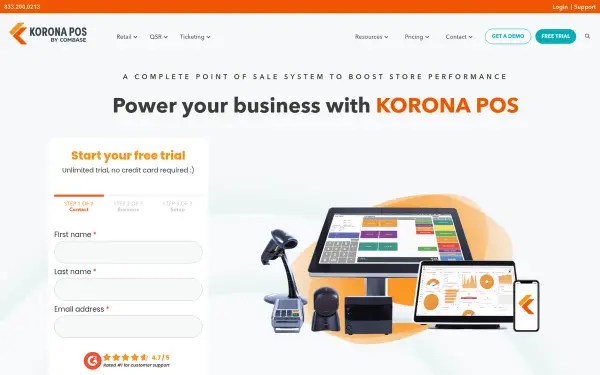
KORONA POS is the pick for a retailer who already has a payment processor and wants to keep it. The software is processing-agnostic and takes no percentage of sales, so the only payment cost is whatever your processor charges. Plans are per terminal: Core at $59 per month, Retail at $79 and Plus at $99, all month-to-month with no setup fees and unlimited users, which matters for shops with several staff sharing a register.
Each register needs its own subscription, so a three-lane shop pays three times, and the optional modules for food service, ticketing, franchising and integrations push the total up quickly. The integration ecosystem is smaller than what Square, Shopify or Clover offer. The Retail plan carries the advanced inventory tools; Core is thinner on stock control.
There is an unlimited free trial with no credit card required, which is unusual in this category and makes it easy to test the software on your own counter before committing a dollar.
It fits a shop with a good processor deal, a modest number of registers and a preference for month-to-month terms over bundled payments. It fits less well if you want one vendor to handle cards, hardware and software on a single invoice.
You already have a processor you like and want software that stays out of the payments business.
You want one invoice for cards, hardware and software or run several registers on a tight budget.
Entry VIII of VIII / Zero monthly fee
Our verdict
The lowest-commitment way for a market seller to take cards, with a short feature list by design.
Zettle is the starter option: no monthly fee, no contract and no setup cost, just a per-transaction rate on card payments. The first card reader is $29, contactless payments can be taken on a phone with Tap to Pay, funds settle quickly and the account connects to PayPal's online selling tools. For a market stall, a pop-up or a new business testing whether retail is viable, that is a low-risk way to start taking cards.
The feature list is short by design. There are no loyalty or marketing tools and few integrations, which limits what the register can do once you want repeat customers tracked. There is no offline mode, so a dropped connection stops the queue. There are also no volume discounts or interchange-plus pricing as the business grows, which means the rate you start on is the rate you keep.
It fits micro-merchants and sellers handling modest card volume who want the smallest possible commitment. It stops fitting once you need stock control across locations, a loyalty program or a rate that improves with volume. At that point the paid tiers from Square, Shopify POS or KORONA cost more per month but change what the software can do. Treat Zettle as a first register, not a destination.
You sell at markets or pop-ups and want to take cards next week with almost no commitment.
You need offline selling, stock across locations or a loyalty program.
VBackground
Retail software for a small business is the system that rings up a sale, takes the card, keeps the stock count and reports what sold. In most small shops those jobs now sit in one subscription: point of sale software on a tablet or terminal, a payment processor attached to it, inventory records that update as items scan, and a back office for purchase orders and customer history.
The category splits by where the money comes from. Some vendors give software away at $0 and earn on card processing, with Square and PayPal Zettle the clearest examples. Others charge a monthly fee per store or per register and let you keep your own processor, as KORONA POS does at $59 per terminal. A third group bundles hardware, software and payments into a financed package, which is Clover's approach.
Four jobs matter most:
A shop selling twenty items a week needs the first job and very little else. An apparel store with sizes, colors and three locations needs all four and should expect to pay for them. Knowing which of those jobs you actually have keeps the monthly bill honest.
This comparison sits in the software register. Further along the shore: baby tracking app and kennel software.
VIPricing
A small retail system bills in one of five ways, and the model matters more than the headline number, because it decides how costs move as you grow.
| Model | How it bills | Typical fit | Example from this list |
|---|---|---|---|
| Free software, paid processing | $0 monthly, a rate on each card transaction | new shops testing retail | Square Free at $0 per location per month |
| Per-location subscription | flat fee for each store every month | shops with a website and one or more stores | Shopify POS Pro at $89 per location per month |
| Per-terminal subscription | fee for each register | shops keeping their own processor | KORONA POS Core at $59 per terminal per month |
| Quoted contract | custom quote, often on a multi-year term | larger or multi-site retailers | Epos Now, quoted through sales on 1 to 5 year terms |
| Hardware bundle | equipment bought outright or financed | shops wanting a purpose-built terminal | Clover Station Duo at $1,899 or Flex at $749 |
Processing is the second bill and often the larger one. Square charges 2.6% + 15 cents in person on the Free plan, Lightspeed Retail and Epos Now Payments both sit at 2.6% + 10 cents, and Clover publishes card-present rates starting at 2.3% + 10 cents. KORONA POS takes no percentage at all, which is why its per-terminal fee looks high next to free tiers. Zettle has no monthly fee, just a rate per card transaction.
Annual billing lowers some fees. Lightspeed Retail Basic is $89 per month billed annually against $109 month to month, and Shopify POS Pro drops from $89 to $79 per location with annual billing. Read the term alongside the discount, because a cheaper annual rate on a three-year contract is a different commitment.
Each entry card shows the starting price as it appeared on the vendor's own pricing page on November 25, 2026. When a vendor shows no figure we could confirm, or only a promotional rate, the card says "See website" or gives the regular price instead of a guess. Usage, overage and add-on rates in the text change more often than plan prices, so confirm them on the vendor page before you set a budget. To test the numbers against your own volume, try the free User Research Budget Planner. The Event Break-Even Calculator is a second way to check the same decision.
VIIDecision
VIIIPitfalls
IXQuestions
Square is the usual answer for a new shop, because the Free plan costs $0 per location per month, card rates are published and hardware can be bought without a sales call. If you already sell on Shopify, start with POS Lite, which is included with every Shopify plan, and upgrade to POS Pro at $89 per location only when you need the deeper tools.
Monthly software runs from $0 to about $89 per location or terminal. Square Free is $0, KORONA POS Core is $59 per terminal, Shopify POS Pro is $89 per location and Lightspeed Retail Basic is $89 per month billed annually. Processing is charged on top, and Clover and Heartland Retail quote by sales conversation instead of publishing a starting price.
Yes, with KORONA POS. It is processing-agnostic, takes no percentage of sales and bills per terminal from $59 per month on month-to-month terms. Most other systems in this list want the payments business as part of the deal, and Epos Now in particular offers a narrow choice of processors, so confirm compatibility before you commit to a term.
Heartland Retail runs three-year terms with a $295 early termination fee per location, Epos Now commonly sells 1- to 5-year terms, and Clover promotional hardware bundles run 36 months with termination fees. Square, KORONA POS and PayPal Zettle are the month-to-month options, and Shopify POS is charged per location without a long tie-in.
One reader and a phone or tablet is enough to open. PayPal Zettle sells its first card reader for $29 and can take contactless payments on a phone with Tap to Pay. Square sells readers, terminals and registers without a sales call. Clover hardware is the larger outlay, with the Flex at $749 and the Station Duo at $1,899.
For a standalone shop with no website, Square is usually cheaper, since the software is free and there is no per-location add-on. Shopify POS earns its fee when you already sell online: POS Pro at $89 per location per month keeps one inventory count across web and store, and a single location on Basic plus POS Pro runs about $128 per month before processing.
XFurther along the shore
Vendors can ask for a correction or apply for a Featured listing. Paid or not, the entry is scored on the same rubric and its limits stay in print. Partner with Umberlake.
Free tools
Our free browser tools turn the prices on this page into a figure for your own volume. Nothing you type leaves your device.