SkySlope
See website
Best for brokerage compliance and audit-ready files
- Free plan
- No
- Rubric
- 7.2 of 10
Eight transaction platforms compared on how they bill, how deep their broker compliance runs, and whether agents will actually use them.

IThe short answer
The best real estate transaction management software in November 2026 depends on which side of the file you sit on. SkySlope leads for brokerage compliance and audit-ready files, dotloop suits agents and teams that work document-first, and Lone Wolf Transact is the practical pick when your MLS or association already bundles forms and signing. We compared eight tools on compliance depth, agent usability, forms coverage, integrations and total cost of ownership, using vendor pricing pages checked on November 26, 2026.
8 tools compared from vendor pages on November 25, 2026. 3 publish a starting price we could read; the rest say "See website".
IITop three berths
Register order is editorial fit for the buyer each entry describes. Prices are the starting figures read on November 25, 2026.
See website
Best for brokerage compliance and audit-ready files
See website
Best for agents and teams working document-first
See website
Best for forms delivered through MLS or association membership
How this page is paid for. All 8 tools here are unpaid editorial picks.
A paid listing's position can be part of what the vendor pays for. Every entry, paid or not, is scored on the same rubric and keeps its limits in print. Advertising disclosure.
IIIThe register
Starting prices as shown on each vendor's pricing page on November 25, 2026. "See website" means no figure we could confirm.
| No. | Tool | From | Free plan | Trial | Rubric | Actions |
|---|---|---|---|---|---|---|
| 01 | SkySlopeBrokerage compliance and audit-ready files | See websiteNot shown publicly | No | See website | 7.2 | |
| 02 | dotloopAgents and teams working document-first | See websiteNot shown publicly | Yes | See website | 7.3 | |
| 03 | Lone Wolf TransactForms delivered through MLS or association membership | See websiteNot shown publicly | No | See website | 7.0 | |
| 04 |  BoldTrail Back OfficeCommission calculations and brokerage operations | See websiteNot shown publicly | No | See website | 5.6 | |
| 05 | Paperless PipelineSmall brokerages that want to pay per deal | $69Up to 5 new transactions per month, unlimited users, month to monthRead on vendor page | No | 14 days free, no credit card | 6.8 | |
| 06 |  Open To CloseTransaction coordinator teams running many files | $99Grow, per month, includes 1 user, each additional user $69 per user per monthRead on vendor page | No | Free 30 day trial | 5.8 | |
| 07 | Form SimplicityFlorida Realtors members needing state forms | See websiteNot shown publicly | Yes | Not applicable, member benefit | 6.9 | |
| 08 |  DocuSignEnforceable signing across multiple systems | $11Personal, per month, annual commitment billed monthlyUpdated on vendor page | No | See website | 7.2 |
Pinned:
IVMethod
Every tool on this list was scored against the same five criteria: compliance depth (28%), agent usability (22%), forms and signing (20%), integrations (15%) and cost fit (15%). Compliance depth asks how completely broker review, checklists and audit trails cover a file. Agent usability asks whether an agent can start and track a deal without a training day. Forms and signing covers maintained libraries and native e-signature. Integrations covers MLS data, CRM, accounting and third-party connections. Cost fit asks how predictably the price scales with agents, deals or volume.
Pricing came from vendor pricing pages checked on November 26, 2026. Where a page could not be fetched or the vendor does not publish rates, the entry says so, and the buying advice leans on the pricing model or a vendor statement. We do not convert currencies or estimate quotes. Figures change, so re-verify anything you plan to budget before you sign.
Each position reflects fit for the buyer described in that entry, not a weighted total. A Featured badge marks a paid placement, and a Featured tool would be scored on the same rubric, with the same honest cons, as every other entry.
Where a tool has a real gap, such as dotloop's lighter compliance layer or Open To Close having no forms library, the review says so.
The full routine, from price reads to corrections, is on the methodology page. Paid listings follow the advertising disclosure.
How thoroughly broker review, checklists and audit trails cover the file.
Whether an agent can originate and track a deal without training days.
Breadth of maintained forms libraries and native electronic signature.
Connections to MLS data, CRM, accounting and third-party systems.
How predictably pricing scales with agents, deals or transaction volume.
Entry I of VIII / Broker audit workflow

Our verdict
The compliance-first choice for brokerages that need audit-ready files at volume, priced and administered at brokerage level.
SkySlope is built for the broker who has to sign off on every file. Each transaction type gets its own document checklist, and the Quick Audit flow puts files into a review queue where a broker or compliance manager approves them or sends them back. The AI assistance layer flags missing signatures, wrong dates and blank fields before a human opens the file, which is a common source of audit exposure. SkySlope Forms, DigiSign and Books extend the same stack into paperwork, electronic signature and commission accounting.
The trade-off is control. Agents work inside a structure the brokerage defines, so the experience is prescriptive rather than collaborative, and checklist configuration is a real administrative project rather than a checkbox during setup. Forms, DigiSign and Books are separate suite components, so the number you are quoted depends on which ones you take.
Pricing is not published in a form we could verify. The vendor states Suite pricing begins at $340 a month with no long-term contract, and brokerage-level pricing of that shape puts the product out of reach for individual agents. We checked pricing pages on November 26, 2026; re-verify the current figure on the vendor site before you budget.
It fits brokerages with hundreds of files and a compliance owner who runs the process. A very small team will pay for audit machinery it never uses.
You are a broker signing off on hundreds of files and need audit trails that survive scrutiny.
You are a solo agent or a small team that needs a shared workspace more than a review queue.
Entry II of VIII / Agent deal workspace

Our verdict
The most natural workspace for agents who live in the file, though broker compliance needs a second system behind it.
dotloop organises work around the loop: one workspace per transaction holding the documents, the participants, the tasks and the signature requests. Agents see what is outstanding in real time, can text clients from inside the file, and can share an offer link rather than emailing attachments back and forth. Paid plans carry unlimited e-signatures, and more than 75 integrations plus MLS and association data feeds pull details into paperwork instead of retyping them.
The free tier covers individuals up to 10 transactions, which makes it the lowest-risk way to try a document-first workflow. Beyond that, pricing is per agent, so a larger team multiplies whatever the seat rate is. Ask about setup and training fees and get them confirmed in writing before you sign.
Compliance is the gap. There is no broker audit layer comparable to a dedicated compliance platform, which is why brokerages often run dotloop for origination and review files somewhere else. Dotloop is owned by Zillow Group. Pricing pages could not be fetched on November 26, 2026; confirm the current per-user rate and any onboarding fee on the vendor site.
Pick it when agents control the file. Skip it if the broker has to enforce a checklist before closing.
Your agents want one shared workspace per deal with signatures and client updates built in.
The broker needs to gate files behind an enforced review workflow before closing.
Entry III of VIII / MLS-bundled forms

Our verdict
Worth using precisely because it is usually already paid for, as long as your MLS or association is the one providing it.
Lone Wolf Transact is the transaction layer most agents never shop for, because it arrives as a membership benefit. Where an MLS or association licenses it, members get centrally maintained state and local forms libraries, contract prefill from MLS data, electronic signing inherited from Authentisign, and file storage and tracking. Nothing to buy, and little to configure beyond what the association has already set up.
That is also the limit. Functionality and configuration vary by what each MLS bundles, so two agents in neighboring markets can be using very different versions. The interface and experience are inconsistent across regions, and access disappears if the association drops the arrangement. The product sits inside the wider Lone Wolf brokerage suite, which matters if your brokerage already licenses that suite and less if it does not.
There is no published pricing and no detailed product comparison without a sales process. For members whose MLS bundles it, cost is effectively zero, so treat it as a benefit you are already paying for rather than a purchase decision. Any paid upgrade path has to be quoted by the vendor.
The fit is narrow but real: agents and small offices in markets where the association provides it. If your market does not bundle it, or you need broker audit workflow, look elsewhere. Availability was checked on November 26, 2026 and should be re-checked after that date.
Your MLS or association already provides it and you need forms, prefill and signing at no extra cost.
Your market does not bundle it or you need a broker-facing audit workflow.
Entry IV of VIII / Commission automation

Our verdict
Buy it for commission math, not document workflow: splits, caps and statements come out right without a spreadsheet.
BoldTrail Back Office solves the arithmetic problem. Commission splits, caps, fees and team shares are calculated from the transaction record instead of a spreadsheet, commission disbursement and agent statements generate from the same data, and reporting is built around closing records rather than manual entry. Agent billing and back-office accounting sit in the same system, so month-end reconciliation stops being a separate project.
The product is built on Brokermint, which specialised in commission management before the BoldTrail rebrand, and the lineage shows. This is office software. Transaction file features are oriented toward the brokerage's records rather than the agent's daily workspace, so do not expect it to replace a deal-centric tool on the agent side.
For a team with simple splits and no caps, the automation adds little beyond a tidier statement. For a growing brokerage with tiered splits, team shares, desk fees and multiple offices, removing closing-day spreadsheet reconciliation is the whole argument.
There is no self-serve purchase path and no public price list. Pricing is quote-based through a brokerage sales process, so budget a procurement cycle. We checked pricing pages on November 26, 2026; packaging requires a quote and should be re-verified after that date.
Commission splits, caps and disbursements have outgrown your spreadsheet and someone is reconciling them every month.
Your splits are simple and your real bottleneck is documents and broker review.
Entry V of VIII / Per-deal billing
Our verdict
Predictable per-deal pricing with unlimited seats makes this the sensible first platform for a small brokerage.
Paperless Pipeline does the unglamorous core well: a compliance checklist per transaction, document storage and broker review, deadline and task tracking, and a file structure clean enough that someone can follow it months later. Unlimited user seats on the account matter for brokerages with a long tail of part-time agents who would otherwise each need a licence.
Billing is the differentiator. The entry plan is $69 a month for up to 5 new transactions per month, month to month, with a 14 day free trial that does not ask for a credit card. Cost therefore tracks production rather than headcount, which suits a small brokerage whose agent count runs well ahead of its deal count. The catch is the ceiling: a high-volume month can push the account into a higher tier, so model your peak months rather than your average.
Automation is lighter than the larger brokerage platforms. There is no AI field checking, and agent collaboration is plainer than the deal-workspace competitors. Migration from shared drives and email is straightforward, which is a common starting point for small offices.
Choose it if you run a modest number of transactions a month and want predictable, volume-based cost. Very large brokerages rarely shortlist it. The $69 entry figure was confirmed on the vendor site on November 26, 2026; re-verify tier allowances after that date.
You run a small brokerage with uneven monthly volume and a lot of agents who only close occasionally.
Your monthly deal count swings hard enough that tier jumps would blow the budget.
Entry VI of VIII / Coordinator orchestration

Our verdict
A specialist tool for transaction coordinators that coordinates the brokerage's existing forms and signing rather than replacing them.
Open To Close is built for the person who runs files for a living. Transaction coordinators get standardized intake applied to every file, reusable checklist logic across agents and brokerages, deadline tracking and extraction, and client-facing update templates, so quality does not depend on which agent originated the deal. Multi-agent, multi-brokerage file management is the point rather than a bonus feature.
It coordinates rather than replaces. There is no forms library and no native e-signature, so the coordinator orchestrates the brokerage's existing forms and signing tools. Broker compliance review still sits in the broker's own system, which is fine if the brokerage already has one and awkward if it does not.
Pricing is a base account plus per-user fees, not a flat rate. The Grow plan is $99 per month and includes 1 user, with each additional user at $69 per user per month. A larger coordination team is a different number than the headline, and the same applies as you add assistants during busy season.
The vendor is smaller and newer than the established brokerage platforms, which is worth weighing for a business that depends on the tool daily. A free 30 day trial lowers that risk. It fits transaction coordinator businesses serving several brokerages. It does not fit a brokerage looking for one system to run compliance end to end. Figures were confirmed on November 26, 2026.
You run files for several agents or brokerages and need one intake process applied to all of them.
You need a single system covering forms, signing and broker approval in one place.
Entry VII of VIII / State forms library
Our verdict
A free, well-maintained Florida forms library for members, with workflow depth that stops well short of a brokerage platform.
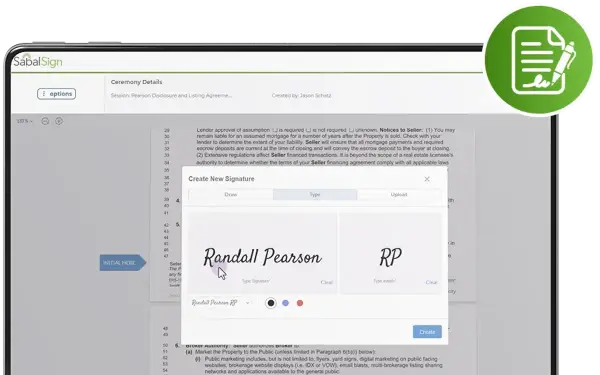
Form Simplicity is a membership benefit, not a purchase. Florida Realtors members get the official state contracts and forms library, electronic signatures, transaction file storage, and member support and training at no additional cost, with the association maintaining legal form updates as state law changes. The forms stay current because the body that owns the forms is the body running the software.
The design follows from that. The interface is built around forms compliance rather than workflow, and broker-level transaction management is thinner than what paid platforms offer. Agents who only need the right contract, filled in and signed, are well served. A brokerage trying to run audit review across hundreds of files will not be.
This edition is limited to Florida. Comparable state associations run equivalent programs elsewhere, so agents in other states should check what their own association provides before shopping commercially. Access ends if membership or state coverage changes, which is a durability risk when you build a workflow on top of it.
There is no commercial price to compare, and pricing was not fetchable on November 26, 2026 because there is no public pricing sheet for the member benefit. Membership terms should be re-checked after that date.
You are a Florida Realtors member who needs current state contracts, signatures and file storage at no extra cost.
You operate outside Florida or need broker-level audit review across a large file count.
Entry VIII of VIII / Enforceable signatures
Our verdict
The signature layer many real estate workflows already use, best bought as a component rather than a management system.
DocuSign is the signature layer. It provides legally recognized electronic signatures, identity verification and certificate-based authentication, audit trails with timestamped document history, real estate specific templates and packages, and envelope management and licence administration. It embeds inside many other real estate workflows, which is why a brokerage's transaction platform often sits on top of it rather than replacing it.
Acceptance is the practical argument. Lenders, title companies and courts recognize it, and the audit documentation is strong enough to defend a signature years later. That matters more in real estate than in most industries, where one disputed date can hold up a closing.
The limits are scope and administration. DocuSign is a signing platform with some transaction features, not a file manager: checklists, broker review and deal workflow live in other tools. Envelope and seat limits need active licence management, and someone has to own that.
Pricing starts at $11 per month for Personal, with an annual commitment billed monthly, which is a floor rather than a realistic brokerage number. Plan structures and real estate packaging change frequently, so confirm the current plan, envelope allowance and per-seat terms in a quote. We checked on November 26, 2026; verify after that date.
You need signatures that lenders and title companies accept without argument, inside another workflow.
You expect one purchase to cover checklists, broker review and deal tracking as well as signing.
VBackground
It replaces the shared drive, the email thread and the spreadsheet that currently hold a deal together. Transaction management software is the system of record for a file from contract to closing: the documents, the checklist, the deadlines, the signatures and, in broker-side tools, the approval that says the file is complete.
That covers more ground than most buyers expect. A full platform typically holds document checklists tied to transaction type, document storage with version history, deadline and task tracking, electronic signature, broker review and audit trails, and often commission or back-office records. It is not a CRM, though the two connect. It is not a forms library, though many platforms include one. And it is not e-signature alone, which is a common confusion in this category.
Two different buyers shop under the same search terms. The agent-side buyer wants a deal workspace: one place per transaction where clients, documents and signature requests are visible at a glance. The broker-side buyer wants audit exposure reduced, which means checklists that agents cannot skip and a review queue that produces a defensible record.
A short list of what a mature platform holds:
If you cannot say which of those five is your actual bottleneck, you are not ready to compare vendors yet.
This comparison sits in the software register. Further along the shore: baby tracking app and kennel software.
VIPricing
The pricing model matters more than the headline rate, because it decides whether your cost grows with success or stays flat. There are five models in this category, and two brokerages of identical size can land on very different bills depending on which one they pick.
| Model | How it bills | Typical fit | Example from this list |
|---|---|---|---|
| Per transaction | Monthly base plus tiers measured in new deals | Small brokerages with uneven volume | Paperless Pipeline at $69 for up to 5 new transactions per month with unlimited users |
| Per user | Base account plus a fee for each additional seat | Coordinator teams and multi-office brokerages | Open To Close Grow at $99 per month including 1 user, additional users $69 each |
| Per brokerage suite | Quoted or tiered by brokerage size, with modules sold separately | Compliance-heavy brokerages | SkySlope, where the vendor states Suite pricing begins at $340 a month with no long-term contract |
| Membership included | Paid through MLS or association dues | Agents whose board or association licenses the tool | Lone Wolf Transact, and Form Simplicity for Florida Realtors members |
| Signature subscription | Flat monthly per seat, often on annual commitment | Teams that only need enforceable signing | DocuSign Personal at $11 per month with an annual commitment billed monthly |
Per-agent pricing is the easiest to quote and the hardest to control, because adding agents adds cost whether or not they close anything. Per-transaction pricing flips that, which is why it suits offices with a long tail of part-time agents. Suite pricing buys depth and charges for it at the brokerage level, with forms, e-signature and accounting as separate components. Bundled tools are effectively free at the point of use, but you do not control the roadmap.
Price the whole stack before you decide. A cheap base plus three add-ons is not cheap, and a free bundle that does half the job still leaves the other half to buy. Figures are from vendor pricing pages and vendor statements; re-verify before you budget.
Each entry card shows the starting price as it appeared on the vendor's own pricing page on November 25, 2026. When a vendor shows no figure we could confirm, or only a promotional rate, the card says "See website" or gives the regular price instead of a guess. Usage, overage and add-on rates in the text change more often than plan prices, so confirm them on the vendor page before you set a budget. To test the numbers against your own volume, try the free User Research Budget Planner. The Event Break-Even Calculator is a second way to check the same decision.
VIIDecision
VIIIPitfalls
IXQuestions
Per agent charges each seat, so cost rises with headcount. Per brokerage pricing is quoted against size and volume. Per transaction billing is metered on new deals, which is why Paperless Pipeline starts at $69 for up to 5 new transactions per month with unlimited users. Membership-included tools such as Lone Wolf Transact are paid through MLS or association dues and cost nothing extra at the point of use.
Agent collaboration belongs to dotloop, where each transaction is a shared workspace with tasks, documents and signature tracking visible to everyone involved. Broker compliance belongs to SkySlope, where Quick Audit queues files for approval and AI assistance flags missing signatures, wrong dates and blank fields. Many brokerages run both, with agents originating in one and the broker reviewing in the other.
Sometimes. A brokerage platform gives the broker a system of record, but it rarely standardizes intake across several agents and offices the way Open To Close does for transaction coordinators. If your team spends hours chasing the same missing items on every file, a coordination layer earns its $99 base plus $69 per additional user. If files already arrive clean, it does not.
Yes, in the sense that matters when buying software. Electronic signatures are legally recognized, and platforms such as DocuSign add identity verification, certificate-based authentication and timestamped audit trails that hold up with lenders, title companies and courts. Enforceability still depends on your jurisdiction and the specific documents, so confirm requirements with your own counsel rather than relying on a vendor page.
Ask for setup and training fees in writing before you sign, because they appear after the demo and not in the headline price. Ask about contract length, notice periods, per-user and per-envelope limits, and what happens when you leave, including how archived files are exported. A monthly arrangement such as Paperless Pipeline's is easier to exit than an annual commitment billed monthly.
XFurther along the shore
Vendors can ask for a correction or apply for a Featured listing. Paid or not, the entry is scored on the same rubric and its limits stay in print. Partner with Umberlake.
Free tools
Our free browser tools turn the prices on this page into a figure for your own volume. Nothing you type leaves your device.