
Wise
See websiteUsage based, sending fee from 0.52 percent, no subscription
Best for bigger USD to NGN bank transfers at the mid-market rate
- Free plan
- Free account
- Rubric
- 8.4 of 10
Eight apps ranked by what actually lands in the recipient's Nigerian account, from same-day wallet payouts to cash at an agent counter.

IThe short answer
The best money transfer app to Nigeria for most larger bank sends is Wise, which passes the mid-market rate through with no markup. For same-day delivery and a discounted first transfer, Remitly fits; for small, frequent sends under $500, Sendwave's zero fee routes usually win. Prices and quotes below were checked on 26 November 2026, and every figure is usage based rather than a subscription.
8 tools compared from vendor pages on November 25, 2026. 0 publish a starting price we could read; the rest say "See website".
IITop three berths
Register order is editorial fit for the buyer each entry describes. Prices are the starting figures read on November 25, 2026.
See websiteUsage based, sending fee from 0.52 percent, no subscription
Best for bigger USD to NGN bank transfers at the mid-market rate

See websiteEconomy transfer fee, 3 to 5 day delivery, Express costs $3.99 same day
Best for same-day delivery and a discounted first transfer
See websiteFee range of $1.99 to $4.99 plus a 0.8 to 1.5 percent rate margin
Best for mobile money and airtime top-ups to Nigerian recipients
How this page is paid for. All 8 tools here are unpaid editorial picks.
A paid listing's position can be part of what the vendor pays for. Every entry, paid or not, is scored on the same rubric and keeps its limits in print. Advertising disclosure.
IIIThe register
Starting prices as shown on each vendor's pricing page on November 25, 2026. "See website" means no figure we could confirm.
| No. | Tool | From | Free plan | Trial | Rubric | Actions |
|---|---|---|---|---|---|---|
| 01 | WiseBigger USD to NGN bank transfers at the mid-market rate | See websiteUsage based, sending fee from 0.52 percent, no subscriptionNot shown publicly | Yes | No | 8.4 | |
| 02 | RemitlySame-day delivery and a discounted first transfer | See websiteEconomy transfer fee, 3 to 5 day delivery, Express costs $3.99 same dayNot shown publicly | No | No | 7.2 | |
| 03 | WorldRemitMobile money and airtime top-ups to Nigerian recipients | See websiteFee range of $1.99 to $4.99 plus a 0.8 to 1.5 percent rate marginNot shown publicly | No | No | 6.9 | |
| 04 | SendwaveSmall, frequent sends under $500 | See websiteZero fee on many routes including first transfers, later transfers $1.99 to $3.99Not shown publicly | No | No | 6.8 | |
| 05 |  Western UnionRecipients who need physical cash with no bank account | See websiteFee on a $1,000 transfer, plus a 1.5 to 3.5 percent rate marginNot shown publicly | No | No | 5.9 | |
| 06 | MoneyGramCash pickup at a slightly tighter margin than Western Union | See websiteFee plus a 1.5 to 3 percent rate margin, total cost of $9 to $21 on a $300 sendNot shown publicly | No | No | 5.5 | |
| 07 |  Ria Money TransferLowest fee among the cash pickup networks | See websiteFees from $0 on new user promotional rates up to $6.40 standard, plus a 1.5 to 3 percent marginNot shown publicly | No | No | 6.1 | |
| 08 |  Xe Money TransferRate checking rather than actually sending to Nigeria | See websiteNo transfer fee, but a wide exchange rate margin is built inNot shown publicly | No | No | 3.6 |
Pinned:
IVMethod
We ranked these eight apps on what a sender actually pays and what a recipient actually receives, not on marketing pages. Every app was scored against the same five criteria: total cost (30 percent), delivery speed (20 percent), payout options (20 percent), rate transparency (20 percent) and fit for large transfers (10 percent). Total cost carries the most weight because the fee is only half the story. The exchange rate margin carries the rest, and it is the part most apps leave out of the headline.
Prices and quotes were checked on November 26, 2026, and where a price varies we point you to the vendor site. Where a page shows usage based pricing rather than a monthly starting price, the entry says so rather than inventing a number. Currency amounts are kept in the form the vendor publishes, and nothing was converted.
The order is editorial. It reflects fit for the buyer each entry describes, plus placement. A Featured listing is a paid placement and is scored with this same rubric, so it can carry the same cons as any other row. A tool can score well on one criterion and poorly on another, which is why the pros, cons and scores sit together.
Two entries are here for specific jobs rather than as all round winners: the cash networks for recipients without a bank account, and Xe as a caution about wide margins.
The full routine, from price reads to corrections, is on the methodology page. Paid listings follow the advertising disclosure.
The fee plus the rate margin, since the visible fee rarely tells the whole story.
How long the recipient waits, from minutes on mobile money to a business day on bank payout.
Whether the app pays into a Nigerian bank account, a mobile wallet, an agent for cash or a phone top-up.
How clearly the app shows the exchange rate and the naira amount before you confirm.
How well limits, checks and pricing hold up on sends above $500.
Entry I of VIII / No rate markup
Our verdict
The fairest rate on the list and the lowest total cost on bank transfers above $500.
Wise is the benchmark for a USD to NGN bank transfer because it passes the mid-market rate through with no markup and shows the fee and the recipient amount before you confirm. Delivery to a Nigerian bank account typically takes a few hours up to one business day, and a live quote calculator lets you check the naira a recipient would get before you commit any money.
Pricing is usage based: the sending fee starts from 0.52 percent, with no subscription and a free account to hold. The catch is that the fee shifts with the funding method, card versus bank, so two quotes for the same send can look quite different. Costs on a $1,000 transfer ranged from about $5.50 to $12.18 in fees depending on how it was funded, which is why the quote screen is the number that counts rather than any headline percentage.
Where Wise wins is total cost on larger sends. There is no zero fee route, so a small $100 send can lose to Sendwave or to a promotional rate, and cash pickup is not a core strength here. Multi-currency holding and card products exist in some markets, which helps if you send regularly. For bank payout above roughly $500, the honest rate and the transparent fee usually beat everything else on this list.
You are sending a larger amount to a Nigerian bank account and want the best total cost.
You send $50 twice a month, where a zero fee route wins.
Entry II of VIII / Same-day Express delivery
Our verdict
Built for speed, with same-day Express delivery and a first transfer rate that can beat the market.
Remitly sells speed and a strong first impression. Express transfers land the same day for a $3.99 fee, Economy takes 3 to 5 days at a lower cost, and both pay into Nigerian bank accounts. Cash pickup and mobile money payout sit alongside bank deposit, so a recipient can be paid whichever way suits them, and the app tracks the transfer as it moves.
The pricing is where you need to read carefully. A rate margin of 0.5 to 2 percent is built into the exchange rate, so the cheap headline fee hides part of the cost. A $1,000 Economy transfer comes to about $15 all in against about $23.99 for Express, with slightly fewer naira delivered on the faster route. Express cost roughly $9 more than Economy on that send.
The new customer promotional rate is real value if you fit it: it can beat the market rate by up to 50 naira per dollar on a first transfer. That promo is a one time thing, and repeat senders pay the standard margin. Remitly fits people who need money in a Nigerian account today and are willing to pay a few dollars for it, or who are sending for the first time and want the promotional rate. It is a weaker fit for large, price sensitive bank transfers where the rate margin compounds.
The recipient needs the money today and you have not used the first transfer promo yet.
You send large amounts often and the rate margin would outweigh the speed.
Entry III of VIII / Wallet and airtime payout
Our verdict
The widest payout menu here, with wallet delivery, airtime top-ups and cash in one account.
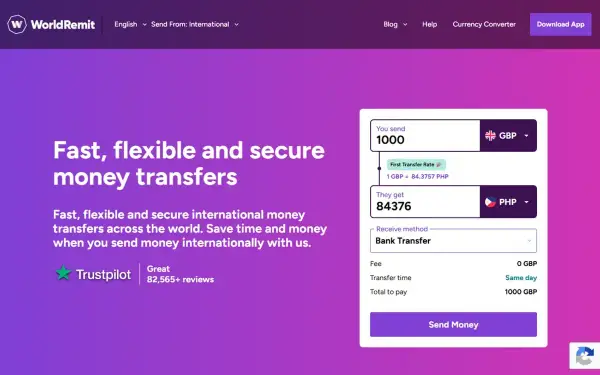
WorldRemit is built for breadth of payout. A recipient in Nigeria can be paid by mobile money into a wallet, by bank transfer, in cash at an agent, or with an airtime top-up on their phone, and all four options sit in one account. Settlement is fast, around an hour for mobile money and bank in many cases, and coverage runs across more than 130 countries.
The cost sits in the middle of this list. Fees run $1.99 to $4.99 and a rate margin of 0.8 to 1.5 percent is applied on top, so the visible fee is only part of the total. A $1,000 transfer comes to about $16.99 all in with roughly 1,548,000 naira delivered. That is more than Wise or Sendwave on the same send.
The airtime top-up is genuinely unusual among the apps here and useful if you want to help with a phone bill rather than send cash. Mobile money delivery is the stronger half of the product, which matters in a market where wallet use is common. WorldRemit fits senders who want one account covering wallets, cash and airtime instead of opening three services. It is not the cheapest route for a plain bank transfer, and the rate margin means a large send pays for that flexibility whether or not you use it.
You want wallet delivery, cash or an airtime top-up handled from one account.
You only ever send to a Nigerian bank account and want the lowest total cost.
Entry IV of VIII / Zero fee micro-sends

Our verdict
The cheapest way to move small amounts often, as long as you accept the built in rate spread.
Sendwave is designed around small, frequent sends. There is no transfer fee on many routes including the first one, later transfers cost $1.99 to $3.99 where the free tier stops, and payout lands in Nigerian bank accounts or mobile wallets in minutes. The app is mobile only and deliberately simple, built for micro-transfers of roughly $20 to $100 rather than five figure remittances. It is part of the Zepz group.
A zero fee does not mean zero cost. A rate spread of 0.5 to 1.5 percent still applies to a fee free send, so the recipient gets slightly fewer naira than a mid-market quote would give. A $1,000 transfer comes to about $13.99 all in, with roughly 1,560,000 naira received, which is competitive on that size but not automatically the best value.
The value shows up on a $100 send: $1.99 to $3.99 against a percentage fee is a small difference in dollars and a real one in percentage terms. Sendwave fits the diaspora sender who moves $50 or $100 every couple of weeks and wants the money there in minutes without thinking about it. It is a poor fit for a one off large transfer, and costs creep up once free routes stop applying.
You send $20 to $100 regularly and want it to land in minutes.
You are moving several thousand dollars in one transfer.
Entry V of VIII / Deepest cash network
Our verdict
The deepest cash network in Nigeria, and the most expensive way to send money on this list.
Western Union is the option when the recipient needs physical cash and has no bank account. Its agent network in Nigeria is the deepest of the apps here, with tens of thousands of locations, and a recipient can collect with photo ID and a reference number within minutes of the send. Bank deposit is available where supported, and mobile wallet payout exists in some markets.
You pay for that reach. The fee sits on top of a rate margin of 1.5 to 3.5 percent, and the margin is where the real cost hides. A $1,000 transfer carries a $30 fee with about 1,381,536 naira received. That is roughly double the total cost of the digital first apps on a comparable send. European online sending has a rate margin of 2 to 4 percent, so check the local site for current numbers.
The brand and the operating history matter if the recipient is nervous about an app or does not have a smartphone. Sending online or in app works fine, and photo ID collection is a familiar process for recipients in Lagos, Abuja and smaller towns. Western Union fits cash pickup for an unbanked relative, an urgent collection, or a recipient who does not trust a wallet. It is the wrong tool for a large bank transfer, where the margin is expensive for no added benefit.
The recipient needs cash and has no bank account or wallet.
You are sending to a Nigerian bank account, where the margin buys you nothing.
Entry VI of VIII / Cash in major cities

Our verdict
Cash pickup with a slightly tighter margin than Western Union, still priced well above digital apps.
MoneyGram competes with Western Union on cash pickup and comes out slightly ahead on margin. Agents are concentrated in Lagos, Abuja, Kano and Port Harcourt, bank deposit payout is available alongside cash, and you can look up rates online before committing. The margin on pickup is tighter than Western Union's in this pack, which matters on larger amounts.
Total cost is still high. A $300 send comes to $9 to $21 all in once the fee and the 1.5 to 3 percent margin are counted, well above what a digital app charges for the same amount. Pricing varies a lot by send country, so a quote from one corridor tells you little about another.
The fee structure is harder to read than Wise's single disclosed fee, because the margin is baked into the rate rather than shown as a line item. MoneyGram fits a sender whose recipient wants cash in a major city and who wants a marginally better deal than Western Union offers. It is a weak fit for regular bank transfers, where the margin and the fee both work against you, and a weak fit for anyone sending small amounts often.
The recipient wants cash in Lagos, Abuja, Kano or Port Harcourt.
You send to a bank account or send small amounts regularly.
Entry VII of VIII / Cheapest cash network
Our verdict
The cheapest of the cash pickup networks, with zero fee promos and a margin that still bites.
Ria is the cheapest of the agent network options here. Standard fees run up to $6.40, new user promotional rates can drop to $0, and payout is available as cash at an agent or as a bank deposit, with delivery in minutes up to one day. You can look up the rate and fee online before sending, which puts it ahead of services that only reveal the number late.
The margin remains. A rate spread of 1.5 to 3 percent applies on top of whatever fee you see, so a zero fee quote is not a mid-market quote. A zero fee quote on $1,000 delivers about 1,393,821 naira, which is close to the digital first apps and better than the other cash networks on the same size.
The trade off is coverage. Ria's agent network is smaller than Western Union's, and there are fewer pickup points in rural areas, so a recipient outside a major city should check proximity before you send. Ria fits someone who needs cash pickup or a bank deposit and wants to pay the least for it, especially a new user taking the promotional rate on a first transfer. It is a weaker fit if the recipient is far from an agent, or if you send often enough that the margin adds up.
You need cash pickup and want the lowest fee among the agent networks.
The recipient is far from an agent or you send often enough for the margin to add up.
Entry VIII of VIII / Rate checking tools
Our verdict
Useful rate tools attached to a wide exchange rate margin, so check the rate before you send.
Xe is included here as a caution rather than a recommendation for sending to Nigeria. There is no transfer fee, which makes the headline look cheap, and the currency tools, live converters, rate alerts and historical data are genuinely useful. It supports larger transfer amounts and the brand is well known for rate data. None of that fixes the exchange rate you actually get.
That rate is far below the mid-market. The rate shown for Xe was about 1,281 naira per dollar against roughly 1,394 to 1,402 from rivals, so the recipient received roughly 113,000 naira less than the best apps on a $1,000 send. The fee you saved is a small fraction of that gap. A free transfer fee paired with a wide margin costs more overall, because the cost never appears as a fee at all.
Use Xe for what it is good at: checking a live rate, setting an alert, or converting a figure before you shop around. Then send through an app that passes the rate through and charges a visible fee. Xe fits a reader who wants rate data or a large transfer where the recipient has already agreed to the rate, and it does not fit anyone comparing total cost on a normal remittance to Nigeria.
You want live rate data, alerts or historical rates before you choose a sender.
You are actually sending money to a Nigerian bank account.
VBackground
A money transfer app to Nigeria is a service that takes your dollars, pounds or euros, converts them at its own exchange rate, and pays a Nigerian recipient in naira by bank deposit, mobile wallet, cash at an agent or a phone top-up. You never hold naira yourself. The app handles the conversion and the local payout leg.
Two costs sit inside every quote. The first is the fee, which is visible and ranges from zero to $30 depending on the app and the amount. The second is the rate margin, the gap between the mid-market rate you see on a currency site and the rate the app actually applies. On a $1,000 send, a 2 percent margin costs $20, which is more than most of the fees on this list.
Payout routes behave differently:
Speed follows the route as much as the app. Express tiers cost more, and the cheapest quote is usually the slowest one. That is why two apps with the same headline fee can leave the recipient with very different amounts, and why the naira figure matters more than the fee line.
This comparison sits in the software register. Further along the shore: baby tracking app and kennel software.
VIPricing
Pricing in this category is usage based. You pay per transfer, there is no subscription, and the number that matters is the naira the recipient receives after both the fee and the rate margin are applied. A free account lets you hold balances or check quotes, but it does not remove the per send cost.
The models break down like this:
| Model | How it bills | Typical fit | Example from this list |
|---|---|---|---|
| Mid-market rate plus a visible fee | Percentage fee per send, no subscription | Larger bank transfers where the rate matters most | Wise, sending fee from 0.52 percent |
| Low fee plus a rate margin | Flat fee per transfer plus spread in the rate | Fast app sends with several payout types | Remitly, Express at $3.99 same day |
| Zero fee plus a rate spread | No transfer fee, margin built into the rate | Small repeat sends | Sendwave, free on many routes, later sends $1.99 to $3.99 |
| Agent network fee plus margin | Fee per transfer, wider margin on cash pickup | Recipients without a bank account | Western Union, 1.5 to 3.5 percent margin |
| Promotional or standard fee plus margin | Fee from $0 to $6.40 plus spread | Cash pickup at lower cost | Ria, fees from $0 up to $6.40 |
Read the table as a map of where the cost hides. A percentage fee on a large send is easy to see and easy to compare. A rate margin is neither, because the fee line can read zero while the rate quietly pays for the transfer.
Funding method also moves the number. Funding by card can cost more than funding from a bank account, so run the quote the way you will actually pay. Promotional rates are one time only, and the standard price applies from the second send onward.
Each entry card shows the starting price as it appeared on the vendor's own pricing page on November 25, 2026. When a vendor shows no figure we could confirm, or only a promotional rate, the card says "See website" or gives the regular price instead of a guess. Usage, overage and add-on rates in the text change more often than plan prices, so confirm them on the vendor page before you set a budget. To test the numbers against your own volume, try the free User Research Budget Planner. The Event Break-Even Calculator is a second way to check the same decision.
VIIDecision
VIIIPitfalls
IXQuestions
Above $500, Wise usually comes out cheapest because it passes the mid-market rate through with no markup, though the fee shifts with the funding method. Below $500, Sendwave's zero fee routes win on many sends, and a first transfer promotional rate from Remitly or Ria can beat both once. Always compare the naira received, not the fee line.
It depends on the app and the payout method. Remitly Express lands the same day and Economy takes 3 to 5 days. Sendwave pays in minutes. WorldRemit settles mobile money and bank in about an hour in many cases. Western Union cash is collectable within minutes. Wise bank delivery typically takes a few hours up to one business day.
No. A zero transfer fee usually hides a margin in the exchange rate. Sendwave charges no fee on many routes but applies a 0.5 to 1.5 percent rate spread, and Xe charges no fee at all while quoting a rate far below the mid-market. Compare the naira a recipient actually receives before you treat any send as free.
No. Western Union, MoneyGram and Ria all pay cash at agent locations with photo ID and a reference number. WorldRemit adds mobile wallet delivery and an airtime top-up, and Remitly and Sendwave pay into Nigerian mobile wallets as well as bank accounts. Cash is the most expensive route of the group.
Expect to upload photo ID for your first transfer, and sometimes again for larger amounts. You also need the recipient's full name as it appears on their bank or wallet record, their account or wallet number, and for cash pickup a reference number plus matching ID. A mismatch in the name can hold or return a payout.
Each app sets its own limits and verification steps, and the cap depends on your corridor, payout method and verification status. Because the caps are not published as one number, check the limit shown in the app before you start a large transfer, and expect identity and source of funds checks to add time to the send.
XFurther along the shore
Vendors can ask for a correction or apply for a Featured listing. Paid or not, the entry is scored on the same rubric and its limits stay in print. Partner with Umberlake.
Free tools
Our free browser tools turn the prices on this page into a figure for your own volume. Nothing you type leaves your device.