Nextech
See websiteCustom quoted contracts, licenses, support and modules priced separately
Best for established medical dermatology practices that want one vendor end to end
- Free plan
- No
- Rubric
- 7.5 of 10
Eight dermatology platforms compared on charting depth, revenue cycle strength and published pricing, with notes on which revenue mix each one actually fits in 2026.

IThe short answer
The best dermatology practice management software for most established medical practices is Nextech, which covers scheduling, charting and revenue cycle from one vendor, though pricing is quoted only. ModMed suits high-volume clinics that want faster notes, EZDERM suits lesion-heavy practices that want a single-specialty EHR, and Pabau fits hybrid insurance plus cash-pay clinics. All prices were checked on November 26, 2026, and every vendor here quotes rather than publishes a full total.
8 tools compared from vendor pages on November 25, 2026. 0 publish a starting price we could read; the rest say "See website".
IITop three berths
Register order is editorial fit for the buyer each entry describes. Prices are the starting figures read on November 25, 2026.
See websiteCustom quoted contracts, licenses, support and modules priced separately
Best for established medical dermatology practices that want one vendor end to end

See websitePer provider per month as a starting figure, exact licensing and support quoted
Best for high-volume medical dermatology clinics focused on charting speed
See websitePer provider per month
Best for lesion-heavy dermatology practices that want a single-specialty EHR
How this page is paid for. All 8 tools here are unpaid editorial picks.
A paid listing's position can be part of what the vendor pays for. Every entry, paid or not, is scored on the same rubric and keeps its limits in print. Advertising disclosure.
IIIThe register
Starting prices as shown on each vendor's pricing page on November 25, 2026. "See website" means no figure we could confirm.
| No. | Tool | From | Free plan | Trial | Rubric | Actions |
|---|---|---|---|---|---|---|
| 01 | NextechEstablished medical dermatology practices that want one vendor end to end | See websiteCustom quoted contracts, licenses, support and modules priced separatelyNot shown publicly | No | No | 7.5 | |
| 02 | ModMedHigh-volume medical dermatology clinics focused on charting speed | See websitePer provider per month as a starting figure, exact licensing and support quotedNot shown publicly | No | Demo only | 7.4 | |
| 03 | EZDERMLesion-heavy dermatology practices that want a single-specialty EHR | See websitePer provider per monthNot shown publicly | No | Demo only | 7.1 | |
| 04 |  PatientNowAesthetic, plastic surgery and medspa practices driven by repeat elective revenue | See websiteQuote based, with marketing and engagement modules adding to the totalNot shown publicly | No | No | 5.8 | |
| 05 |  PabauHybrid clinics combining insurance billing and cash-pay cosmetic work | See websitePriced by team size, monthly or annual plan, prices not shownNot shown publicly | No | Demo only | 6.7 | |
| 06 |  AdvancedMDPractices whose main pain is insurance claims and denial rework | See websitePer provider per month, lowest band of a published range reaching about $1,070Not shown publicly | No | No | 6.2 | |
| 07 |  DrChronoSmall or solo practices charting on iPads in the exam room | See websiteFoundation, Growth, Premium plans, prices not shownNot shown publicly | No | No | 5.7 | |
| 08 | athenahealthMulti-specialty groups wanting outsourced revenue cycle at scale | See websiteHistorically priced as a share of collections rather than a flat per-seat feeNot shown publicly | No | No | 5.5 |
Pinned:
IVMethod
Every tool here was scored against five criteria weighted for dermatology buyers: clinical depth (30 percent), revenue cycle strength (20 percent), pricing clarity (15 percent), revenue mix fit (20 percent) and implementation scale (15 percent). Clinical depth asks whether lesion, biopsy, Mohs and photo documentation are native or bolted on. Revenue cycle asks whether claims, denials and eligibility are handled inside the platform. Pricing clarity rewards vendors who publish something a buyer can budget against. Revenue mix fit measures how well the platform matches the kind of practice it is being sold to. Implementation scale looks at what it takes to go live and what happens when you grow.
Scores inform the write-up but they do not set the order. The order is editorial: fit for the buyer each entry describes, plus the Featured position where one applies. Any listing labeled Featured is a paid placement, and it is scored against the same five criteria with the same disclosed drawbacks.
Prices, plan structures, free plan status and trial availability were checked on November 26, 2026 against vendor pricing pages where one existed. Where no pricing page was available, we say so and mark the figure unverified rather than guess. Several vendors in this market quote everything, so the absence of a number is itself a finding worth weighing. Ask every vendor for a written pricing sheet before you compare totals, and confirm certification and compliance claims for your own use case.
The full routine, from price reads to corrections, is on the methodology page. Paid listings follow the advertising disclosure.
Whether lesion, biopsy, Mohs, injection and photo documentation are native to the product or adapted from a general template.
How much of claims scrubbing, denial work, eligibility and billing reporting happens inside the same platform.
Whether a buyer can find or obtain a figure they can budget against before sitting through a full sales cycle.
How well the platform matches insurance-driven medical work versus cash-pay cosmetic and medspa revenue.
What going live demands in time and staff, and whether the platform still fits as the practice adds providers and sites.
Entry I of VIII / One-vendor suite

Our verdict
The safest single-vendor bet for established medical dermatology, provided you can absorb a quoted contract and a real implementation project.
Nextech is the closest thing here to a single accountable vendor. Scheduling runs on drag-and-drop calendars, charting is built around dermatology rather than adapted from a general template, and billing and revenue cycle sit in the same system as the clinical record. The patient portal handles automated reminders, and the platform carries AAD DataDerm registry integration, which matters if quality reporting is already part of your year. The vendor holds DataDerm Gold Recognition from the American Academy of Dermatology and was named Best in KLAS for Ambulatory Specialty EHR in 2024 and 2025, credentials that were current as of 2025.
The trade-off is that you are buying a platform shared with ophthalmology, plastics and medspa, so dermatology-specific requests compete with a wider roadmap. Pricing is the bigger issue. There is no published pricing page and no verified figure, contracts are custom quoted, and licenses, support and individual modules are priced separately. License and support costs carry a premium against several competitors.
Implementation is a project with a timeline, not a same-week signup, which is fine for a group with a biller and an operations lead and heavy for a solo cosmetic practice. Ask for total contract value across three years, including interfaces and support escalation, and get reference calls from practices of similar size and specialty mix.
You run an established medical dermatology practice and want one vendor accountable for scheduling, charting and claims.
You are a solo cosmetic practice that needs a live price and a fast start.
Entry II of VIII / Charting speed
Our verdict
Built for speed in a busy medical dermatology clinic, with dermatology-native charting attached to a quote-led, premium-priced suite.
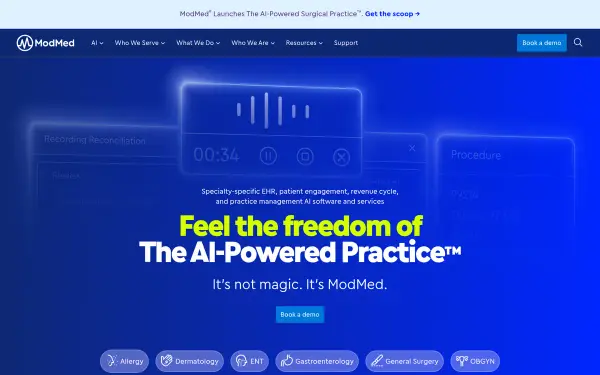
ModMed's pitch is documentation time, and the EMA EHR is the reason practices shortlist it. It adapts to each provider's phrasing over time, suggests ICD-10 codes from the chart and includes an anatomical atlas with drawing tools for lesion notes, plus built-in dermatology coding content. Clinical photos are stored with the patient record rather than in a separate folder, and ModMed Boost handles digital check-in and intake. Scheduling, front desk workflows, billing and analytics sit in the same suite.
The catch is that all of this arrives through a quote. The plan note describes per provider per month as a starting figure, with licensing and support quoted separately, so there is no verified number to budget from. Ask for a written quote instead. Reported full licensing is expensive.
Roadmap is shared with gastro, ortho, ophthalmology and other specialties, so a dermatology-only request competes for priority. It is also a weak fit for cash-pay aesthetics, where memberships, packages and marketing automation matter more than coding suggestions. The right evaluation is a timed demo: chart your three most common visit types and compare minutes per note against your current system. Judge it on that, not on the feature list.
Note time per visit is your bottleneck and you can commit to a quoted, project-based rollout.
Most of your revenue is cash-pay aesthetics rather than coded medical visits.
Entry III of VIII / 3D body map

Our verdict
The tightest fit for lesion and Mohs-heavy practices that want dermatology only and can accept a smaller vendor.
EZDERM is built for the part of dermatology that general EHRs handle badly: documenting lesions. The 3D body map records where a lesion, biopsy or Mohs case sits on the body and links that visual record to the patient chart, and mole mapping workflows support patients who are tracked over years. A built-in library of skin disorder specifications speeds up description, and the interface is designed around Apple hardware, including iPad use in the exam room.
The scope is deliberately narrow. That is the strength if your practice is lesion-heavy medical dermatology and the limitation if a group adds another specialty, because there is no shared platform to fall back on. The Apple-centric design also constrains practices running Windows desktops at the front desk and in billing.
Pricing is per provider per month, but no figure could be verified on a vendor page, so ask the vendor for a written quote rather than budgeting from a number quoted elsewhere. EZDERM is a smaller company than the market leaders and carries fewer third-party credentials, so diligence should lean on reference calls with similar practices and questions about support response times and long-term development staffing. It suits practices that want dermatology only and document a high volume of lesions every day.
Lesion, biopsy and Mohs documentation drives your day and you work on Apple hardware.
You need a multi-specialty platform or a Windows-first deployment across the front desk.
Entry IV of VIII / Aesthetic revenue engine
Our verdict
A strong aesthetic revenue engine that will feel thin the moment insurance claims and registry reporting enter the picture.
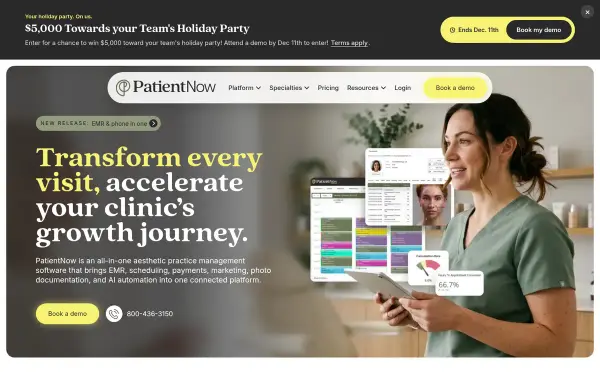
PatientNow is built around elective revenue, and that shapes everything in it. Practice management and EMR sit alongside lead tracking with automated follow-up, memberships and treatment packages, patient recall and engagement automation, and photo management with before and after workflows. Treatment documentation covers injectables and procedures, which is what an aesthetic chart actually needs.
If your schedule is mostly cosmetic, this is the shortest path from enquiry to booked treatment to rebooked package, because marketing, recall and the clinical record share one patient file. The before and after photo handling is the feature most aesthetic practices name first, and the vendor has an established presence in the niche.
The limits appear as soon as insurance enters the picture. Medical dermatology depth is thin, with no registry integration comparable to Nextech's DataDerm work and no complex charting for lesion-heavy visits, so it is a poor fit for insurance-driven practices. Pricing is quote based and modules add to the total, so the headline figure rarely reflects what you will pay. Marketing and engagement modules in particular need to be totalled deliberately rather than assumed. Map your revenue mix before shortlisting: a mostly cosmetic practice fits here, a mostly medical one does not.
Memberships, packages, recall and before and after photos drive your revenue.
Insurance claims make up most of your collections.
Entry V of VIII / One patient record
Our verdict
The best one-record answer for hybrid clinics doing insurance and cash-pay work, with specialist depth still catching up.
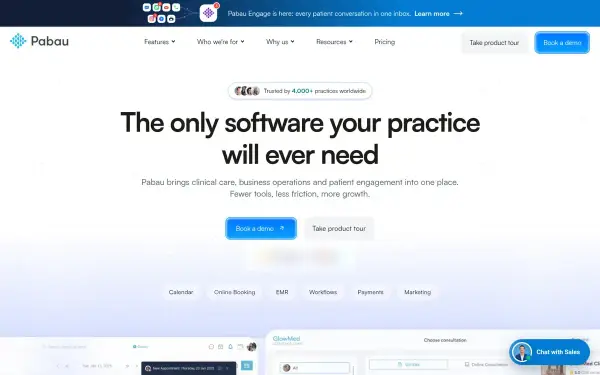
Pabau's argument is one patient record. Scheduling, clinical notes, payments and marketing sit in one system, and insurance billing and cash-pay cosmetic work are recorded against the same patient file, which removes the duplicate-record problem that hybrid clinics create when they run a medical EHR next to a salon-style booking tool. Injection plotting with anatomical marking and clinical photography attached to the record cover the aesthetic side, and client communication and marketing tools are included rather than bolted on.
Pricing is priced by team size on a monthly or annual plan, and the tiers are published as a structure even though the prices themselves are not shown, which is more transparency than most of this list offers. Cost rises with users and features above the entry tier, and the entry tier covers a single user only, so a five-provider clinic should model the upper tiers before assuming it is the cheap option.
The gaps are specialty depth and time in market. Mohs workflows, registry recognition and the kind of dermatology content ModMed and Nextech carry trail the specialists, and ONC certification status for US medical billing needs verification for your specific use case. The vendor originated in the UK clinic market and has been expanding in the US, so US compliance specifics belong on the demo agenda. Best suited to clinic groups and medspas moving off paper or generic tools.
You need one record covering insurance visits and cosmetic treatments in the same clinic.
You need Mohs workflows and dermatology registry reporting on day one.
Entry VI of VIII / Denial management
Our verdict
Pick it for claims and denial cleanup rather than charting, and check whether the specialty gap bothers your clinicians.
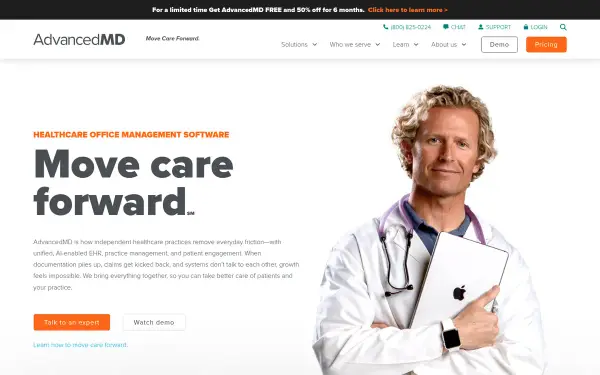
AdvancedMD sells on the revenue cycle, and that is where it earns a place on this list. Claims scrubbing catches problems before submission, denial management workflows give a billing team a queue to work rather than a pile of rejections, and centralised billing supports multi-provider groups with a dedicated office. Scheduling, practice management, an EHR with dermatology templates, a patient portal and telehealth fill out the platform.
Specialty depth is the weakness. There is no lesion mapping or body map comparable to EZDERM, and the dermatology content is template level, so clinicians who document a high volume of skin findings will feel the gap daily. The interface and workflow draw mixed feedback when set against specialty rivals.
Pricing is quoted per provider per month, and the published range for medical specialties reaches about $1,070 at the top band. Confirm the band that applies to you with the vendor. The premium bands buy billing capability rather than dermatology features, which is good value only if claims complexity is your actual problem. Practices with simple billing and complex clinical needs are better served elsewhere.
Denials and claims rework cost you more than charting friction does.
Your billing is simple and your clinical documentation is complex.
Entry VII of VIII / iPad charting

Our verdict
An affordable iPad-first EHR for small practices, though dermatology depth stops at templates and photo charting.
DrChrono is a mobile-first EHR, and the iPad charting that made its name still holds up in a specialty that documents visually. Providers carry the tablet room to room, photo charting attaches images to the note, and customisable forms and templates let a practice shape common visits without a developer. Scheduling, practice management, telehealth, lab integrations and revenue cycle services round out the platform.
Dermatology depth is template level. There is no body map, no mole mapping and no registry integration comparable to what Nextech and EZDERM carry, so practices documenting complex lesion histories will spend time on workarounds. The small-practice orientation also shows at multi-site scale, where reporting and centralised billing expectations outgrow the design.
The mobile-first approach divides opinion. Clinicians tend to like it and desktop-heavy billing teams less so, so involve the billing office in the demo rather than only the providers. The vendor is part of the EverCommerce portfolio, which makes roadmap direction a fair due diligence question, particularly on dermatology-specific development. Pricing is presented as Foundation, Growth and Premium plans with no starting figure shown, so the plan structure tells you less than a number would. Practices planning several locations should model outgrowing the platform, and the migration cost, before choosing on entry price.
You are a solo or two-provider practice charting on iPads and want a workable entry price.
You plan several sites and an in-house billing department.
Entry VIII of VIII / Claims network

Our verdict
Outsourced revenue cycle at scale, priced as a share of collections, with dermatology handled as one department among several.
athenahealth pairs athenaOne with outsourced revenue cycle services, and the case for it rests on the size of the claims network behind the payer rules engine, which learns from claims across many practices and can reduce avoidable denials. Scheduling and patient engagement tools are enterprise grade, and the model suits groups that would rather not staff a large billing department.
Pricing is the thing to understand before anything else. The vendor has historically billed a share of collections rather than a flat per-seat fee, so no simple published figure exists. That arrangement is attractive when collections are weak and expensive when they are strong, because the practice pays a percentage of money it would have collected anyway. Model the total against a per-provider quote from a competitor at three levels of collection performance.
Dermatology depth is generalist. There is no lesion mapping, body mapping or registry recognition here, so skin practices that document heavily will look at Nextech, ModMed or EZDERM instead. Platform change and contract weight are heavy for small practices.
It fits multi-specialty groups where dermatology is one department, contracts are negotiated at group level and a shared billing operation is the point. It is a poor first system for a standalone skin practice.
You are a multi-specialty group that wants billing outsourced and priced against collections.
Dermatology is your whole business and you want specialty charting.
VBackground
The best dermatology practice management software combines front desk operations, clinical charting and billing in one system, and most practices buy it that way rather than as separate tools. A standalone practice management system handles scheduling, registration, eligibility and claims; an EHR holds the clinical note. Splitting them creates two patient files and double entry.
In dermatology the split hurts more than in most specialties, because the clinical record has to carry lesion measurements, biopsy tracking, pathology results and photos, and the biller needs the procedure codes that go with them. When those live in different systems, the front desk reconciles by hand and the claim waits.
That is why suites dominate this market. Nextech and ModMed both sell one platform covering scheduling, charting and revenue cycle, while EZDERM sells a dermatology-only charting platform. Pabau takes the same approach from the aesthetic clinic side, keeping insurance and cash-pay work on one patient record.
A few things are worth separating before you shortlist:
Dermatology-specific capability sits on top of that stack: anatomical body maps (EZDERM's 3D map), lesion drawing and atlases (ModMed), injection plotting (Pabau), before and after photo workflows (PatientNow) and registry reporting (Nextech's AAD DataDerm integration). Match those to the work your clinicians actually do. A Mohs-heavy practice and a medspa buying through the same category need almost nothing in common.
This comparison sits in the software register. Further along the shore: baby tracking app and kennel software.
VIPricing
There is no single list price in this category. Most vendors here point you to the site or to a quote rather than a headline number, and billing is usually per provider per month after a demo. Expect implementation, training, migration, interfaces and support to sit outside the headline figure, so compare three-year totals.
Pricing models split into four shapes. Quote-only contracts bundle modules and licenses, and the total only arrives after a scoping call. Per-provider subscriptions scale with clinician headcount, which is predictable until you add a provider. Plan tiers priced by team size scale with users and features, so the entry tier tells you little. Collections-share arrangements take a percentage of receipts, which is cheap when collections are weak and expensive when they are strong.
| Model | How it bills | Typical fit | Example from this list |
|---|---|---|---|
| Custom quote | Modules, licenses and support priced separately | Established multi-provider practices | Nextech |
| Per provider, quoted | Starting per-provider figure, licensing and support quoted | High-volume medical clinics | ModMed |
| Per provider | Flat per-provider rate, demo only | Lesion-focused practices | EZDERM |
| Quote based | Base system plus marketing and engagement modules | Aesthetic and medspa practices | PatientNow |
| Team size tiers | Monthly or annual plan, price scales with users | Hybrid insurance and cash-pay clinics | Pabau |
| Per provider bands | Published range reaching about $1,070 per provider per month | Billing-heavy groups | AdvancedMD |
| Plan tiers | Foundation, Growth, Premium, prices on request | Solo and small practices | DrChrono |
| Share of collections | Percentage of receipts rather than a per-seat fee | Multi-specialty groups | athenahealth |
AdvancedMD is the only vendor here that lists a published range, reaching about $1,070 per provider per month at the top band. Every other vendor points you to the site or to a quote, so treat any headline figure you hear as a starting point for negotiation rather than a budget.
Whatever the model, ask for the pricing sheet in writing with implementation, training, data migration, interface fees, support tiers and a multi-year total. Then ask what happens at renewal.
Each entry card shows the starting price as it appeared on the vendor's own pricing page on November 25, 2026. When a vendor shows no figure we could confirm, or only a promotional rate, the card says "See website" or gives the regular price instead of a guess. Usage, overage and add-on rates in the text change more often than plan prices, so confirm them on the vendor page before you set a budget. To test the numbers against your own volume, try the free User Research Budget Planner. The Event Break-Even Calculator is a second way to check the same decision.
VIIDecision
Start with revenue mix, then narrow by documentation need and billing complexity. A medical dermatology group should weight charting depth and claims handling; a cosmetic clinic should weight memberships, photos and recall. Nextech, ModMed and EZDERM suit the first group, PatientNow and Pabau suit the second, and AdvancedMD or athenahealth suit groups with billing scale.
VIIIPitfalls
The most expensive mistakes are buying on a headline price and buying for the wrong revenue mix. Dermatology practices commit to multi-year contracts after a generic demo, then discover that the lesion documentation, denial workflow or photo handling they assumed was included costs extra or does not exist.
IXQuestions
Practice management software runs scheduling, registration, billing and claims, while an EHR holds the clinical chart. Dermatology practices usually buy a suite because splitting the two creates duplicate patient files, double entry at the front desk and reconciliation work between the clinical record and the claim.
Starting prices rarely reflect the total. Expect implementation, training, data migration, interface fees and support to sit outside the quoted figure. Nextech, ModMed and PatientNow quote everything, Pabau publishes tiers without prices, and athenahealth historically bills a share of collections, so compare three-year totals rather than entry numbers.
Look for anatomical body mapping, lesion measurement over time, biopsy tracking with pathology results, injection plotting and photo storage attached to the chart. EZDERM builds a 3D body map, ModMed offers an anatomical atlas and drawing tools, and PatientNow handles before and after photos for aesthetic work.
Hosting arrangements vary by vendor, so confirm them directly for Pabau, DrChrono and athenahealth. Ask for a written export commitment, a full data extract in a usable format on exit, uptime terms, HIPAA business associate agreements and where data is stored. Confirm ONC certification for the exact modules you buy.
Start with revenue mix. If most income is insurance-based, prioritize charting depth, claims scrubbing and registry reporting, which points to Nextech or ModMed. If most is cash-pay aesthetics, prioritize memberships, recall and photo workflows, which points to PatientNow or Pabau. Hybrid clinics need one record covering both.
None of the eight offers a free plan, and only ModMed, EZDERM and Pabau list a demo. That means you cannot trial your way to a decision. Ask for a scripted demo using your own visit types, request a sandbox or pilot period in the contract, and get the pricing sheet in writing before signing.
XFurther along the shore
Vendors can ask for a correction or apply for a Featured listing. Paid or not, the entry is scored on the same rubric and its limits stay in print. Partner with Umberlake.
Free tools
Our free browser tools turn the prices on this page into a figure for your own volume. Nothing you type leaves your device.