
The Search Monitor
See websitecustom quote
Best for paid search and affiliate compliance teams replacing Brandverity
- Free plan
- No
- Rubric
- 6.7 of 10
Eight tools that cover paid search monitoring, affiliate fraud casework, counterfeit takedowns and domain governance, with what each costs and where each one stops.
IThe short answer
Eight brandverity alternatives for November 2026, picked by the job each one does. The Search Monitor is the closest like-for-like swap for paid search and affiliate compliance teams. AdPolice suits performance marketers chasing affiliate fraud and ad hijacking, where redirect tracing and automated casework matter more than dashboards. Red Points fits consumer brands removing counterfeit marketplace listings at volume. The rest of the list covers trademark and legal work, phishing and impersonation response, domain governance, and one budget search suite for small brands. Pricing checked November 25, 2026.
8 tools compared from vendor pages on November 25, 2026. 1 publish a starting price we could read; the rest say "See website".
IITop three berths
Register order is editorial fit for the buyer each entry describes. Prices are the starting figures read on November 25, 2026.
See websitecustom quote
Best for paid search and affiliate compliance teams replacing Brandverity

See website
Best for performance marketing teams fighting affiliate fraud and ad hijacking

See website
Best for legal and IP teams combining trademark work with enforcement
How this page is paid for. All 8 tools here are unpaid editorial picks.
A paid listing's position can be part of what the vendor pays for. Every entry, paid or not, is scored on the same rubric and keeps its limits in print. Advertising disclosure.
IIIThe register
Starting prices as shown on each vendor's pricing page on November 25, 2026. "See website" means no figure we could confirm.
| No. | Tool | From | Free plan | Trial | Rubric | Actions |
|---|---|---|---|---|---|---|
| 01 | The Search MonitorPaid search and affiliate compliance teams replacing Brandverity | See websitecustom quoteQuote only | No | Demo only | 6.7 | |
| 02 | AdPolicePerformance marketing teams fighting affiliate fraud and ad hijacking | See websiteNot shown publicly | Yes | Free brand check | 6.7 | |
| 03 | CorsearchLegal and IP teams combining trademark work with enforcement | See websiteNot shown publicly | No | Demo only | 5.8 | |
| 04 | Red PointsConsumer brands removing counterfeit marketplace listings at scale | See websiteNot shown publicly | No | Demo only | 5.9 | |
| 05 |  BrandShieldBrands facing phishing, impersonation, and fraudulent apps | See websiteNot shown publicly | No | Demo only | 5.9 | |
| 06 |  MarkMonitorEnterprises needing governance for large domain portfolios | See websiteNot shown publicly | No | Demo only | 3.8 | |
| 07 |  ZeroFoxSecurity teams managing external threats and brand abuse | See websitecustom quoteQuote only | No | Demo only | 5.7 | |
| 08 |  SemrushSmall brands and agencies monitoring brand search on a budget | $117.33SEO plan, per month, billed annuallyUpdated on vendor page | Yes | 7-day free trial | 5.6 |
Pinned:
IVMethod
Does it watch paid search ads, shopping and organic listings and affiliate links across engines and regions, and see through cloaking.
What happens after detection: automated complaints, network case workflows, takedown volume and analyst validation.
Coverage beyond search, including marketplaces, domains, social, apps, phishing and dark web sources.
Whether pricing is published, how much the quote depends on volume, and whether a free evaluation route exists.
Onboarding time, setup effort, and how much of the platform a mid-sized team will actually use each week.
VMethod
We assessed eight tools against the job a Brandverity customer is already doing: watching paid search for trademark misuse, checking affiliates against program rules, and getting offending ads or partners removed. Five criteria shaped the scoring, each rated 1 to 10 and weighted.
Search coverage (25%) asks whether a tool watches paid search ads, shopping listings, organic results and affiliate links across engines and regions, and whether it can follow redirects and hidden copy. Enforcement depth (25%) asks what happens after detection: automated complaint filing, network case workflows, takedown volume, analyst validation. Threat breadth (20%) covers marketplaces, domains, social, apps, phishing and dark web sources. Price clarity (15%) rewards published pricing and free evaluation routes. Ease of adoption (15%) weighs onboarding time and how much of the platform a mid-sized team will use.
Prices and plan facts come from vendor pricing pages checked on November 25, 2026. Where a vendor publishes nothing, we say pricing is on the vendor site and do not guess a figure. Plan names, billing terms and limits are quoted as the vendor states them. Semrush is the only entry with a published starting price this month.
Where a listing carries the Featured label, that is a paid placement. It is scored with the same rubric and carries the same honest cons as every other entry. The order here is editorial: it reflects fit for the buyer each entry describes, plus any disclosed Featured position, not a weighted total.
The full routine, from price reads to corrections, is on the methodology page. Paid listings follow the advertising disclosure.
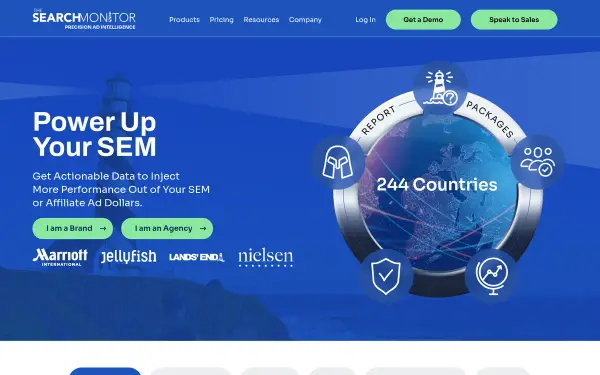
Entry I of VIII / Automated complaint filing
Our verdict
The closest functional swap for Brandverity when paid search and affiliate compliance are the whole job.
The Search Monitor is the closest like-for-like replacement on this list for a Brandverity user whose work is paid search and affiliate compliance. It crawls paid search results for unauthorized trademark use, checks affiliate ads against program rules, and reports across paid, shopping and organic listings, so one dashboard covers the three surfaces where brand bidding problems usually appear. SmartCrawler de-cloaking follows redirects and hidden ad copy, which is the part budget tools skip.
The feature that changes daily work is automated trademark complaint submission to search engines. Instead of an analyst copying evidence into a web form, the platform files complaints from the same record that captured the ad. Hourly crawling and configurable alerts set the pace, and coverage spans multiple countries, regions and search engines, which matters if you run programs outside one market.
Pricing is on the vendor site and built through a custom quote form, with keyword crawling fees added to the base. Cost therefore scales with the number of terms you protect. There is no free plan and no self-serve trial, so evaluation runs through a demo. Ask for that demo against your own brand terms and regions rather than a generic walkthrough.
Scope is the other limit. It does not handle marketplace counterfeits or phishing response, so a brand with a counterfeit problem needs a second vendor alongside it. Smaller brands may find it is more platform than they need. For teams where search and affiliate enforcement is the entire job, that narrow focus is the point.
Paid search and affiliate compliance are your main enforcement workload and you need complaints filed, not just detected.
Counterfeit marketplace listings or phishing sites are the loss you are trying to stop.
Entry II of VIII / Case workflow automation
Our verdict
Built for affiliate fraud casework: it traces redirects, documents cloaking and pushes cases to networks without manual chasing.
AdPolice targets the mechanics of affiliate fraud rather than the surface of the ad. It detects affiliate fraud across search engines, traces redirect chains, and identifies link cloaking, geo-targeting, cookie stuffing and extension injection. Those are the techniques a rogue partner uses to hide a hijacked ad or a dropped cookie from a spot check, and tracing them is what turns a suspicion into something a network will act on.
The second half of the product is casework. Automated workflows push cases to ad networks, publishers and search engines, which reduces the daily chasing that otherwise lands on one person's calendar. An open API exports case data for custom reporting, and a plain-language AI agent answers queries without a reporting build. Pricing is quote based, and the pricing page returned no content when checked on November 25, 2026, so treat cost as a conversation rather than a list.
A free brand check is available before purchase, and it doubles as the trial. Run it against your own affiliates and search terms, because broad automation rules can flag legitimate partners; the value depends on how much tuning you do in the first weeks.
The limits are scope and precision. It is not a marketplace or phishing platform, so counterfeit and impersonation work stays elsewhere. Teams wanting one vendor for search, affiliates and marketplaces will need a second contract. Teams whose losses come from affiliate partners rather than counterfeiters get a tool built specifically for that work.
Affiliate poaching or ad hijacking is your main loss and you want case files that networks can act on.
You need marketplace takedowns or phishing response under the same contract.
Entry III of VIII / Trademark plus enforcement
Our verdict
Best when the trademark team owns the budget and wants watching, ownership and enforcement records in one system.
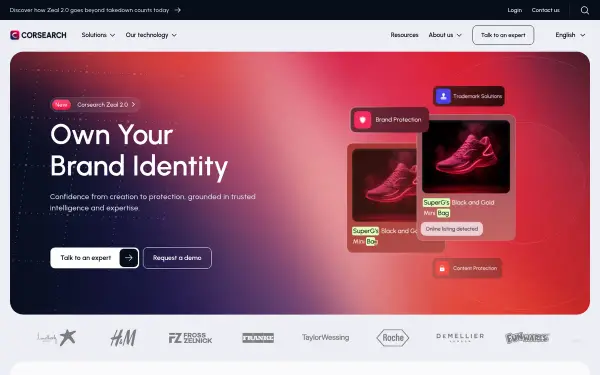
Corsearch is a trademark business with an enforcement arm attached, which is a different starting point from the search monitoring tools above. Trademark search, screening, clearance and watching sit alongside portfolio management, and marketplace, domain and content enforcement sit on top of the same record. When a legal team needs to show that a mark was cleared, watched and then enforced, that chain is the argument.
It also tracks the sellers and entities behind threats rather than only the listings, and it offers expert-supported enforcement as a service. That combination suits in-house counsel and IP teams who already run a docket and want one system producing the evidence. Ownership records, watching output and removal outcomes can be presented together instead of being stitched together from separate vendors.
The cost of that breadth is onboarding. Enterprise quote-based pricing means no published figure, and the pricing page returned no content when checked on November 25, 2026. There is no free plan, and evaluation is a demo. Implementation takes longer than a search-only tool because portfolios, marks and jurisdictions have to be loaded before the system earns its keep. A brand with a single paid search problem will find it excessive, and a marketing team that wants hourly ad alerts will find the workflow aimed at someone else.
Use it when the buyer is legal and the deliverable is a defensible enforcement record. Pair it with a search monitoring tool if paid search and affiliate compliance still need daily coverage, because that is not where this platform's center of gravity sits.
Legal owns brand protection and you need clearance, watching and takedowns documented together.
Your problem is brand bidding and you need hourly ad alerts rather than portfolio records.
Entry IV of VIII / Managed high-volume takedowns
Our verdict
Choose it when marketplace counterfeit volume, not search ad copy, is the problem you are sizing a budget for.
Red Points is a managed takedown operation. It detects infringements across marketplaces, websites, social media, domains and ads, then files automated removal requests at volume, with AI models handling routine cases and human review covering the edge cases. Coverage runs across thousands of marketplaces, and the headline model includes unlimited detection and enforcement, which is the shape of contract that makes sense when counterfeit volume is high and unpredictable.
Two features earn their place beyond raw removal counts. Seller risk scoring identifies repeat infringers, so effort goes to the accounts that keep coming back rather than the one-off listings. A revenue recovery program is also offered. The service is managed, which means a provider team does much of the work; that reduces headcount but also reduces hands-on control compared with a self-serve dashboard. Teams that want to run their own queries and tune their own rules will feel the difference.
Pricing is on the vendor site and quote based, and the pricing page returned no content when checked on November 25, 2026. There is no free plan, and evaluation is through a demo. Ask for a sample of detection output in your own categories before signing, since removal pathways vary by marketplace and category.
Paid search compliance is a small part of the platform. If brand bidding or affiliate poaching is your main loss, this is a large contract aimed at a different problem. If counterfeit listings are the loss, it is a strong fit.
Counterfeit marketplace listings are arriving faster than your team can file removals.
You want a self-serve dashboard and direct control over every query and rule.
Entry V of VIII / Campaign clustering
Our verdict
The pick when phishing sites and fake apps outrank counterfeit listings on your risk register.
BrandShield is organized around impersonation. It monitors websites, marketplaces, social media, domains, apps and ads, and puts phishing and impersonation detection at the center rather than at the edge. It detects fake apps and spoofed support profiles, which is where a lot of consumer harm now starts: a cloned app or a fake support account can cost customers money before any listing is taken down.
Campaign clustering is the feature that separates it from a list of alerts. Related assets get grouped, so a set of domains, ads and social profiles used in one operation shows up as one case instead of many separate tickets. Expert-reviewed enforcement then handles takedowns. The platform is positioned for finance, pharma and travel use cases, where impersonation and fraud tend to be the dominant threat rather than counterfeit goods.
Pricing is on the vendor site and quote based, and the pricing page returned no content when checked on November 25, 2026. There is no free plan, and evaluation is a demo. Broad scope means scoping takes longer: decide before the demo whether you are buying phishing response, marketplace enforcement or both, because the configuration and the quote differ.
It is not built around paid search compliance. A team whose problem is affiliate poaching or trademark misuse in ads will find the center of the product elsewhere. A team whose problem is a fake login page or a cloned app is the intended buyer.
Phishing sites, spoofed support profiles or fake apps are your main brand risk.
The problem you need solved is trademark misuse in paid search ads.
Entry VI of VIII / Domain governance
Our verdict
Domain governance first: registration, renewal, security and recovery for portfolios large enough to need a written policy.
MarkMonitor is domain governance software. The core is centralized domain registration and renewal, domain security controls, and a policy layer that keeps a large portfolio from drifting into expiry or unauthorized transfer. Domain threat monitoring, enforcement and domain recovery sit on top. Dedicated advisors handle corporate domain policy, and support is global, which matters when registrations are spread across many countries and business units.
The value shows up in portfolios big enough to need a rulebook: who may register, which registrar, which renewal calendar, which brand variants get defensive registrations. For those buyers, centralized control and recovery are worth more than another monitoring feed. Threat monitoring adds a watch on lookalike and abusive domains, and enforcement covers recovery rather than marketplace removal.
The limits follow from that description. It does not cover marketplace or social enforcement, so counterfeit listings and fake profiles stay with another vendor. Pricing is on the vendor site and quote based, and the pricing page returned no content when checked on November 25, 2026. There is no free plan, and evaluation is a demo. Smaller portfolios will pay for governance features nobody uses.
Treat it as a domain layer in a stack, not a Brandverity replacement. If your losses are ad hijacking or affiliate poaching, this does not address them. If your risk is losing control of a domain that carries your brand, it is a direct answer.
You manage a large corporate domain portfolio and need policy, renewal and recovery under control.
Your problem is paid search ads, counterfeit listings or social impersonation.
Entry VII of VIII / Analyst-validated threats
Our verdict
Fits security operations: analyst-validated external threats, takedowns and feeds piped into SIEM and SOAR workflows.
ZeroFox is built for security operations, and brand abuse is one input among several. External attack surface discovery maps what is exposed. Coverage includes phishing, impersonation, credential leaks and executive targeting, plus dark web intelligence and threat feeds. Brand abuse monitoring is part of the platform. Analyst validation means alerts arrive with a human judgment attached, which is the difference between a queue a security team can work and a queue it learns to ignore.
Integrations with SIEM, SOAR and TIP platforms are the practical reason to choose it. If your analysts live in a SIEM and your playbooks run in SOAR, having external threats arrive in the same workflow avoids a second console nobody opens. Takedown and disruption workflows then run at scale from that queue.
Pricing is on the vendor site and quote based, and all four bundles list request pricing only, with no published figure. There is no free plan, and evaluation is a demo. Security budgets and marketing budgets are separate things, so expect procurement to be a security conversation rather than a marketing one, with a longer approval path than a subscription bought on a card.
Paid search and affiliate compliance are secondary here. A performance marketing team will not get the ad monitoring or the network casework it needs, and the reporting is aimed at threat analysts rather than media buyers. A security team responsible for phishing, executive impersonation and external exposure gets a platform built around its actual workflow instead of a marketing tool with a security module bolted on.
Your security team already runs external threat workflows and wants brand abuse in the same queue.
The buyer is marketing and the job is brand bidding or affiliate rule checks.
Entry VIII of VIII / Public pricing
Our verdict
The budget option for watching brand terms and competitor ads, with enforcement left entirely in your hands.
Semrush is a search intelligence suite, not an enforcement platform, and that difference sets the ceiling. Position tracking watches brand terms, advertising research shows competitor ad copy, and brand mention monitoring alerts when the brand appears across the web. Search visibility reporting comes with it. The pricing is public, which on this list is unusual: $117.33 per month on the SEO plan, billed annually, with a free plan at $0/mo covering one demo project and a 7-day free trial. Plan terms should be confirmed on the vendor site before budgeting.
For a small brand or an agency, that is a genuine starting point. You can see who bids on your terms, compare ad copy, and catch mentions without a sales call or a procurement cycle. The SEO, content and social tools come along as well, which is what makes the price defensible for a team that also needs organic work and cannot justify a dedicated contract yet.
The ceiling is enforcement. There is no automated takedown or complaint workflow, marketplace and phishing coverage is limited, and anything you find has to be escalated by hand. Evidence collection, timestamps and screenshots become your process rather than the product's. Affiliate compliance checks against program rules are not what the tool is for, so poaching has to be caught by reading the ad data manually.
Use it as the monitoring layer while the problem is small and the budget is smaller, then plan the move to a dedicated platform when enforcement volume or affiliate fraud starts consuming real hours each week.
You need visibility on brand bidding and mentions now and have no budget for a quote-based platform.
You need complaints filed, affiliates audited or marketplace listings removed.
VIBackground
Brand protection and affiliate compliance software watches the places where someone else uses your brand without permission, then helps you do something about it. The category splits three ways: detection, detection plus enforcement, and managed service. Most tools on this list do at least two of those.
On the search side, the software crawls paid search results for your trademark, records which advertisers show up, and flags affiliates bidding on terms their program rules forbid. Good tools look through cloaking, redirect chains and geo-targeting, because a rogue partner will show a clean ad to a compliance crawler and a different one to a shopper. Evidence has to include a timestamp, the landing page after redirects, the region and the device.
On the brand side, the software watches marketplaces, domains, social profiles, apps and phishing pages, then files takedowns through marketplace notice systems, registrar complaints or search engine trademark forms.
A useful way to sort vendors:
The questions that separate them are not feature lists. Does the tool file the complaint or only find the ad? Who writes the evidence file, you or the vendor? How many languages and marketplaces are covered? What happens when an automation rule flags a legitimate partner? And can the output survive a dispute with a network or a marketplace?
Buyers also need to know which team owns the problem. Marketing owns brand bidding and affiliate poaching, legal owns trademark and counterfeit, security owns phishing and impersonation. Tools here sit at the border of all three, so a short internal agreement about who acts on an alert is worth more than a longer feature comparison. Without it, alerts pile up in a shared inbox and nobody files the complaint.
This comparison sits in the software register. Further along the shore: baby tracking app and kennel software.
VIIPricing
Most brand protection pricing is quoted, and The Search Monitor adds keyword crawling fees to its quote. Seven of the eight tools here publish no figure at all. That reflects scope, because crawling more keywords across more countries costs more than a small program, and managed takedowns are labor.
Two models dominate. The Search Monitor uses a custom quote plus keyword crawling fees. Managed services such as Red Points are quote based and can include revenue recovery. Domain governance here is quote based, and domain registration and renewal are in scope. ZeroFox lists four bundles with request pricing only.
| Model | How it bills | Typical fit | Example from this list |
|---|---|---|---|
| Custom quote, subscription plus crawling fees | Custom quote with keyword crawling fees added | Paid search and affiliate compliance teams | The Search Monitor |
| Custom quote, casework scope | Quote based, scope set by affiliates and markets | Performance marketing teams fighting affiliate fraud and ad hijacking | AdPolice |
| Managed service | Quote based, human review included | Consumer brands removing counterfeit marketplace listings at scale | Red Points |
| Enterprise quote | Quote based | Legal, IP, brand and security teams | Corsearch, MarkMonitor, BrandShield, ZeroFox |
| Published subscription | $117.33 per month on the SEO plan, billed annually | Small brands and agencies | Semrush |
Ask two questions before signing: what unit the price scales on, and what happens when you exceed it. Then ask for the quote against your own keyword list, marketplace list and regions rather than a sample set. Pricing was checked on November 25, 2026; confirm on the vendor site before you budget.
Each entry card shows the starting price as it appeared on the vendor's own pricing page on November 25, 2026. When a vendor shows no figure we could confirm, or only a promotional rate, the card says "See website" or gives the regular price instead of a guess. Usage, overage and add-on rates in the text change more often than plan prices, so confirm them on the vendor page before you set a budget. To test the numbers against your own volume, try the free User Research Budget Planner. The Event Break-Even Calculator is a second way to check the same decision.
VIIIDecision
IXPitfalls
XQuestions
The Search Monitor and AdPolice come closest. The Search Monitor covers paid search monitoring, affiliate rule checks, de-cloaking and automated trademark complaint filing in one platform, which is the same shape of work Brandverity does. AdPolice focuses on affiliate fraud and ad hijacking, with redirect tracing and automated case workflows for networks and publishers. Both are quote based, so budget a demo or free brand check before comparing contracts.
Semrush is a lower-cost way in, at $117.33 per month on the SEO plan billed annually, with a free plan covering one demo project and a 7-day free trial. It tracks brand terms and shows competitor ad copy, but it does not file complaints or check affiliates against program rules. For anything past monitoring, the quote-based platforms are the next step up.
Red Points is a direct fit for high-volume marketplace takedowns, with detection across marketplaces, websites, social and domains and automated removal requests. BrandShield adds phishing and impersonation coverage alongside marketplace enforcement, and Corsearch ties marketplace enforcement to trademark records. All three are quote based, so ask for detection samples in your own product categories before signing anything.
Keep a timestamped record of the ad or listing, the full redirect chain, the landing page, the region and the device used. For affiliate cases, add the publisher ID, the network and the program rule the ad breaks. For trademark complaints, attach the registration number and the jurisdictions covered. Screenshots alone are weak evidence because cloaked pages can serve different content to different visitors.
Marketing owns brand bidding and affiliate poaching, legal owns trademark and counterfeit enforcement, and security owns phishing, impersonation and credential exposure. The tool matters less than the handoff: name one person who acts on each alert type, agree escalation thresholds, and give legal and security read access to the same detection record so evidence is not rebuilt twice from scratch.
Move when enforcement starts consuming hours every week, when affiliate fraud survives your manual spot checks, or when one brand term needs coverage in several countries. A budget search tool gives visibility and nothing else. Run any evaluation for two to four weeks so crawl cycles and cloaked ads have time to surface before you judge coverage.
XIFurther along the shore
Vendors can ask for a correction or apply for a Featured listing. Paid or not, the entry is scored on the same rubric and its limits stay in print. Partner with Umberlake.
Free tools
Our free browser tools turn the prices on this page into a figure for your own volume. Nothing you type leaves your device.