Optro (formerly AuditBoard)
See websiteCustom quote, priced by module
Best for mid-to-large enterprises running SOX and internal audit
- Free plan
- No
- Rubric
- 7.7 of 10
We compare nine audit platforms for SOX, internal audit, GRC and compliance automation, with prices checked November 25, 2026 and plain guidance on who each tool fits.

IThe short answer
As of November 2026, the best audit software for most mid-to-large enterprises is Optro (formerly AuditBoard) for SOX and internal audit, Workiva for audit work tied to financial reporting, and TeamMate+ for traditional internal audit departments that want proven workflows. The rest of this list covers ServiceNow IRM for ServiceNow estates, Archer for heavily regulated risk programs, LogicGate for no-code workflows, Trullion for AI lease and revenue accounting, MetricStream for massive enterprises, and Drata for first compliance audits.
9 tools compared from vendor pages on November 25, 2026. 0 publish a starting price we could read; the rest say "See website".
IITop three berths
Register order is editorial fit for the buyer each entry describes. Prices are the starting figures read on November 25, 2026.
See websiteCustom quote, priced by module
Best for mid-to-large enterprises running SOX and internal audit

See websiteCustom enterprise quote
Best for connecting audit work to financial reporting
See websiteQuote-based pricing
Best for traditional internal audit departments that want proven workflows
How this page is paid for. All 9 tools here are unpaid editorial picks.
A paid listing's position can be part of what the vendor pays for. Every entry, paid or not, is scored on the same rubric and keeps its limits in print. Advertising disclosure.
IIIThe register
Starting prices as shown on each vendor's pricing page on November 25, 2026. "See website" means no figure we could confirm.
| No. | Tool | From | Free plan | Trial | Rubric | Actions |
|---|---|---|---|---|---|---|
| 01 | Optro (formerly AuditBoard)Mid-to-large enterprises running SOX and internal audit | See websiteCustom quote, priced by moduleNot shown publicly | No | No | 7.7 | |
| 02 | WorkivaConnecting audit work to financial reporting | See websiteCustom enterprise quoteNot shown publicly | No | No | 6.9 | |
| 03 | TeamMate+Traditional internal audit departments that want proven workflows | See websiteQuote-based pricingNot shown publicly | No | No | 6.8 | |
| 04 | ServiceNow Integrated Risk ManagementEnterprises already standardized on ServiceNow | See websiteQuote-based enterprise pricingNot shown publicly | No | No | 6.0 | |
| 05 |  ArcherHighly regulated industries with complex risk programs | See websiteQuote-based enterprise pricingNot shown publicly | No | No | 6.2 | |
| 06 |  LogicGate Risk CloudBusiness users who want to build their own risk workflows | See websiteQuote-based, reported entry points from about $1,000 annuallyNot shown publicly | No | No | 6.1 | |
| 07 |  TrullionAI-automated lease accounting and financial audit workflows | See websitePer year, entry tierNot shown publicly | No | Yes, free trial | 5.8 | |
| 08 |  MetricStreamMassive enterprises with AI-driven risk programs | See websitePer year, entry pointNot shown publicly | No | No | 6.5 | |
| 09 | DrataGrowing companies automating their first compliance audits | See websiteFoundation, Advanced, Enterprise, no prices shownNot shown publicly | No | Demo only | 5.1 |
Pinned:
IVMethod
Internal audit planning, workpapers, controls testing and issue tracking depth.
Published prices, trials and predictable costs for budget planning.
Scale, regulatory coverage and multi-entity support for complex organizations.
Dashboards, data lineage and executive reporting.
Speed to deploy and administrative burden.
VMethod
To build this list, we scored each platform on five criteria: audit workflow depth (30 percent), pricing clarity (20 percent), enterprise fit (20 percent), reporting and analytics (15 percent), and implementation effort (15 percent). The scores are a reading aid, not a ranking formula. The order is editorial: each position reflects fit for the buyer described in that entry, not a weighted total. A Featured placement, where present, is a paid placement and is scored with the same rubric as every other tool.
Prices and plan facts came from vendor pricing pages checked on November 25, 2026. Where a vendor shows no public price, we say pricing is on the vendor site and do not estimate a number. The same rule applies to any older pricing figure: if current pricing could not be verified, the review does not present it as a current price and keeps the buying advice focused on what is visible today. We also checked free plan and trial facts on the same date.
Feature and fit judgments come from the product capabilities supplied for this comparison: SOX testing, workpapers, risk assessment, issue tracking, automation, framework coverage, dashboards and integrations. We weighed depth against the buyer each tool targets. A large SOX program needs different evidence, controls and reporting than a first SOC 2 readiness project, so a lower score on enterprise fit is not a defect if the tool is aimed at a smaller team. We did not give credit for claims we could not tie to a listed capability. Finally, we wrote cons for every tool, including the Featured tool if one appears, because every platform here has a real trade-off in price, complexity or scope.
The full routine, from price reads to corrections, is on the methodology page. Paid listings follow the advertising disclosure.
Entry I of IX / SOX program depth
Our verdict
The deepest fit for SOX and internal audit at scale, provided you can absorb module-based quotes and dedicated administration.
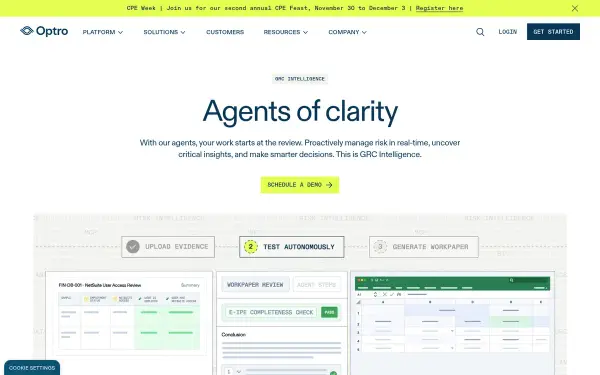
Optro, formerly AuditBoard, is built for the audit work that sits at the center of a SOX 404 program. It holds controls testing, workpaper management, evidence and control documentation in one place. Risk assessment and audit planning connect to the same system, so the audit universe, the controls being tested and the issues that come out of testing do not live in separate files. Executive dashboards and board reporting are listed features.
The bigger argument for Optro is the connected platform. Audit, risk, compliance and ESG modules share workpapers and can refresh across modules, which cuts duplicate evidence requests in large organizations. Issue and remediation tracking gives exceptions an owner and a status, and the evidence repository gives reviewers a defensible record. That breadth is why the platform fits mid-to-large enterprises with several control frameworks and a formal audit committee reporting cycle. It is also why smaller teams can feel over-equipped.
Pricing is the main friction. Optro does not publish prices on the vendor site; the plan note describes a custom quote priced by module. That model makes sense for a large buyer with a defined scope, but it means the total grows as audit, risk, compliance and ESG modules are added. The platform also expects a dedicated administrator to manage configuration, permissions and reporting, and that role is not optional if you want full value. Teams with a narrow internal audit remit should compare TeamMate+ before committing. The company renamed from AuditBoard to Optro in March 2026, and the underlying product line carried over unchanged.
You run a multi-entity SOX or internal audit program and want audit, risk, compliance and ESG modules on one platform.
You need a low-cost tool for a small team or cannot staff an administrator for the platform.
Entry II of IX / Linked data model
Our verdict
Best when audit evidence must stay linked to financial reporting, close and filing work rather than sit in a separate audit silo.
Workiva is the choice for teams that cannot separate audit evidence from the numbers being reported. Its linked data model connects audit work to financial close, consolidation and SEC filing preparation, so a change in one place can be traced through the documents that depend on it. SOX testing and controls documentation sit alongside that reporting work, and data lineage gives reviewers a way to follow a figure back to its source. For a finance-led SOX team, that is a different value proposition from a stand-alone audit workpaper tool.
The collaboration and review workflows are built for multi-person document work, which matters when audit, controllership and external reporting teams touch the same evidence. ESG and sustainability reporting support extends the same linked model to another reporting stream. The platform is strongest where audit testing, close and external reporting overlap, and weaker where a pure internal audit department wants planning, resource scheduling and audit universe management without the finance reporting layer.
Pricing is on the vendor site as a custom enterprise quote, and implementation requires planning and resources. That fits a large finance organization with a defined reporting stack, but it is a poor match for a small audit team that wants to start quickly. Buyers should ask how seats, reporting entities and implementation services are scoped, and whether the audit module can stand alone if the finance project slips. Workiva rewards a buyer with a clear process map; it punishes a buyer who treats it as a lightweight audit tracker. The plan note does not publish a price, so the vendor site and a scoped quote are the only reliable sources.
Your audit team works closely with finance, close and external reporting teams and needs evidence tied to reported figures.
You need a stand-alone internal audit tool with lower complexity and a narrow audit workflow.
Entry III of IX / Internal audit focus
Our verdict
A proven internal audit workhorse for departments that want planning, workpapers and issue tracking without a full GRC build.
TeamMate+ is aimed at the internal audit department that wants a purpose-built system rather than a broad GRC platform with audit bolted on. Risk assessment for the audit universe and annual audit planning are core, with resource scheduling and time tracking close by. Electronic workpapers and review notes give supervisors a standard way to clear work, and issue tracking carries exceptions through follow-up. Audit reporting and analytics close the loop for the audit committee. It does not try to be a full enterprise risk platform, and that focus is the point.
The product has a long history with audit departments, and ownership by Wolters Kluwer connects it to a wider tax and compliance portfolio. That matters to buyers who want a vendor with an established audit lineage rather than a newer platform learning the category. The trade-off is breadth. TeamMate+ is deliberately narrower than Optro, Archer or MetricStream, so a buyer that wants audit, third-party risk, policy and ESG in one place will need to look at those broader suites. For a traditional audit shop, that narrower scope can be a benefit because the workflow matches how the team already works.
Pricing is on the vendor site as a quote-based purchase. The interface feels older than newer platforms, which is not a deal breaker for auditors who value stable workflows, but it does affect training and adoption. Departments that mostly need risk assessment, planning, workpapers, time capture and issue tracking will find the fit direct. Departments that want a no-code workflow builder or continuous evidence monitoring should compare LogicGate and Drata before they decide. There is no free plan, and the plan note does not list a trial.
Your internal audit department wants a focused system for risk assessment, planning, workpapers and issue follow-up.
You need a modern all-in-one GRC suite or a tool your business users can configure without training.
Entry IV of IX / ServiceNow native workflows
Our verdict
The pragmatic pick when ServiceNow is already the IT system of record and audit can reuse its data and workflows.
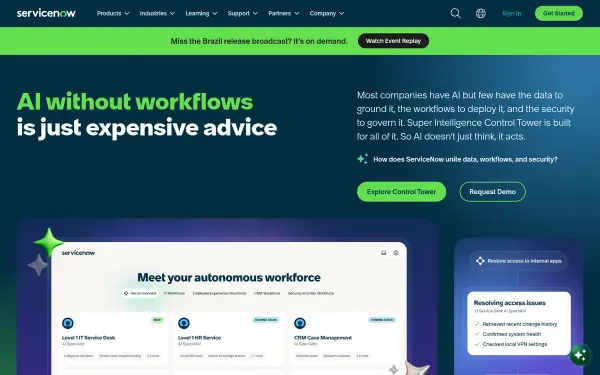
ServiceNow Integrated Risk Management makes the most sense as an extension of an existing ServiceNow estate. Control testing can draw on IT operations data, and the platform can reuse CMDB and asset data that the IT team already maintains. Workflow automation is the core strength and runs through the same platform that handles IT service management. For an enterprise already standardized on ServiceNow, that reduces the number of systems staff must learn. The platform is not a dedicated audit tool, and that shapes both its strengths and its limits.
The risk register and assessment, policy and compliance management, and audit engagement tracking cover the basics of an integrated risk program. Integrations with ITSM and security operations are a real advantage when audit findings touch infrastructure, access or incident data. The limit is audit methodology depth. A dedicated audit platform usually gives more structure for audit planning, workpaper review and SOX testing than a platform that started in IT service management.
Pricing is on the vendor site as a quote-based enterprise purchase, and value depends on broader ServiceNow adoption. If the platform is already in place, the incremental cost and integration work can be easier to justify than a new audit system. If it is not, buying ServiceNow just for audit is hard to defend. Buyers should test a full audit workflow, not just a control dashboard, and ask how much configuration the audit team can own without platform specialists. The plan note does not publish a price, so the vendor site and a scoped quote are the only reliable sources. The tool is strongest where audit work is inseparable from IT operations and security.
Your organization already runs ServiceNow for ITSM or security operations and wants audit workflows on the same platform.
You need deep audit methodology, workpaper structure or a fast stand-alone audit deployment.
Entry V of IX / Regulatory risk depth
Our verdict
A deep GRC platform for regulated enterprises that need risk quantification, policy control and third-party risk in one program.
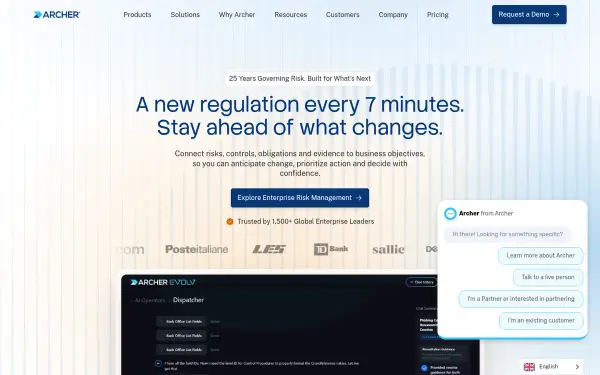
Archer is a long-standing GRC platform for organizations whose risk program is shaped by regulators. The risk register supports quantification scoring, which lets a large enterprise compare risks in financial or scored terms rather than just labels. A regulatory content library, control and policy management, and third-party risk management sit in the same environment. Complex organizational hierarchy modeling is important for banks, energy companies and healthcare groups that need to roll risk up across legal entities and business units.
The platform is proven at very large enterprise scale, and many regulated organizations have built their programs around it. That history is an advantage when a buyer needs a vendor that understands formal risk committees, regulatory exams and multi-layer reporting. The cost is implementation effort. Archer is not a quick audit workpaper tool; it is a program platform that needs design, configuration and ongoing administration. The interface and release pace also trail newer rivals, which affects user adoption.
Pricing is on the vendor site as a quote-based enterprise purchase. The plan note does not list a price or a trial, and the buying cycle will reflect the scope of entities, risk content and integrations. Buyers should separate the audit use case from the broader GRC use case. If audit is the primary need, Optro or TeamMate+ may be a better fit. If the audit team is one participant in a regulated risk program that also covers policy, third-party risk and board reporting, Archer belongs in the shortlist. The platform is heavy, and that weight is the point for a complex program. It can be excessive for a mid-market audit department. A scoped pilot with real hierarchy data is more useful than a generic demo.
You operate in banking, energy or healthcare with complex risk programs and regulators who expect formal GRC controls.
You need a fast audit deployment, a modern interface or a tool that smaller teams can administer without specialists.
Entry VI of IX / No-code builder
Our verdict
A configuration-first GRC choice for business teams that need to build risk workflows quickly without waiting on IT.
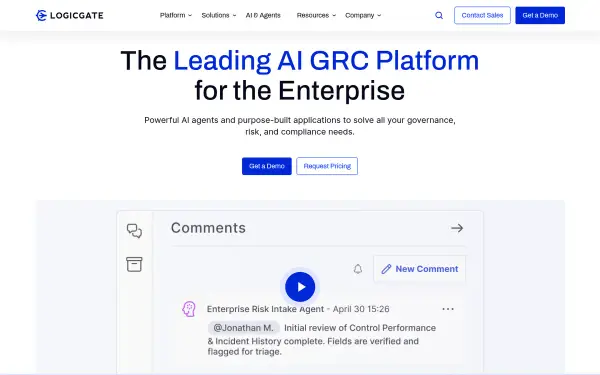
LogicGate Risk Cloud is built around a no-code drag-and-drop application builder, which is the feature that separates it from heavier GRC suites. A risk team can assemble workflows for risk, controls, third-party risk and compliance without waiting for IT to write code. Prebuilt apps and framework mapping give the team a starting point, and configurable approvals let the workflow match how the business actually operates. For a mid-market company that wants to move in weeks, that is a practical advantage.
The platform is positioned as the agile GRC option, with self-service configuration by business teams. That fits a risk or compliance function that knows what it wants and does not want a long implementation. The limits appear at the high end. Standalone reporting is limited, and the product does not scale as far as the largest GRC suites. Buyers with those needs should test a real reporting pack before they commit.
Pricing is on the vendor site as a quote-based purchase. Pricing is quote-based, so the vendor site and a scoped quote are the reliable sources. LogicGate is a good fit for business users who want to build their own risk workflows and for mid-market teams that value speed over depth. It is a weaker fit for a SOX program that needs audit planning, workpaper review and issue tracking with a dedicated audit methodology. The no-code model also shifts responsibility to the buyer: someone must own app design, permissions and content updates. A demo should include a workflow the team builds, not just a prebuilt app.
Your risk or compliance team wants to configure its own workflows and apps without a long IT project.
You need deep audit methodology, complex enterprise hierarchy modeling or reporting that stands alone from the platform.
Entry VII of IX / AI contract extraction
Our verdict
A focused AI tool for lease and revenue accounting, with a free trial, but not a replacement for a full internal audit platform.
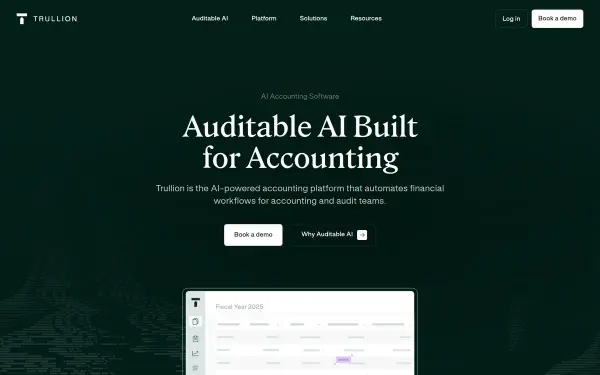
Trullion is an AI-native product focused on lease and revenue accounting, not on running a full internal audit department. Its core capability is extracting lease and revenue terms from PDF and Excel contracts, then turning that data into accounting workflows. ASC 842 and IFRS 16 lease accounting are covered, along with ASC 606 revenue recognition support. Auditable journal entries and full audit trails on extracted data are the features that matter to finance teams that need a defensible record.
The platform also provides a central repository of contract terms and compliance workflow management, which helps when multiple people review the same contract data. The interface is clean and onboarding is quick, according to the product positioning. The limits are scope. Trullion covers accounting workflows rather than internal audit planning, workpapers, controls testing or SOX program management, and it is a smaller vendor with a narrower customer base. A buyer should not treat it as a full GRC suite.
Pricing is on the vendor site with a per-year entry tier, and a free trial is available. That is unusual in this category, where most tools list no trial. The trial is useful for testing extraction accuracy on your own contracts, which is the real buying question. Teams that need a broad audit platform should pair Trullion with an audit system rather than replace one with the other. The product is strongest where contract data feeds accounting and audit evidence, not where audit planning starts. The plan note does not publish a current price, so the vendor site is the place to confirm the entry tier. For finance teams with heavy lease portfolios, that focused test is worth the time.
Your team spends too much time extracting lease or revenue terms from contracts and needs auditable accounting workflows.
You need internal audit planning, workpapers, SOX controls testing or a broad GRC suite.
Entry VIII of IX / Massive-scale analytics
Our verdict
An enterprise-scale risk and compliance platform for very large, multi-entity organizations, with the cost and implementation weight to match.
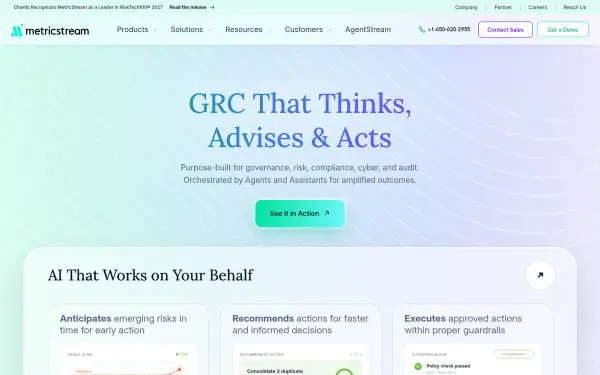
MetricStream is aimed at the top of the market: very large enterprises with multi-entity risk programs and globally regulated operations. Its federated data model is designed for complex structures, so risk data can roll up across entities without forcing every unit into one identical process. Enterprise and operational risk management, control testing, compliance management and third-party risk sit in the same platform. Regulatory change tracking and risk dashboards support the reporting layer that large risk committees expect.
The analytics and AI depth is a real differentiator at the high end. Predictive analytics across risk programs can help a large organization spot patterns that a manual review would miss, and the reporting layer is built for executive audiences. The trade-off is weight. Implementations are long and require specialist skills, and the platform is excessive for buyers below true enterprise scale. A mid-market audit team will pay for capability it cannot absorb.
Pricing is on the vendor site as a per-year entry point with quotes above it. Older notes listed a high annual entry figure, but that figure could not be verified; the plan note makes clear that the entry point is not the full cost of a complex program. Buyers should budget for implementation, content and administration, not just the license. MetricStream belongs in a shortlist when risk analytics, multi-entity structure and global regulatory coverage matter more than speed or simplicity. For a large bank, insurer or industrial group, that trade-off can be justified. For everyone else, the implementation burden is the deciding factor. A proof of concept should include real entity data and a reporting pack.
You run a globally regulated, multi-entity risk program and need analytics, third-party risk and compliance in one platform.
You are a mid-market buyer, need a quick audit deployment or cannot fund a long implementation with specialist skills.
Entry IX of IX / Continuous evidence monitoring
Our verdict
The right starting point for first SOC 2 or ISO 27001 readiness, but not an internal audit or SOX program platform.
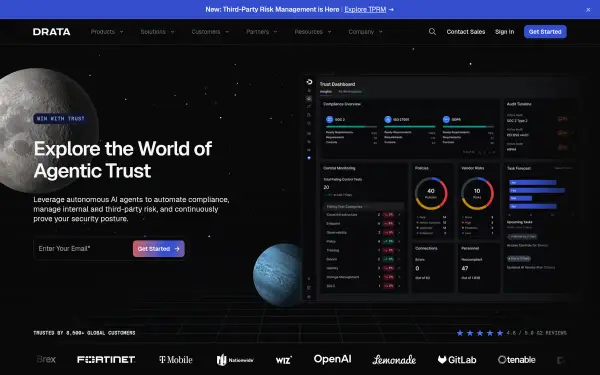
Drata is built for the company that needs to get through a first compliance audit, not for the internal audit department that runs a SOX program. Continuous control monitoring across 20 or more frameworks and automated evidence collection from the cloud and SaaS stack reduce the manual chase that makes first audits painful. Readiness assessments for SOC 2, ISO 27001 and HIPAA give the team a gap list, and policy management and templates cover the documentation side.
The integration library is central to the product. It pulls technical evidence from infrastructure and SaaS tools, which is where a growing company usually has the least documentation discipline. Access to an auditor network helps buyers who do not yet have a relationship with a CPA firm. The limits are just as important: Drata lacks internal audit planning, workpapers and SOX methodology. It complements a full audit platform rather than replacing one, and it is not the tool for a mature audit function.
Pricing is on the vendor site, where the plans page lists Foundation, Advanced and Enterprise tiers but shows no prices. That means a quote is required, and the buyer should ask which frameworks, integrations and user roles are included at each tier. The product is strongest before a first certification, when continuous monitoring and evidence automation save the most time. As the company matures, it may add a dedicated audit platform for planning, workpapers and SOX controls testing, while keeping Drata for compliance automation. A demo should test one real framework and one real integration, not a generic dashboard. That is the fastest way to see whether the evidence model fits your stack.
You need to automate evidence and control monitoring before a first SOC 2, ISO 27001 or HIPAA audit.
You need internal audit planning, workpapers, SOX 404 testing or a system of record for a mature audit department.
VIBackground
Audit software is the system of record for audit work: it holds the plan, the evidence, the test results, the issues and the report in one controlled place. Instead of chasing files across shared drives and email, an audit team uses the platform to show who did what, when, and which control or risk the work supports. That matters most in SOX 404 programs, internal audits, and regulated risk programs where reviewers need a traceable path from risk to control to evidence to conclusion.
Across the audit lifecycle, the software covers four broad jobs. Risk assessment and annual planning define what gets audited and when. Workpaper management and controls testing give auditors a structured place to document procedures, attach evidence and clear review notes. Issue tracking and remediation follow exceptions through to a named owner and a due date. Reporting turns the results into dashboards, committee packs and board summaries that non-auditors can read.
The category is broader than internal audit. Some platforms connect audit evidence to financial reporting, which suits finance-led SOX teams. Others start from GRC and add audit as one module inside risk, policy, third-party and compliance management. A third group focuses on compliance automation before a first SOC 2 or ISO 27001 audit, with continuous monitoring and evidence collection rather than full audit planning. AI-native tools add a narrower layer, such as extracting lease and revenue terms from contracts and turning them into auditable entries.
The right choice depends on the job you need to control. A SOX program with many entities, controls and reviewers needs deep workpaper structure, issue tracking and reporting. A smaller team preparing for a first certification may get more value from continuous control monitoring than from a full audit planning suite. Buyers should also check whether the tool is meant to be the audit system of record or a connected module inside a larger platform.
This comparison sits in the software register. Further along the shore: baby tracking app and kennel software.
VIIPricing
Audit software pricing is mostly quote-based because the work itself is modular. A vendor prices the platform, the audit module, the risk module, the number of users or entities, and sometimes implementation services. That is why two buyers can see very different numbers for the same product. The vendor site is the only place to confirm a current quote; this list does not turn unpublished terms into a range.
| Model | How it bills | Typical fit | Example from this list |
|---|---|---|---|
| Custom module quote | Priced by module under a custom quote | Mid-to-large SOX and internal audit | Optro |
| Custom enterprise quote | Quoted by scope, users and implementation | Finance-led reporting and large audit teams | Workiva |
| Quote-based suite | Quoted by scope and modules | Traditional internal audit departments | TeamMate+ |
| Platform quote | Quoted as an extension of an existing platform estate | Enterprises already on the platform | ServiceNow Integrated Risk Management |
| Enterprise risk quote | Quoted by scope, entities and regulatory needs | Highly regulated risk programs | Archer |
| Per-year entry point | Billed per year, with quotes above entry | Massive multi-entity risk programs | MetricStream |
| Per-year entry tier | Billed per year at entry tier | Lease and revenue accounting teams | Trullion |
| Quote-based | Quoted by scope and modules | Business-built risk workflows | LogicGate |
| Plan tiers, no prices | Tiered plans with pricing on request | First compliance audits | Drata |
The practical lesson is to ask for a quote that matches your audit universe, user count and module list, not a generic demo price. For a SOX program, ask how controls, entities, evidence and reviewer seats affect the total. For a smaller compliance automation purchase, ask which framework coverage is included at entry and what triggers an upgrade. Free trials are rare in this category; Trullion lists one, while most others list no trial. A free plan is not part of any tool here. Prices for this list were checked on November 25, 2026, and where a vendor showed no price, the entry stays at pricing on the vendor site.
Each entry card shows the starting price as it appeared on the vendor's own pricing page on November 25, 2026. When a vendor shows no figure we could confirm, or only a promotional rate, the card says "See website" or gives the regular price instead of a guess. Usage, overage and add-on rates in the text change more often than plan prices, so confirm them on the vendor page before you set a budget. To test the numbers against your own volume, try the free User Research Budget Planner. The Event Break-Even Calculator is a second way to check the same decision.
VIIIDecision
IXPitfalls
XQuestions
Audit software manages the audit from risk assessment and annual planning through workpapers, controls testing, issue tracking and reporting. It gives reviewers a traceable path from risk to control to evidence to conclusion, which matters for SOX 404 and internal audit. It also stores evidence and dashboards so audit committees and executives see status without chasing files.
Most audit vendors do not publish current prices, so cost depends on modules, users, entities and implementation. Mid-market buyers should ask for an entry quote with core workpapers and one framework; large SOX programs should price controls testing, multiple entities, reporting and administration. Pricing is on the vendor site for every tool here, and older figures should be treated as unverified.
Enterprise audit software is priced by modules and custom quotes because each buyer has a different audit universe, entity structure, user mix and reporting need. A single list price would either overcharge a small team or underprice a multi-entity SOX program. Vendors quote the platform, modules, users and implementation together, so the vendor site and a scoped quote are the reliable sources.
AuditBoard renamed itself Optro in March 2026 and now markets an AI-powered connected risk platform, but the underlying product line carried over unchanged. Buyers should expect the same SOX, internal audit, risk, compliance and ESG modules under the new name. The practical change is branding and positioning, not a sudden replacement of the audit workflow.
Lower-cost options exist, but few publish current prices. LogicGate is the configuration-first choice for business users, Trullion is the AI-native option for lease and revenue accounting, and Drata targets compliance automation before a first SOC 2 audit. Trullion lists a free trial; the others quote on scope. Smaller teams should avoid enterprise suites that need a dedicated administrator.
Optro is the broader audit, risk and compliance platform for SOX and internal audit teams that need controls testing, workpapers, issue tracking and board reporting. Workiva is stronger when audit evidence must tie to financial reporting, close and SEC filings through a linked data model. Pure audit departments often favor Optro; finance-led SOX teams often favor Workiva.
XIFurther along the shore
Vendors can ask for a correction or apply for a Featured listing. Paid or not, the entry is scored on the same rubric and its limits stay in print. Partner with Umberlake.
Free tools
Our free browser tools turn the prices on this page into a figure for your own volume. Nothing you type leaves your device.