PandaDoc
$25Starter, per seat per month, billed annually
Best for small clinics and practices needing templates and e-signatures
- Free plan
- Free, 5 documents per month
- Rubric
- 7.2 of 10
Eight tools for clinics, legal teams, and health systems, ranked by fit, with pricing, HIPAA questions, and implementation notes for November 2026.

IThe short answer
The best healthcare contract management software for November 2026 depends on whether you need a simple repository or a full lifecycle suite. For small clinics, PandaDoc starts at $25 per seat per month on annual billing and combines templates with e-signatures. ContractWorks fits mid-sized teams that want a searchable repository with unlimited users. Concord suits cross-department collaboration with unlimited e-signatures.
8 tools compared from vendor pages on November 25, 2026. 2 publish a starting price we could read; the rest say "See website".
IITop three berths
Register order is editorial fit for the buyer each entry describes. Prices are the starting figures read on November 25, 2026.
$25Starter, per seat per month, billed annually
Best for small clinics and practices needing templates and e-signatures
See website
Best for mid-sized healthcare teams wanting a simple searchable repository

$499Essentials, per month, paid annually, includes 5 users
Best for cross-department legal, finance and operations collaboration
How this page is paid for. All 8 tools here are unpaid editorial picks.
A paid listing's position can be part of what the vendor pays for. Every entry, paid or not, is scored on the same rubric and keeps its limits in print. Advertising disclosure.
IIIThe register
Starting prices as shown on each vendor's pricing page on November 25, 2026. "See website" means no figure we could confirm.
| No. | Tool | From | Free plan | Trial | Rubric | Actions |
|---|---|---|---|---|---|---|
| 01 | PandaDocSmall clinics and practices needing templates and e-signatures | $25Starter, per seat per month, billed annuallyUpdated on vendor page | Yes | 14-day free trial | 7.2 | |
| 02 | ContractWorksMid-sized healthcare teams wanting a simple searchable repository | See websiteNot shown publicly | No | No | 6.3 | |
| 03 | ConcordCross-department legal, finance and operations collaboration | $499Essentials, per month, paid annually, includes 5 usersRead on vendor page | No | No | 7.2 | |
| 04 |  AgiloftHealth systems needing custom no-code approval workflows | See websiteNot shown publicly | No | No | 7.1 | |
| 05 | IroncladLegal teams reviewing high volumes of payer and provider contracts | See websitecustom quoteQuote only | No | No | 6.9 | |
| 06 |  IcertisLarge health systems and payers with thousands of agreements | See websiteNot shown publicly | No | No | 7.1 | |
| 07 | Conga CLMDrafting through obligation tracking in one platform | See websitecustom quoteQuote only | No | No | 6.7 | |
| 08 |  GatekeeperOrganizations focused on renewals and vendor spend visibility | See websitecustom quoteQuote only | No | No | 6.4 |
Pinned:
IVMethod
We scored each tool against five criteria: healthcare fit, lifecycle depth, pricing clarity, implementation speed, and workflow control. Healthcare fit asks how well the product handles regulated contract data, business associate agreement reviews, and clinical or payer workflows. Lifecycle depth covers repository search, drafting, approvals, signatures, obligations, and renewals. Pricing clarity rewards published entry prices and predictable billing over quote-only sales processes. Implementation speed weighs time to first value, setup effort, and known rollout constraints. Workflow control assesses no-code configuration, approval routing, audit trails, and integrations with finance or CRM systems.
Prices and plan details come from vendor pricing pages checked on November 26, 2026, and from the plan notes supplied with each listing. Where a vendor does not publish pricing, we say so and do not guess a number. ContractWorks and Agiloft are marked as unconfirmed where no pricing page could be fetched.
The order is editorial: it reflects fit for the buyer described in each entry, plus the disclosed Featured position. Any Featured placement is paid, and we score it with the same rubric as every other tool. Scores are not a weighted total and do not set the order. We also checked for practical limits such as user caps, signature licences, implementation fees, and healthcare specific compliance depth.
The full routine, from price reads to corrections, is on the methodology page. Paid listings follow the advertising disclosure.
Measures how well the product handles regulated contract data, business associate agreement reviews, and clinical or payer workflows.
Covers repository search, drafting, approvals, signatures, obligations, and renewal tracking.
Rewards published entry prices and predictable billing over quote-only sales processes.
Weighs time to first value, setup effort, and whether implementation fees or long rollouts are expected.
Assesses no-code configuration, approval routing, audit trails, and integrations with finance or CRM systems.
Entry I of VIII / Template plus e-signature
Our verdict
A low cost document and e-signature platform for small clinics, but not a healthcare specific compliance suite.
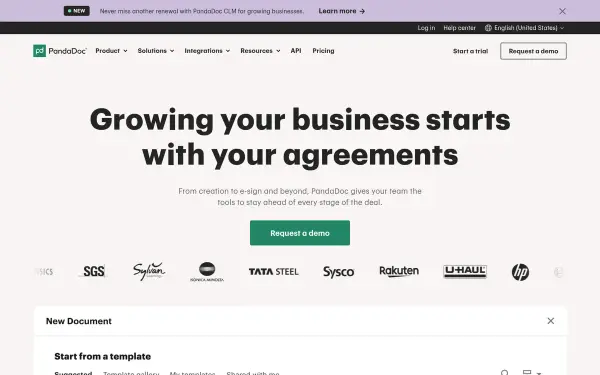
PandaDoc is a general document platform that puts templates, electronic signatures, and contract automation in one place. It captures fields with AI, reads scanned documents with OCR, and answers contract questions, which helps a practice manager find a clause without reading a full agreement. CRM integrations keep signed documents tied to account records, and approval workflows and real time analytics show where a document sits. Connectors to Claude and ChatGPT extend how teams query content. The trade-off is healthcare depth: PandaDoc is not built specifically for regulated healthcare, so confirm protected health information handling and a business associate agreement before storing clinical contract data.
Pricing starts at $25 per seat per month on Starter, billed annually, with custom Enterprise quotes. The price note records that the lowest paid tier rose from $19 to $25. The free plan allows 5 documents per month, and a 14-day free trial is available. Advanced approvals require higher tiers, so confirm which workflow features sit in the plan you buy.
It fits small clinics and practices that need a low entry price, reusable templates, and e-signatures without a long rollout. Per user pricing scales with headcount. Larger health systems with complex approval chains will likely outgrow it.
You run a small clinic that needs templates, e-signatures, and a low entry price.
You need deep healthcare compliance workflows or complex approval chains.
Entry II of VIII / Searchable contract repository
Our verdict
A simple searchable repository for mid-sized teams, with unlimited users but a steep entry price.
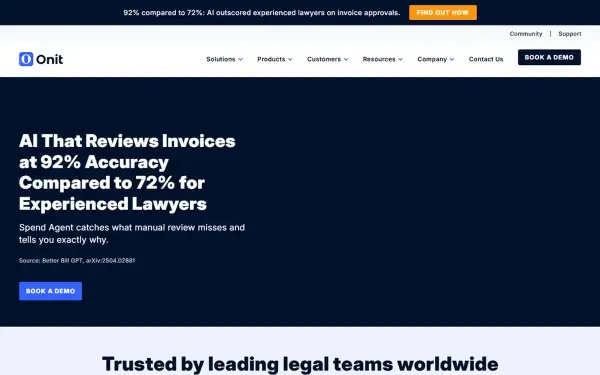
ContractWorks gives mid-sized healthcare teams a searchable repository rather than a full authoring suite. Smart document tagging uses AI to organize agreements, and date and renewal alerts reduce the chance of missing a notice window. Permission based roles control who sees each contract, while OCR makes scanned paper searchable. Electronic signature licences are available, though the number is capped by tier, and customizable reporting supports simple portfolio reviews. The interface is built for non-legal staff, which matters when clinic managers and practice administrators need to find terms without calling legal.
Pricing is not published on the vendor site; see the vendor site for current pricing. Implementation is included, which shortens time to value. Standard pricing includes unlimited users, so the cost does not rise with every additional reader. That is a real advantage for a mid-sized team that wants finance, compliance, and operations to search the same repository.
It fits teams that want a simple, searchable repository and can accept the vendor's pricing. It is steep for very small practices, and workflow depth trails enterprise lifecycle platforms. Groups that need complex approval routing, obligation tracking, or multi-party negotiation should look at broader suites.
You want a searchable repository with unlimited users and fast implementation.
You need advanced approval routing or have a very small practice budget.
Entry III of VIII / Unlimited e-signatures
Our verdict
A collaboration platform with unlimited e-signatures and audit trails, best for cross-team review.
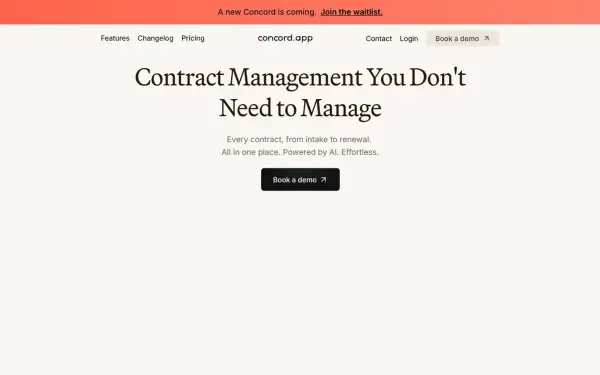
Concord, rebuilt as Concord Horizon, targets collaboration across legal, finance, and operations. It includes unlimited electronic signatures on its plans, deadline reminders, approval workflows, audit trails, and a template library. AI Copilot answers contract questions and produces summaries, while AI search combines keyword and semantic matching to surface obligations buried in long agreements. The vendor says its AI partners operate under a zero data retention policy, which is relevant when contracts contain sensitive commercial terms. The rebuilt interface uses consistent tables and collapsible navigation, which should help reviewers move through large documents.
Pricing starts at $499 per month on Essentials, paid annually, and includes 5 users. Pricing was restructured during 2026, so Essentials terms should be reconfirmed before budgeting. AI capability varies by tier, so confirm which Copilot and search features are in the package you buy. The entry tier limits the team to 5 users, which suits a small cross-functional group but not a large department.
It fits organizations that need unlimited signatures, audit trails, and multi-team approval routing without buying an enterprise suite. It is less suitable for a small clinic that only needs templates and signatures, or for a buyer who needs a published healthcare-specific compliance package.
Legal, finance, and operations need shared approvals and unlimited e-signatures.
Your team exceeds 5 users on entry tier or you need published healthcare pricing.
Entry IV of VIII / No-code workflow design
Our verdict
A configurable no-code lifecycle platform for health systems with complex cross-department approval chains.
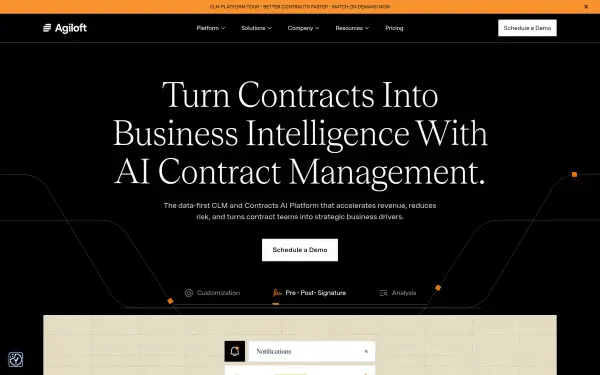
Agiloft is a configurable contract lifecycle platform for organizations that need approval chains across departments. Its core strength is no-code workflow customization: legal operations can adjust routing without waiting for IT. A data-first agreement platform adds analytics, and integrations reach more than 1,000 business systems across finance, procurement, and legal. Contract lifecycle management covers request through renewal, with AI driven automation to reduce manual steps. For a health system, that matters when physician contracts must pass through medical staff offices, compliance, and finance in a defined sequence.
Pricing is quote-only, so budgeting requires a sales cycle. The platform's breadth can overwhelm small teams, and implementation effort grows with workflow complexity. No-code flexibility still requires workflow design work during rollout, so assign an owner who understands both the contract process and the system configuration. The vendor reports a 95% customer renewal rate, which is a useful signal but not a substitute for checking references in your own contract mix.
It fits health systems and larger medical groups with complex approval sequences and enough internal capacity to configure and maintain them. It is a poor fit for a small clinic that needs a simple repository, or for a buyer who cannot start a quote-only procurement process.
Your health system needs custom no-code approval chains across departments.
You need published pricing or run a small clinic with simple contracts.
Entry V of VIII / AI clause review

Our verdict
A legal team platform for high volume payer and provider contracts, with strong clause review.
Ironclad is built for legal teams that review a high volume of payer and provider contracts. AI assisted clause review targets rate, termination, and liability terms, and risk flagging compares language against standard positions. Workflow automation moves requests, redlines, and approvals through the business, while compliance tracking supports audit readiness. An analytics dashboard provides visibility into contract work. Business teams can request and approve without leaving the platform, which reduces email chasing when operations, finance, and legal all touch the same agreement.
Pricing is not published; the plan note says custom quote. AI clause review and risk flagging appear in newer plans, so plan selection affects access. Expect a multi-month rollout when covering a full lifecycle across a large health system. The legal team focus may not fit operations-led buying, especially if the clinic or medical group wants a simple repository with a published entry price.
It fits legal departments with enough contract volume to justify configuration and training. It is less suitable for small practices, for teams that need a fixed public price before a business case, or for buyers who want a lightweight searchable repository rather than a lifecycle platform.
Your legal team handles high volumes of payer and provider contracts and wants AI clause review.
Operations leads buying or you need a published price before a business case.
Entry VI of VIII / Portfolio-level intelligence
Our verdict
An enterprise contract intelligence platform for large systems and payers with thousands of agreements.
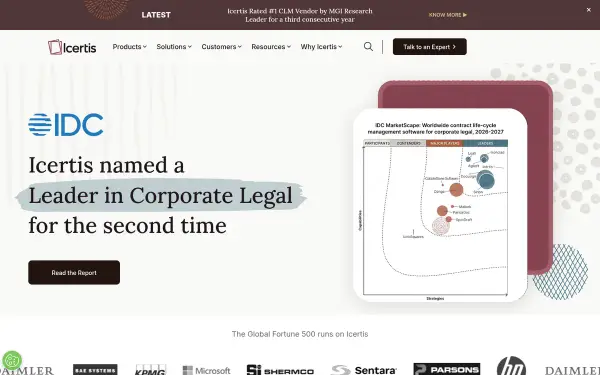
Icertis is an enterprise contract intelligence platform for large health systems and payers with thousands of agreements. Three AI engines cover different jobs: VisualizeAI for portfolio insight, DiscoverAI for clause discovery, and NegotiateAI for negotiation support. Obligation tracking follows service levels and payment terms after signature, which helps surface commitments that are easy to miss when contracts sit in different departments. ERP integration ties contract data to finance and procurement systems, and the platform provides contract intelligence across multiple legal entities.
Pricing is quote-only, and custom enterprise pricing is high. Complexity is excessive for small clinics or single sites, and implementation runs for months with dedicated project management required. The scale justifies the cost only at enterprise contract volume. Buyers should map legal entities, ERP connections, and reporting needs before the first scoping call, because each adds design work.
It fits a large system or payer that needs portfolio level visibility, obligation tracking, and finance integration across a complex organization. It is a poor fit for a clinic, a small medical group, or any team without the staff to support a multi-month implementation.
Your system or payer has thousands of agreements and needs ERP linked portfolio intelligence.
You are a clinic or lack dedicated project management for a long rollout.
Entry VII of VIII / Draft to obligation
Our verdict
A broad lifecycle suite from drafting to obligations, with negotiation portals and guided creation.
Conga CLM covers drafting through obligation tracking in one platform. Document generation builds agreements from templates, guided wizards let non-legal staff draft standard contracts, and negotiation portals keep external parties working from one version of truth. Electronic signatures close the deal, and obligation management carries post-signature duties forward. AI insights and lifecycle analytics are included. That breadth matters for payer and vendor agreements that move from a template to redlines to signatures to recurring service credits.
Pricing is not published; the plan note says custom quote. Some deployments are Salesforce-centric, so integration fit should be confirmed early. Full suite implementation requires significant effort, especially when obligation management and negotiation portals are added at the same time. The platform is broader than a repository, so a small clinic may pay for capability it will not use.
It fits organizations that want one system from drafting to obligations and can support a configuration project. It is less suitable for a practice that mainly needs storage and renewal alerts, or for a buyer whose CRM and finance stack does not align with the vendor's deployment model.
You want drafting, negotiation, signatures, and obligation tracking in one platform.
You need a lightweight repository or your stack does not fit a Salesforce-centric deployment.
Entry VIII of VIII / Renewal spend control

Our verdict
A renewal and vendor spend platform for teams focused on avoiding auto-renewals and wasted spend.
Gatekeeper focuses on contract visibility, renewals, and vendor spend. A dashboard shows the contract estate, renewal alerts and workflows prevent unwanted auto-renewals, and risk categorization helps teams sort agreements by exposure. The workflow engine supports contract processes, while auditable activity records feed compliance reviews and board reporting. Spend consolidation reporting and benefit tracking for volume discounts and service credits make the platform useful when procurement wants to prove savings, not just store documents.
Pricing is not published; plans are sized by third-party volume, but no figures are published. The workflow depth varies by tier, so confirm the processes you need are in the quoted package. The vendor has a smaller US presence than larger rivals, so support coverage should be checked during evaluation.
It fits organizations whose primary pain is missed renewals and poor visibility into vendor spend. It is less suitable for a health system that needs deep authoring, complex internal approval chains, or a large US support footprint. A clinic with a handful of agreements will likely find a simpler repository or document tool easier to justify.
Missed renewals and vendor spend visibility are your main contract problems.
You need deep authoring, complex approvals, or a large US support footprint.
VBackground
Healthcare contract management software is a system for storing, routing, signing, and tracking the agreements a healthcare organization depends on. The category covers payer agreements, provider employment contracts, vendor and purchasing contracts, business associate agreements, leases, and service commitments. A clinic may use it mainly to replace shared drives and email approvals. A health system may use it to connect legal, compliance, procurement, and finance across a large contract portfolio.
The tools fall into two broad groups. A contract repository is a searchable library with permissions, renewal alerts, and reporting. A full lifecycle platform adds drafting from templates, negotiation portals, approval routing, e-signatures, obligation tracking, and analytics after signature. Repository tools usually cost less and go live faster. Lifecycle suites cost more, take longer, and need process design before rollout.
Buyers also need to confirm how protected health information is handled. Ask for a business associate agreement, documentation of safeguards, and a clear description of where data is stored and who can access it. Do not assume a general document platform is ready for clinical contract data just because it offers e-signatures.
The right choice depends on contract volume, the number of approvers, and whether post-signature obligations need tracking.
This comparison sits in the healthcare register. Further along the shore: money transfer app to nigeria and accounting automation software.
VIPricing
Pricing in this category follows four common models, and the model matters as much as the headline number. Per-seat plans are easy to start but rise with headcount. Flat platform fees can include unlimited users but carry a higher entry point. Department plans bundle a small number of users into an annual price. Custom enterprise quotes fit large portfolios but require a sales process before you can budget. Prices below were checked on November 26, 2026.
| Model | How it bills | Typical fit | Example from this list |
|---|---|---|---|
| Per-seat subscription | Per named user per month, with annual billing discounts | Small clinics with a few administrators | PandaDoc starts at $25 per seat per month on Starter, billed annually |
| Flat monthly platform | Fixed monthly fee, usually billed yearly, with tier limits | Mid-sized teams needing a shared repository | See the vendor site for ContractWorks pricing |
| Department plan | Annual plan with a set number of included users | Cross-functional legal, finance, and operations groups | Concord Essentials is $499 per month paid annually and includes 5 users |
| Custom quote | Negotiated contract based on volume, modules, and deployment | Large health systems and payers | Agiloft, Ironclad, Icertis, Conga CLM, and Gatekeeper do not publish pricing |
Watch the limits inside each model. PandaDoc has a free plan for 5 documents per month and a 14-day free trial, but advanced approvals require higher tiers. ContractWorks includes unlimited users on standard pricing and no implementation fee, while signature licences are capped by tier. Concord includes unlimited e-signatures but limits Essentials to 5 users. Quote-only vendors can hide implementation and integration costs until scoping, so ask for a total first-year estimate and a pricing sheet in writing.
Each entry card shows the starting price as it appeared on the vendor's own pricing page on November 25, 2026. When a vendor shows no figure we could confirm, or only a promotional rate, the card says "See website" or gives the regular price instead of a guess. Usage, overage and add-on rates in the text change more often than plan prices, so confirm them on the vendor page before you set a budget. To test the numbers against your own volume, try the free User Research Budget Planner. The Event Break-Even Calculator is a second way to check the same decision.
VIIDecision
VIIIPitfalls
IXQuestions
It covers payer agreements, provider employment contracts, vendor and purchasing contracts, business associate agreements, leases, and service commitments. The software should support the contract types you actually sign, with fields, approvals, and renewal rules for each. Confirm templates and reporting match those types before buying.
Ask the vendor for a business associate agreement and written documentation of how protected health information is stored, accessed, and retained. Confirm audit trails, role permissions, encryption, and breach notification terms. Do not rely on e-signature features alone. Your compliance officer should review the terms before contract data moves into the system.
PandaDoc has a published entry point at $25 per seat per month on Starter, billed annually, with a free plan for 5 documents per month. Concord Essentials is $499 per month paid annually for 5 users. ContractWorks pricing is on the vendor site. Agiloft, Ironclad, Icertis, Conga CLM, and Gatekeeper require a quote.
A repository stores, searches, and controls access to signed agreements, with renewal alerts and reporting. A full lifecycle platform adds drafting, negotiation, approval routing, e-signatures, obligation tracking, and analytics. Repositories are simpler and faster to launch. Lifecycle suites cost more and need process design, but they replace more manual steps across legal, finance, and operations.
Repositories can launch quickly when implementation is included, as with ContractWorks. Enterprise suites take longer: Icertis runs for months and needs dedicated project management, Ironclad expects a multi-month rollout for a full lifecycle, and Agiloft and Conga CLM add effort as workflows and integrations grow. Ask each vendor for a first-value date.
Move when shared drives and templates no longer control renewals, approvals, or audit trails. Signs include multiple sites, more than a few approvers, payer and vendor contracts with recurring obligations, or a compliance review that demands traceable records. Start with a repository if search and alerts solve the pain; choose a lifecycle suite only when workflow complexity justifies it.
XFurther along the shore
Vendors can ask for a correction or apply for a Featured listing. Paid or not, the entry is scored on the same rubric and its limits stay in print. Partner with Umberlake.
Free tools
Our free browser tools turn the prices on this page into a figure for your own volume. Nothing you type leaves your device.