Drata
See website
Best for growing companies automating evidence collection across multiple frameworks
- Free plan
- No
- Rubric
- 7.5 of 10
Eight PCI compliance tools compared on evidence automation, scope reduction and price, with notes on which buyer each one actually fits and where it falls short.

IThe short answer
The best PCI compliance software in November 2026 depends on whether you are automating evidence or shrinking scope. Drata suits growing companies that want PCI DSS managed alongside SOC 2 and ISO 27001 in one control set. Vanta suits teams chasing a first audit with guided setup. Secureframe suits startups that want compliance specialists on call during the assessment. Drata and Vanta publish no prices, Secureframe lists a $7,500 per year Fundamentals starting point, and all three are sold through a sales conversation.
8 tools compared from vendor pages on November 25, 2026. 2 publish a starting price we could read; the rest say "See website".
IITop three berths
Register order is editorial fit for the buyer each entry describes. Prices are the starting figures read on November 25, 2026.
See website
Best for growing companies automating evidence collection across multiple frameworks

See website
Best for teams that want to reach a first audit quickly with guided setup
$7,500Fundamentals, per year
Best for startups wanting compliance experts on call during assessment
How this page is paid for. All 8 tools here are unpaid editorial picks.
A paid listing's position can be part of what the vendor pays for. Every entry, paid or not, is scored on the same rubric and keeps its limits in print. Advertising disclosure.
IIIThe register
Starting prices as shown on each vendor's pricing page on November 25, 2026. "See website" means no figure we could confirm.
| No. | Tool | From | Free plan | Trial | Rubric | Actions |
|---|---|---|---|---|---|---|
| 01 | DrataGrowing companies automating evidence collection across multiple frameworks | See websiteNot shown publicly | No | No | 7.5 | |
| 02 | VantaTeams that want to reach a first audit quickly with guided setup | See websiteNot shown publicly | No | Demo only | 7.0 | |
| 03 | SecureframeStartups wanting compliance experts on call during assessment | $7,500Fundamentals, per yearUpdated on vendor page | No | Demo only | 7.0 | |
| 04 | SprintoSmaller teams needing PCI DSS automation without enterprise overhead | See websiteNot shown publicly | No | Demo only | 6.7 | |
| 05 |  Scrut AutomationCloud-native mid-market teams combining compliance and risk management | See websiteNot shown publicly | No | Demo only | 6.5 | |
| 06 | Very Good SecurityFintech and SaaS firms removing card data from their systems | $1,000Starter, per monthRead on vendor page | No | Free trial | 7.1 | |
| 07 | NetwrixAuditing access to cardholder data across IT environments | See websiteNot shown publicly | No | Demo only | 5.5 | |
| 08 | VaronisEnterprises governing data access at scale | See websiteNot shown publicly | No | Demo only | 5.7 |
Pinned:
IVMethod
We scored each tool on five criteria: PCI DSS coverage, automation depth, price clarity, scope reduction, and fit with the team size and audit timeline the tool is built for. The weights are in the rubric above. Nothing here was scored on brand size or on how many integrations a vendor claims, because those numbers are hard to verify and rarely decide a purchase.
Prices and plan facts come from vendor pricing pages checked on November 26, 2026. Where a vendor publishes no figure, the entry says so in the review rather than guessing. Secureframe's $7,500 per year Fundamentals starting point and Very Good Security's $1,000 per month Starter plan are the only published starting prices in this list.
The order is editorial. Each position reflects how well the tool fits the buyer described in that entry, plus any Featured placement, which is paid. A Featured listing is scored with the same rubric and carries the same honest cons as every other entry. No vendor in this list is marked Featured this month; if one is added, the label will appear on the entry and this disclosure stays the same.
We did not test the products hands-on. The assessment draws on published feature lists, plan structures, deployment models and contract terms.
The full routine, from price reads to corrections, is on the methodology page. Paid listings follow the advertising disclosure.
How directly the tool maps controls, evidence and reporting to PCI DSS requirements.
How much evidence collection, control testing and remediation the product handles without manual work.
Whether pricing, contract terms and plan limits are published or only available through a sales conversation.
How far the tool shrinks the cardholder data environment rather than only documenting it.
How well the product matches the team size, technical skill and audit timeline of the buyer it targets.
Entry I of VIII / Multi-framework control set
Our verdict
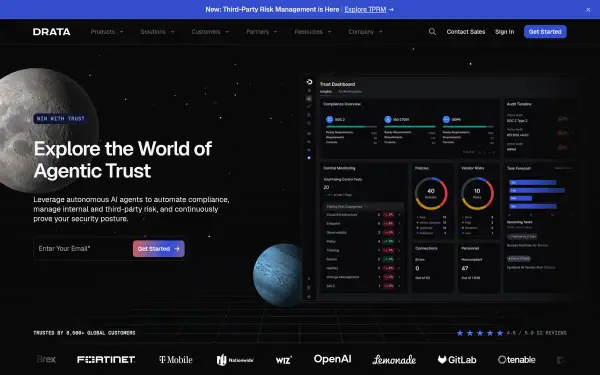
The broadest control set here for companies running PCI DSS beside SOC 2 or ISO 27001, held back by quote-only annual pricing.
Drata sits at the automation end of this market. It monitors controls continuously through integrations with cloud infrastructure, identity providers, HR systems and security tools, then maps the evidence to what an auditor asks for. PCI DSS is handled inside the same control set as SOC 2, ISO 27001, HIPAA and GDPR, so a company that already holds one of those certifications does not rebuild its evidence library to add cardholder data.
That breadth is why it suits growing companies rather than single-framework buyers. Automated remediation workflows and control testing keep the control set current between audits, and the integration catalog covers the common cloud stacks without much custom work.
The trade-off is buying it. Drata lists Foundation, Advanced and Enterprise tiers but publishes no prices, and the page checked on November 26, 2026 gave no figures. Contracts are annual, and quotes scale with headcount and framework count. There is no free tier and no trial, so evaluation is a demo plus a quote. Very small teams sometimes find more platform than they can use.
PCI DSS has to sit beside SOC 2 or ISO 27001 and you want one evidence library for all of them.
You need a published price before you can get internal budget approval.
Entry II of VIII / Guided first audit
Our verdict
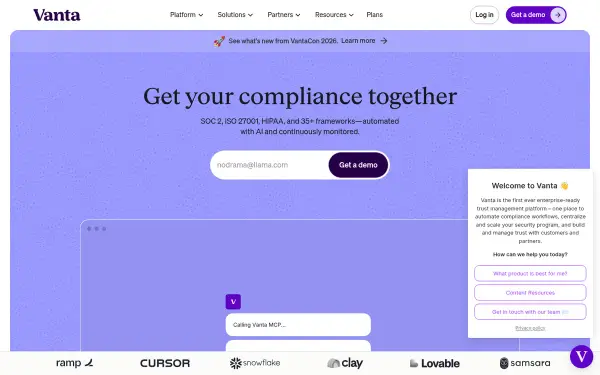
The fastest route to a first PCI DSS audit through guided setup and partner auditors, though automation depth varies by framework.
Vanta is built around time to first audit. Setup walks a team through scoping, evidence collection and remediation, and automated security testing plus employee onboarding checks fill in the controls that are easy to forget. PCI DSS sits alongside SOC 2 and ISO 27001 support, and the auditor marketplace connects buyers with firms already familiar with the platform, which shortens the back and forth on evidence requests.
That makes it a strong fit for a first certification project, particularly where nobody on staff has run an assessment before. A trust center lets the company share its posture with customers without emailing documents one at a time.
Where it thins out is automation depth between frameworks. Coverage is not uniform across the library, and organisations with mature security programmes often find less differentiation than a first-time buyer does. Pricing is quote-based with no published figures, the page checked on November 26, 2026 returned no content, and there is no free plan, so a demo is the entry point. Expect an annual commitment and confirm which frameworks the quoted tier includes.
This is your first PCI DSS assessment and you want structure plus an auditor introduction.
You already run a mature security programme and need uniform depth across many frameworks.
Entry III of VIII / Specialists on call
Our verdict
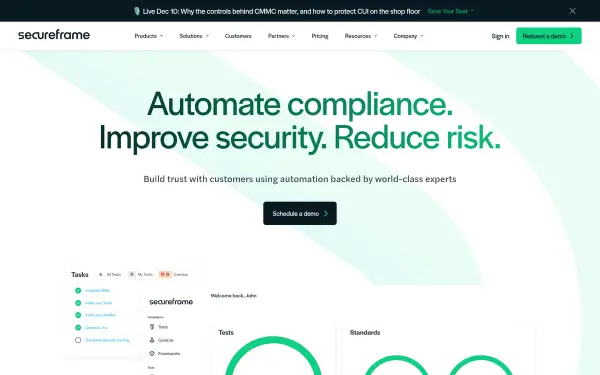
Best when you want compliance specialists alongside automation, at a published $7,500 per year Fundamentals starting point.
Secureframe pairs automation with people. Automated control monitoring and evidence collection run across supported frameworks including PCI DSS, integrations pull evidence from cloud and HR systems, and a readymade policy library covers the documentation most teams would otherwise write from scratch. On top of that, buyers get access to compliance specialists who can guide the assessment, which is the part founder-led companies most often underestimate.
That service layer is why it fits startups without a dedicated security hire. The buying process is built for a founder or an operations lead rather than a security engineer running a scored evaluation, and the policy templates shorten the first pass considerably.
Limits are real. The integration catalog is narrower than the largest competitors, and security-engineer-led reviews tend to surface gaps quickly. Pricing has moved: the pack we hold had no figure, and the Secureframe page checked on November 26, 2026 now leads with an annual starting price of $7,500 on the Fundamentals plan. The rest of the plan structure is still sold through sales, so confirm what is included at that number before treating it as a budget. No free plan; demo only.
You are a founder or operations lead who wants automation plus a named specialist to call.
Your security team needs the widest possible integration catalog on day one.
Entry IV of VIII / Fast deployment
Our verdict
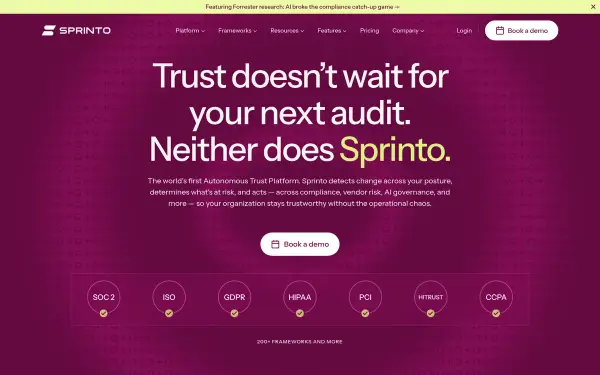
A fast, right-sized option for small teams that need PCI DSS automation, with less depth for multi-entity or heavily regulated setups.
Sprinto targets the smaller end of the market: teams in the dozens of employees, not hundreds, that need PCI DSS automation without a long implementation. Control monitoring and evidence collection are automated, integrations connect cloud and business tools, and the setup is designed to complete in days rather than months. PCI DSS sits alongside SOC 2 and ISO 27001, with continuous tracking and alerts plus policy and risk management support.
For a small merchant or a young payments company, that combination covers the practical work: keeping evidence current, watching controls drift and holding the policies an assessor will ask for. Fast deployment matters when an enterprise customer has put a security questionnaire on the critical path.
The limits show up as you grow. Depth is thinner for complex, multi-entity environments, and heavily regulated industries tend to outgrow it. Pricing is quoted through sales, and the page checked on November 26, 2026 returned no content, so confirm in writing which frameworks the quoted tier includes before signing. No free plan, demo only.
You have dozens of employees and need PCI DSS controls live quickly.
You operate several entities or expect heavy regulatory scrutiny.
Entry V of VIII / Risk plus compliance

Our verdict
A cloud-native mid-market pick that folds continuous risk management into PCI DSS compliance work, with a smaller ecosystem than the leaders.
Scrut Automation bundles two jobs that are usually separate purchases: compliance automation and risk management. Continuous control monitoring and evidence management sit in one workspace, and a continuous risk register tracks risk over time rather than in an annual spreadsheet. That matters for PCI DSS, where risk assessment is an ongoing obligation rather than a document you file once.
Framework support covers PCI DSS, SOC 2 and ISO 27001, the architecture is cloud-native, and unified dashboards let a mid-market team see compliance posture and risk exposure in the same place. Positioning is aimed at mid-market budgets, which is the segment where buying two separate tools gets expensive fast.
The trade-offs are ecosystem and recognition. Brand recognition is lower than the larger US vendors, the integration and partner ecosystem is smaller, and pricing is quote-based, so you will not find a figure on the site. The pricing page checked on November 26, 2026 returned no content. For a cloud-native company that wants risk tracking built into compliance work, those are manageable. For a team that needs a wide integration catalog immediately, they are not.
You want one workspace for PCI DSS evidence and ongoing risk tracking.
Your procurement prefers vendors with a large established partner ecosystem.
Entry VI of VIII / Scope reduction by tokenization
Our verdict
Removes card data from your systems rather than documenting it, starting at $1,000 per month with a free trial.
Very Good Security attacks the problem from the other end. Instead of automating evidence for an audit, it vaults card numbers so your systems only ever handle tokens, which shrinks the cardholder data environment and with it the scope of the assessment. Tokenization is the core product, supported by network tokens, an account updater and payment data orchestration across processors, and it works alongside processors such as Stripe.
The pricing is the clearest in this list. Starter begins at $1,000 per month, and a free trial is available, which no other tool here offers. Growth packages are quoted custom and add network tokens, account updater and compliance support.
Two things to weigh. At low card volumes, $1,000 per month can cost more than the audit scope it removes, and a hosted payment form from a processor may be cheaper for a tiny merchant. Procurement and security review are thorough, which takes time. But for a fintech or SaaS company running several processors and handling card data directly, removing the data is a more durable fix than documenting it every year.
You handle card data directly across several processors and want that exposure gone.
You process very low volume and could use a hosted payment form instead.
Entry VII of VIII / Access audit trails
Our verdict
The access and change auditing layer for PCI DSS logging requirements, best paired with a compliance platform rather than bought alone.
Netwrix is a technical control, not a compliance platform, and that is the point. It audits access to cardholder data across file servers, databases and Active Directory, keeps audit trails and alerts on sensitive data access, and monitors configuration changes that could quietly weaken the cardholder data environment. Reporting is shaped around what assessors ask for on logging and monitoring.
For PCI DSS Requirement 10, that is the actual work: knowing who touched cardholder data, when, and whether anything changed that should not have. Coverage spans on-premises and directory systems, which is where a lot of retail and hospitality environments still keep the data.
It is not a substitute for a compliance automation tool. Most buyers pair it with one, using Netwrix for access and change evidence and the platform for the wider control set. Pricing is quote-based through an enterprise sales process, and there is no official pricing page to check as of November 26, 2026, so plan for a longer procurement cycle. The interface reflects its enterprise software heritage, which shows in setup time. No free plan, demo only.
An assessor has questioned who can reach cardholder data and what changed.
You need one platform to run the whole PCI DSS programme.
Entry VIII of VIII / Data access visibility

Our verdict
Enterprise data governance for cardholder data spread across many systems, too heavy and too costly for small environments.
Varonis governs data access at scale. It discovers and classifies sensitive data automatically, shows who can reach cardholder data and through which path, enforces least privilege, and applies user behaviour analytics to flag abnormal access. Coverage spans cloud and on-premises data stores, and reporting maps to PCI DSS access requirements.
That is a different job from running an assessment. It fits large retailers, processors and enterprises where cardholder data is spread across many systems and nobody has a reliable map of who can see it. Discovery and classification at that scale is the reason teams buy it, and least-privilege enforcement plus behaviour monitoring is what keeps the position from drifting back.
The cost of entry is high in every sense. Pricing is enterprise and quote-based, with no official pricing page to check as of November 26, 2026, deployment is complex, and the product rewards organisations with mature data governance already in place. Smaller merchants and single-application businesses get little from it. If your cardholder data environment is small, a compliance platform plus a scoped access review is the better spend.
Cardholder data is scattered across many stores and nobody can map who can reach it.
A single application holds your cardholder data.
VBackground
PCI compliance software is a tool category that does the paperwork and evidence work for a Payment Card Industry Data Security Standard assessment. It connects to your cloud accounts, identity provider and HR systems, keeps a control set current, collects the evidence an assessor will ask for, and tracks remediation when something drifts. It does not secure anything by itself.
There are two distinct jobs in the category, and buyers often conflate them:
The size of your cardholder data environment decides which matters more. A small merchant with a hosted payment page has almost no environment to document, so tokenization or a processor form beats an expensive platform. A SaaS company that stores card data in its own systems needs both: scope reduction first, evidence automation second.
No software passes an assessment. A Qualified Security Assessor or a self-assessment questionnaire still decides, and a platform only makes the evidence easier to produce and the controls easier to keep between audits. Treat the tool as a way to shorten the audit and reduce drift, not as a certificate.
This comparison sits in the compliance register. Further along the shore: vat compliance software and waste management software.
VIPricing
Pricing in this category splits into three models, and only one of them gives you a number before a sales call.
| Model | How it bills | Typical fit | Example from this list |
|---|---|---|---|
| Quote-only annual contract | Annual subscription sized by headcount and framework count, price released after a sales call | Companies buying automation and audit support together | Drata, Vanta, Sprinto, Scrut Automation, Netwrix, Varonis |
| Published starting price | Annual subscription with a listed entry figure tied to a named plan | Teams that need a budget number before a demo | Secureframe at $7,500 per year on Fundamentals |
| Platform fee plus custom tiers | Monthly platform fee, with higher packages quoted custom | Fintechs removing card data rather than auditing it | Very Good Security at $1,000 per month on Starter |
Six of the eight tools here publish nothing. Drata lists Foundation, Advanced and Enterprise tiers with no figures. Vanta, Sprinto, Scrut Automation, Netwrix and Varonis all route pricing to sales. For budgeting, assume an annual commitment and ask three questions in writing: which frameworks are included at the quoted tier, what happens to the price when headcount grows, and whether auditor fees sit inside or outside the subscription.
Free access is thin. Only Very Good Security offers a free trial. Everyone else offers a demo, which means you evaluate on a guided walkthrough rather than on your own data. That is a reason to run a structured demo script covering your actual scope instead of accepting a generic tour.
Each entry card shows the starting price as it appeared on the vendor's own pricing page on November 25, 2026. When a vendor shows no figure we could confirm, or only a promotional rate, the card says "See website" or gives the regular price instead of a guess. Usage, overage and add-on rates in the text change more often than plan prices, so confirm them on the vendor page before you set a budget. To test the numbers against your own volume, try the free User Research Budget Planner. The Event Break-Even Calculator is a second way to check the same decision.
VIIDecision
VIIIPitfalls
IXQuestions
It automates the evidence side of a PCI DSS assessment. The tool connects to your cloud, identity and HR systems, keeps a control set current, collects the evidence an assessor asks for, and flags drift for remediation. It does not secure systems or certify you. Only an assessor or a self-assessment questionnaire decides the outcome, so treat the software as a way to shorten the audit.
Yes, and it changes more than most buyers expect. A small merchant using a hosted payment page has almost nothing to document, so tokenization or a processor form beats a platform. A company storing card data in its own systems needs scope reduction plus evidence automation, and an enterprise with data spread across many stores adds access governance such as Varonis.
Mostly whatever the quote says. Six of the eight tools here publish no prices, including Drata, Vanta, Sprinto, Scrut Automation, Netwrix and Varonis. Secureframe lists $7,500 per year on Fundamentals, and Very Good Security starts at $1,000 per month on Starter. Assume an annual contract sized by headcount and framework count, and ask for renewal terms in writing.
Yes, and you should do it first. Moving card capture to a hosted payment form, or vaulting card numbers with a service like Very Good Security, removes data from your systems and shrinks the cardholder data environment along with the assessment that follows. Do that work before pricing a compliance platform, because it can change which tier you need.
No. An assessor or a self-assessment questionnaire determines the result. Software keeps controls current, gathers evidence and shows drift, which makes the assessment faster and less manual, but it does not replace the review itself. Budget for the assessor and internal time separately from the subscription, and expect the assessor to test what the platform reports.
Usually yes. Drata, Vanta, Secureframe, Sprinto and Scrut Automation all support PCI DSS next to SOC 2 and ISO 27001, and Drata keeps them in a single control set. Coverage depth varies between frameworks, so ask the vendor to show the exact PCI DSS controls in scope for your assessment rather than accepting a framework list.
XFurther along the shore
Vendors can ask for a correction or apply for a Featured listing. Paid or not, the entry is scored on the same rubric and its limits stay in print. Partner with Umberlake.
Free tools
Our free browser tools turn the prices on this page into a figure for your own volume. Nothing you type leaves your device.